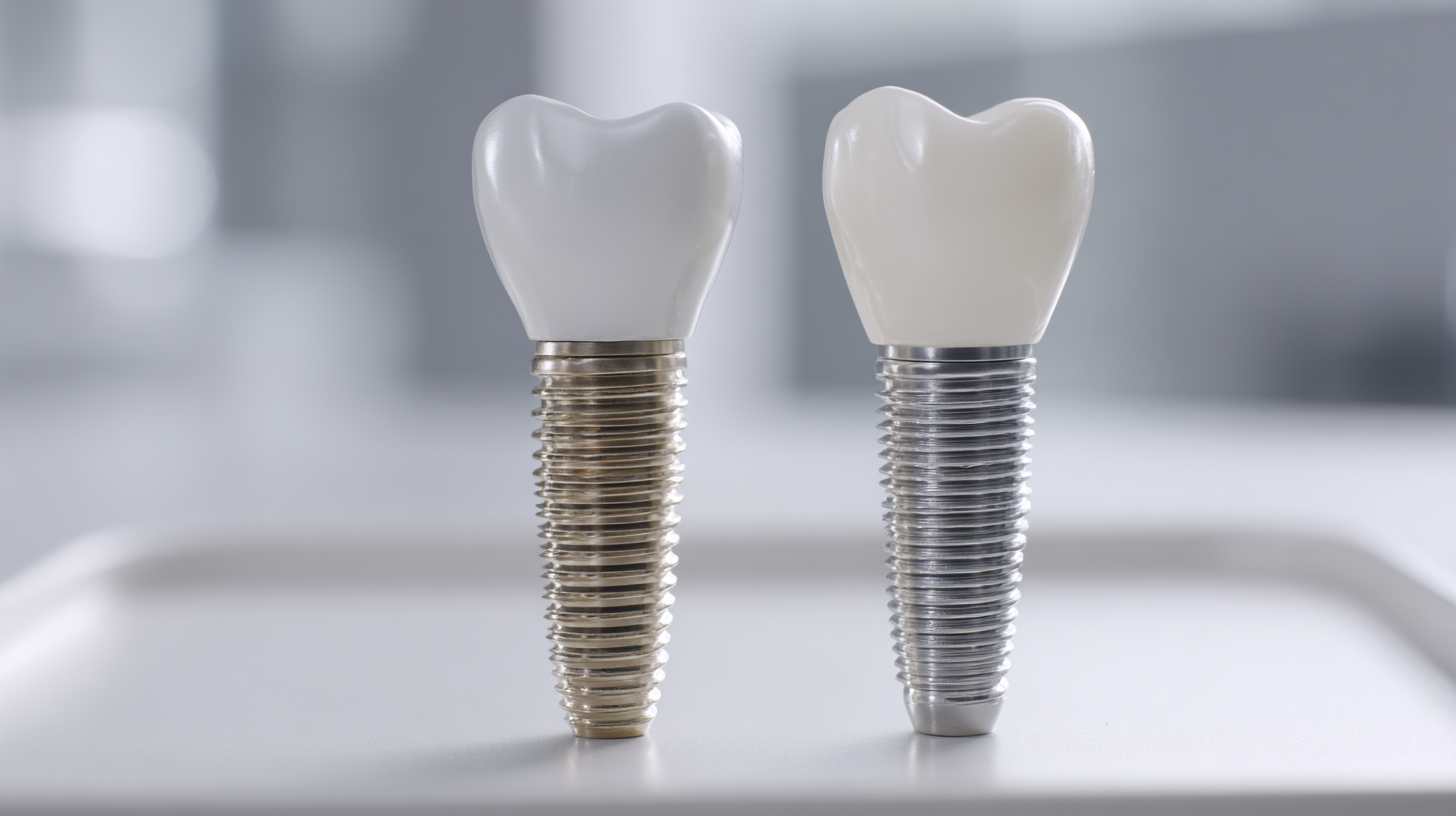
The material inside your dental implant will be fused to your jawbone for the rest of your life. The material on top of it, your prosthetic teeth, will determine how your smile looks, how your food tastes, and how often you are back in the dental chair for repairs. These are not interchangeable decisions, and getting them wrong is expensive to fix.
The problem is that most patients never learn what materials their provider plans to use until they are already sitting in the consultation chair. Marketing from implant companies is written for dentists, not for you. And the providers placing implants rarely volunteer a side-by-side comparison of the options. You are left Googling brand names and trying to parse clinical studies written for an audience with a dental degree.
This guide breaks down the materials used in dental implant procedures from the three dominant manufacturers, Straumann, Nobel Biocare, and ZimVie, explains what each material means for full arch procedures like All-on-4, and gives you a realistic cost-to-value comparison so you can walk into your consultation already knowing the right questions to ask.
What are dental implants made of, and what are the main material options?
Dental implants are made from one of three base materials: commercially pure titanium (grade 4), titanium-zirconium alloy, or zirconia ceramic. Each serves as the post that gets surgically placed into your jawbone and fuses with the bone through a process called osseointegration.
Titanium (Grade 4)
Titanium has been the standard material for dental implants for over 40 years. It is the most researched, most documented, and most widely used implant material in the world. Titanium implants have a documented survival rate of approximately 97% at five years and 95% at ten years. The material is biocompatible, meaning your body accepts it without triggering an immune response, and it integrates with bone reliably across a wide range of patient conditions.
Titanium-zirconium alloy
This is a newer category, pioneered by Straumann with their Roxolid material. Roxolid is an alloy of roughly 85% titanium and 15% zirconium (the metallic element, not the ceramic). The result is a material with higher tensile strength than pure titanium, which allows manufacturers to make smaller diameter implants without sacrificing durability. This matters for patients with limited bone width who might otherwise need a bone graft before implant placement.
Zirconia ceramic
Zirconia (zirconium dioxide) is the metal-free alternative to titanium. It is a white ceramic material that eliminates the risk of a grayish shadow showing through thin gum tissue, which can happen with titanium implants in the front of the mouth. Zirconia implants have demonstrated success rates of 95 to 97% in short-term studies, though long-term data beyond ten years is still limited compared to titanium's decades of clinical evidence.
How do Straumann, Nobel Biocare, and ZimVie implant systems compare?
Each of the three major implant manufacturers uses proprietary materials and surface treatments designed to improve how the implant integrates with your bone. The differences are real, though they matter more to your surgeon than to you. What matters to you is the clinical track record and whether the material is appropriate for your specific case.
Straumann
Straumann, based in Switzerland, offers three material options. Their grade 4 titanium implants use the SLA surface, which has become an industry benchmark for roughened implant surfaces that promote bone attachment. Their Roxolid titanium-zirconium alloy is paired with the SLActive surface, a hydrophilic (water-attracting) treatment that the company says accelerates early healing. And their PURE Ceramic line uses yttria-stabilized zirconia with a ZLA surface specifically developed for ceramic implants. Every PURE Ceramic implant undergoes a mechanical proof test before leaving the factory, applying forces that exceed the maximum human bite.
Nobel Biocare
Nobel Biocare, the company that commercialized the original Branemark implant system in the 1960s, builds its implant line primarily around grade 4 titanium with their proprietary TiUnite surface. TiUnite is created through an anodization process that produces a porous, slightly rough titanium oxide layer. This surface has been documented in over 465 publications, and a large-scale systematic review found that TiUnite implants had a survival rate exceeding 99% at one year and 95.1% at ten years. Nobel Biocare also offers the NobelPearl, a two-piece ceramic implant made from alumina-toughened zirconia (ATZ) with a unique carbon fiber-reinforced polymer screw (VICARBO) instead of a metal screw. NobelPearl is currently the only completely metal-free, screw-retained two-piece ceramic implant system on the market.
ZimVie (formerly Zimmer Biomet)
ZimVie's implant portfolio is built around titanium with several proprietary surface technologies. Their T3 implant uses a dual acid-etched Osseotite surface at the collar and a discrete crystalline deposition (DCD) surface on the body, creating what ZimVie calls a "contemporary hybrid surface." Their most distinctive offering is the Trabecular Metal implant, which incorporates a tantalum-based three-dimensional material at the coronal portion of the implant. Trabecular Metal is not a surface coating but a structural material designed to mimic the architecture of cancellous (spongy) bone. ZimVie claims this structure promotes rapid bone ingrowth and has documented its use in orthopedic applications for over two decades before bringing it to dental implants in 2011.
Does the implant brand really affect my outcome?
For most patients, the honest answer is that the surgeon's skill and experience matter more than the implant brand. All three manufacturers produce implants with strong clinical evidence and high survival rates. The differences in surface technology and material composition translate to measurable but modest differences in healing speed and early stability, not dramatic differences in whether the implant succeeds or fails over the long term.
That said, there are situations where the specific material matters. If you have thin gum tissue over your front teeth, a zirconia implant from Straumann or Nobel Biocare may prevent the grayish show-through that titanium can cause. If you have narrow bone and want to avoid a grafting procedure, Straumann's Roxolid alloy allows for smaller-diameter implants. If you have a documented metal sensitivity (rare, but real), zirconia is the appropriate choice.
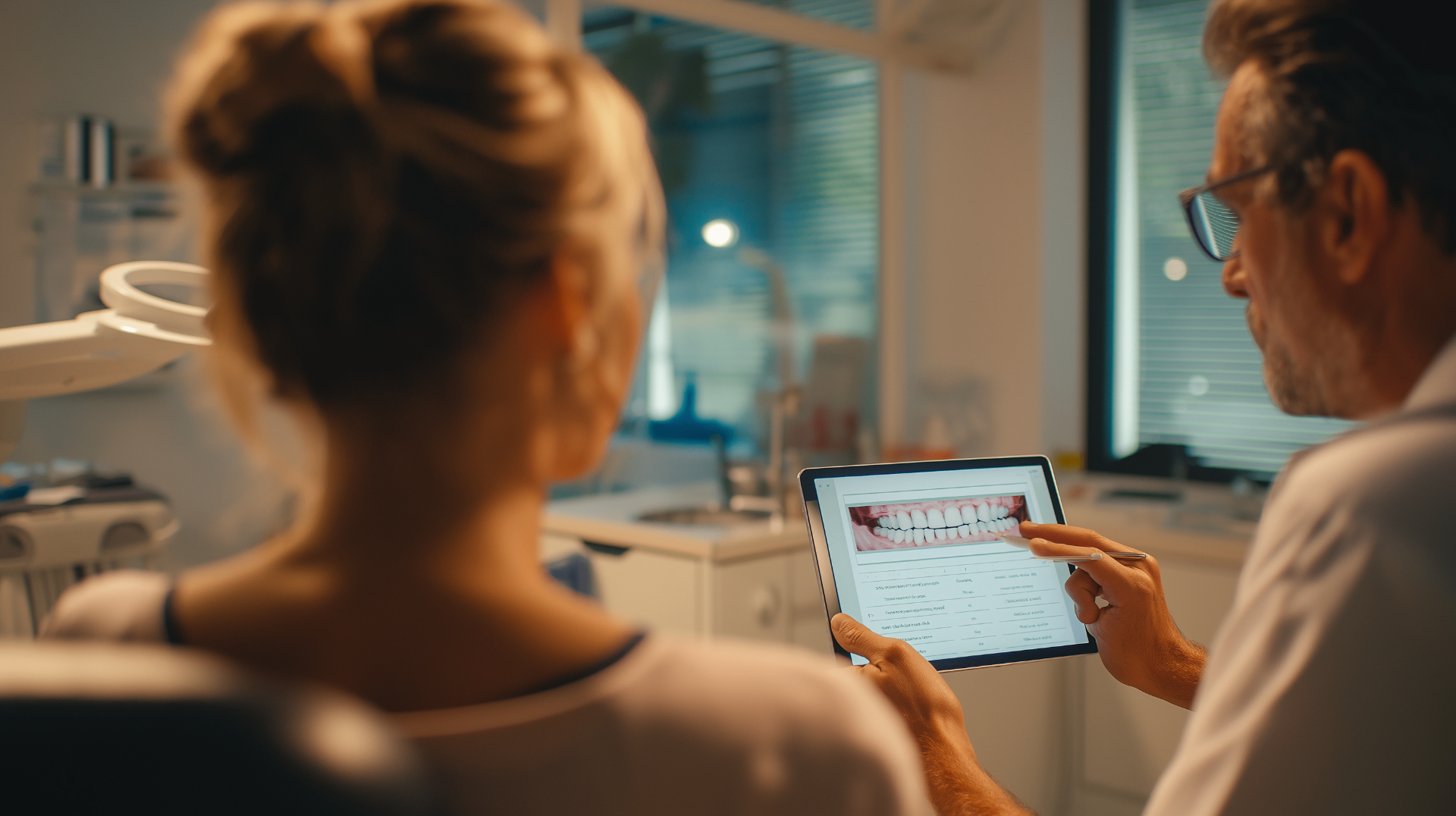
The most important thing is to ask your provider which implant system they use, why they chose it, and how many cases they have completed with that system. A surgeon who has placed 500 Straumann implants will likely get better results with Straumann than a surgeon who just switched to Nobel Biocare last month, regardless of what the manufacturer's literature says. If you are still building your shortlist of providers, Dental Implant Directory lets you filter by specialty and credentials so you can compare qualifications before booking consultations.
What prosthetic materials are used in All-on-4 full arch restorations?
The implant posts are only half the equation. For full arch procedures like All-on-4, the prosthetic teeth, the part you actually see and chew with, are made from one of three material categories: acrylic, hybrid (titanium bar with acrylic), or monolithic zirconia.
Acrylic (PMMA)
PMMA (polymethyl methacrylate) is the most common material for the temporary prosthesis placed on the day of All-on-4 surgery. It is lightweight, easy to adjust chairside, and inexpensive to fabricate. Many patients receive an acrylic temporary that they wear for four to six months while their implants integrate with the bone. Some patients keep acrylic as their permanent prosthesis to save money, but this is a trade-off. Acrylic is porous, meaning it absorbs stains, odors, and bacteria over time. The teeth can chip or debond, and the material wears down with daily chewing. Acrylic prostheses typically last five to seven years before they need significant repair or replacement.
Hybrid (titanium framework with acrylic teeth)
The hybrid prosthesis addresses acrylic's structural weakness by building the teeth on top of a precision-milled titanium bar. The titanium framework provides strength and rigidity, while the acrylic layer gives the prosthesis its tooth and gum-colored appearance. Hybrids are stronger than pure acrylic and less expensive than zirconia. The limitation is that the acrylic portion still stains, wears, and degrades over time. Most hybrid prostheses need the acrylic teeth replaced every five to seven years, though the titanium bar underneath can last much longer. If you are evaluating whether All-on-4 is the right procedure for you, our guide on whether you are a candidate for All-on-4 dental implants covers the clinical factors your provider should be assessing.
Monolithic zirconia
Zirconia is the premium prosthetic material for All-on-4. The entire bridge is milled from a solid block of zirconia ceramic using CAD/CAM technology, resulting in a single-piece restoration with a flexural strength of approximately 1,000 to 1,200 MPa. For context, acrylic's flexural strength is a fraction of that. Zirconia does not stain, does not absorb odors, resists bacterial buildup, and is nearly impossible to chip under normal chewing forces. A well-made zirconia prosthesis can last 15 to 20 years or longer. The downsides are weight (zirconia is denser than acrylic, though most patients adapt quickly), difficulty of repair (if damage occurs, the prosthesis typically needs to go back to a lab), and cost.
What about the gum-colored portion of the prosthesis?
Most All-on-4 restorations are classified as FP3 prostheses, meaning they replace both the teeth and a portion of the gum tissue. That pink section along the base of your bridge is not just decorative. It fills the gap left by bone and tissue that has resorbed over time, restores facial volume around the lip line, and creates the visual transition between your prosthetic teeth and your natural gums. The material used for this gum portion affects how realistic your smile looks, how easy it is to keep clean, and how well the tissue underneath stays healthy.
Pink acrylic
Pink acrylic is the most common gum material in hybrid and acrylic-based prostheses. It is lightweight, easy to shape and color-match during fabrication, and simple to repair if damaged. The downside is the same as with acrylic teeth: the material is porous. Over time, pink acrylic absorbs moisture, stains from food and beverages, and can harbor bacteria at the gum interface. Clinicians have observed slightly more gum inflammation where acrylic sits directly against tissue compared to other materials. The junction between acrylic and your natural gums can also be visible up close, especially if the color match shifts as the acrylic ages.
Pink zirconia
In a monolithic zirconia prosthesis, the gum-colored portion is made from the same zirconia ceramic as the teeth, tinted and layered to mimic natural tissue. Pink zirconia is non-porous, stain-resistant, and far more biocompatible with the gum tissue underneath. It does not absorb bacteria or odors. The trade-off is weight (the gum section adds to the overall mass of an already heavy prosthesis) and color matching (achieving a natural-looking pink in ceramic requires a skilled lab technician, and the result can look less lifelike than high-quality acrylic if the lab work is not precise).
Composite or resin overlay
Some providers use a hybrid approach, building the structural framework from zirconia or titanium and then layering a composite or resin material over the gum-colored areas. This can combine the strength of a rigid substructure with a more natural-looking tissue simulation. However, the composite overlay is softer than zirconia and may wear or discolor over time, requiring eventual maintenance.
Does the gum material really matter?
Yes, for two reasons. First, biocompatibility. The material sitting against your gum tissue every day affects tissue health. Zirconia and titanium produce less inflammation at the tissue interface than acrylic. Second, aesthetics. If your smile line shows the gum portion of your prosthesis (common with upper arch restorations), the quality of that pink section is what makes the difference between a smile that looks natural and one that looks prosthetic. Ask your provider what material they use for the gum portion, not just the teeth, and ask to see photos of finished cases so you can evaluate the result yourself.
How much do the different prosthetic materials cost for All-on-4?
The prosthetic material is the single biggest variable in the cost of an All-on-4 procedure. The surgical implant placement is relatively consistent across providers, but the difference between an acrylic prosthesis and a zirconia prosthesis can be $10,000 to $15,000 per arch.
Here is what you can expect to pay per arch in the United States as of 2026.
- Acrylic (PMMA) prosthesis: $15,000 to $20,000 per arch, all-inclusive. This is the entry-level option and often includes the temporary prosthesis as the final restoration.
- Hybrid (titanium bar + acrylic teeth): $20,000 to $28,000 per arch. The titanium framework adds durability and cost.
- Monolithic zirconia prosthesis: $25,000 to $38,000 per arch. This is the premium tier, and the price reflects the material cost, the advanced CAD/CAM fabrication, and the additional lab work required.
For both arches (full mouth), double these figures. A full mouth All-on-4 with zirconia prosthetics runs $50,000 to $75,000 or more at experienced practices in major metro areas.
Is zirconia worth the extra cost over acrylic for All-on-4?
This is the question most patients are really asking when they research All-on-4 materials, and the answer depends on how you define cost.
If you are comparing upfront price alone, acrylic wins. But dental economics do not work on a single transaction. They work on a timeline. An acrylic prosthesis that costs $18,000 today and needs replacement at year six will cost you another $8,000 to $12,000 for refabrication, plus the inconvenience of being without your teeth while the lab does the work. Repeat that cycle once or twice over 20 years, and you have spent $34,000 to $42,000 on a material that was never designed for permanence.
A zirconia prosthesis that costs $32,000 upfront and lasts 15 to 20 years with minimal maintenance may never need replacement during that window. A published retrospective analysis found that zirconia prostheses had higher initial costs (an estimated difference of approximately $7,800 compared to metal-acrylic hybrids) but showed reduced overall complications and superior survival rates, meaning the maintenance and complication costs over time were comparable between the two groups.
The cost-per-year math favors zirconia for patients who plan to live with their implants for a decade or more. A $32,000 zirconia prosthesis lasting 20 years costs $1,600 per year. An $18,000 acrylic prosthesis replaced every seven years costs $2,571 per year, not counting the cost of interim repairs.
That said, not every patient needs zirconia. Patients with limited budgets, patients who are elderly and prioritize lighter weight and easier adjustability, and patients in medically complex situations where a provisional material makes more clinical sense may be well-served by acrylic or hybrid options. The key is that your provider should explain the trade-offs clearly and in writing, not default to the cheapest option without telling you why.

What should I ask my provider about implant and prosthetic materials?
Before you commit to an All-on-4 procedure or any implant treatment, ask these questions and expect clear, specific answers.
- Which implant brand and model are you placing, and why did you choose it for my case?
- What material is the implant made from (titanium, titanium-zirconium alloy, or zirconia)?
- What material will my temporary prosthesis be made from?
- What material will my final prosthesis be made from?
- What material is used for the gum-colored portion of the prosthesis, and how does it affect tissue health and aesthetics?
- If you are recommending acrylic or hybrid as the final prosthesis, what is the expected lifespan and what will replacement cost?
- What is the total cost difference between an acrylic final prosthesis and a zirconia final prosthesis for my case?
- Do you use an in-house lab or outsource prosthetic fabrication?
- What happens if my prosthesis chips or fractures after delivery? What is covered and what is not?
A provider who answers these questions in detail is giving you the information you need to make a real decision. A provider who waves them off or says "we'll discuss that later" is not giving you the full picture. Our guide on how to choose a dental implant provider covers additional questions and red flags to watch for during consultations.
Understanding what to expect after surgery matters too. The material your provider uses affects healing timelines, dietary restrictions, and follow-up schedules. Our All-on-4 recovery guide walks through the full recovery process from day one through final prosthetic delivery.
The Bottom Line
The materials in your dental implants and prosthetic teeth are not cosmetic details. They determine how long your restoration lasts, how much maintenance it requires, how natural it looks and feels, and what you will spend over the next 10 to 20 years. Titanium implants from Straumann, Nobel Biocare, and ZimVie all have strong clinical evidence behind them, and the differences between brands matter less than the skill of the surgeon placing them. For All-on-4 prosthetics, zirconia costs more upfront but delivers better long-term value for most patients, while acrylic and hybrid options remain reasonable choices for patients who need to manage costs or who have specific clinical needs. Do not overlook the gum-colored portion of your prosthesis either; the material at the tissue interface affects both the health of your gums and the realism of your smile. Ask your provider to explain exactly what they plan to use, why, and what it will cost over time, not just on day one.
When you are ready to compare providers who can walk you through these decisions with transparency, find qualified providers near you at Dental Implant Directory.
Ready to find a qualified provider?
Search our independent directory of dental implant providers organized by specialty, location, and credentials.