Mexico is the world's second-largest dental tourism destination, with hundreds of thousands of US patients crossing the border each year for implants, crowns, veneers, and full-arch restorations. The savings can be dramatic — a full-mouth All-on-4 restoration that runs $50,000–$60,000 in the United States often comes in under $20,000 across both arches at a Mexican clinic. But the same word that makes those numbers possible — 'Mexico' — also makes the decision more complicated than choosing a provider down the street.
This guide walks through what dental implants in Mexico actually cost, where the credible clinics are, what credentials to verify, what anesthesia options are typically offered, where to stay during treatment, and the real risks that don't show up on a glossy clinic homepage.
Why are dental implants so much cheaper in Mexico?
Mexican dental implants typically cost 50–70% less than the US average, and the underlying math isn't complicated. Mexican dentists pay a fraction of what their US counterparts pay for dental school (roughly $30,000–$60,000 total versus $300,000+ in the United States), face lower malpractice insurance premiums, operate in real estate markets that cost a fraction of US commercial leases, and pay clinic staff at Mexican wage rates. Implant components — titanium fixtures from Straumann, Nobel Biocare, MIS, or BioHorizons — are sourced through the same global supply chain US clinics use, but the labor and overhead applied on top is meaningfully cheaper.
That structural cost advantage is real, and it explains why a credentialed Mexican implantologist can charge $900 for a single implant and still run a profitable practice. It does not, however, automatically mean every Mexican clinic offers the same quality at a discount — the price gap creates room for both excellent clinics charging fair Mexican rates and substandard clinics chasing US patients who are price-shopping.
What does it really cost to get dental implants in Mexico?
Typical 2025 pricing at established Mexican implant clinics:
- Single dental implant (titanium fixture only): $700–$1,200.
- Single implant + abutment + crown: $1,200–$2,000.
- All-on-4 per arch: $7,500–$12,000.
- All-on-4 full mouth restoration (both arches): $14,000–$22,000.
- Zirconia All-on-4 upgrade: add $3,000–$6,000 per arch.
- Bone graft: $300–$600.
- Sinus lift: $800–$1,500.
- 3D CT scan: often included; $80–$150 if billed separately.
Compare those to the US national averages tracked by the Dental Implant Directory: a single implant averages $2,143, and a full-mouth All-on-4 restoration averages $30,352. After factoring in flights, hotel, and per-diem expenses for a 7–10 day trip, US patients still typically save $25,000–$40,000 on a full-mouth case.
What are the top destinations in Mexico for dental implants?
Most US dental tourism flows into a short list of cities, each with a different character — border towns are designed for fast in-and-out trips, interior cities for longer recovery stays.
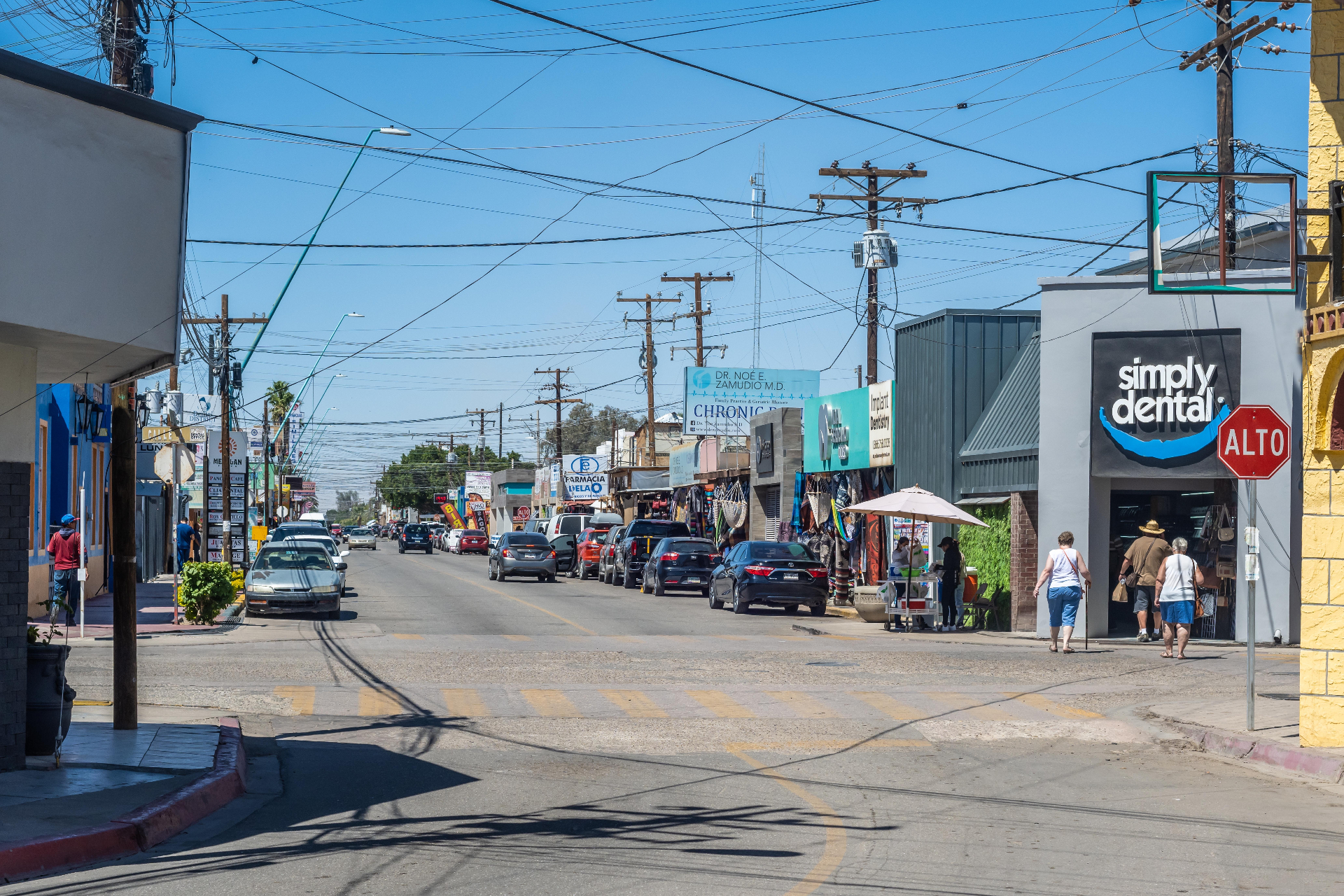
- Los Algodones, Baja California ('Molar City'). A small border town directly south of Yuma, Arizona, with more than 350 dental clinics packed into roughly four square blocks. Walk-across access from the US makes it the highest-volume dental destination in Mexico.
- Tijuana, Baja California. Twenty minutes from San Diego. Established full-arch centers draw patients flying in from across the western US.
- Nuevo Progreso, Tamaulipas. A border town across from Progreso, Texas, popular with patients from Houston, San Antonio, and the broader Texas market.
- Ciudad Juárez, Chihuahua. Across from El Paso; convenient for west Texas and southern New Mexico patients.
- Cancún and Playa del Carmen, Quintana Roo. Direct flights from most major US airports, beach recovery, and a growing concentration of high-end clinics catering to combined dental-and-vacation trips.
- Puerto Vallarta, Jalisco. Pacific-coast resort destination with several established implant-focused clinics.
- Los Cabos, Baja California Sur. Premium pricing relative to other Mexican destinations, but still well below US rates; popular for combined recovery-and-vacation cases.
- Mexico City. Higher concentration of US- and Europe-trained specialists, university-affiliated implantology programs, and access to advanced surgical centers; the right choice for complex zygomatic or full-mouth reconstruction cases.
- Mérida, Yucatán. Lower-cost alternative to Cancún with growing specialist density.
- Guadalajara, Jalisco. Mexico's second-largest city; strong dental school tradition and a mature implant specialist market.
What credentials should I verify for a Mexican dental implant provider?
The single biggest mistake US patients make is treating 'Mexico' as the credential. It is not. A few specific things to verify before booking:
- Cédula profesional. Every licensed Mexican dentist is issued a federal professional license number by the Secretaría de Educación Pública (SEP). Ask for it and verify it on the official registry at cedulaprofesional.sep.gob.mx — it takes two minutes.
- Specialty training in implantology. General dentistry training in Mexico does not qualify a dentist to place implants. Look for a postgraduate Maestría or Especialidad en Implantología, Periodoncia, or Cirugía Oral y Maxilofacial.
- ADM membership. The Asociación Dental Mexicana is the national professional body, comparable to the American Dental Association.
- International memberships. AAID (American Academy of Implant Dentistry), ICOI (International Congress of Oral Implantologists), or ITI (International Team for Implantology) Fellow status are genuine credentialing signals because they require demonstrated case volume and continuing education.
- US training history. Many of the most experienced Mexican implantologists completed residencies, externships, or master's programs at US universities. Ask, and verify on the US institution's alumni page where possible.
- Hospital affiliation. For full-arch and zygomatic cases, a clinic with a relationship to a hospital or accredited surgical center is a meaningful safety signal.
- CT/CBCT imaging on site. 3D imaging is the modern standard for implant planning. A clinic without it should be a hard no.
- Written warranty. Established Mexican implant clinics offer 5–10 year warranties on the implant fixture and 1–5 years on the restoration. Get the terms in writing, and confirm what coverage looks like if you need warranty work after returning home.
What anesthesia options are used during dental implant surgery in Mexico?
Anesthesia options at established Mexican implant clinics are essentially the same as in the United States, but they vary clinic by clinic — confirm what's offered before traveling.
- Local anesthesia (lidocaine, articaine, mepivacaine). Standard for single-implant placement. Patients are fully awake and pain is controlled at the surgical site.
- Nitrous oxide ('laughing gas'). Light, easily reversible sedation often used as an add-on to local anesthesia for anxious patients.
- Oral conscious sedation. Pre-operative oral medication (typically triazolam) that produces a relaxed, drowsy state while the patient remains responsive.
- IV sedation. Twilight sedation administered by an anesthesiologist or sedation-credentialed dentist. Standard of care for full-arch and All-on-4 cases. Confirm that an MD anesthesiologist or trained sedation provider is on site, and that the clinic has emergency airway and resuscitation equipment.
- General anesthesia. Used selectively for complex full-mouth reconstructions or zygomatic implants, typically performed in a hospital setting rather than an in-office clinic.
For any sedation deeper than nitrous oxide, ask specifically who is administering it and what their credential is. An MD anesthesiologist, a dentist with a sedation permit, and a non-credentialed staff member are three very different things.
How long do I need to stay in Mexico for dental implants?
Implant treatment is rarely a single trip. Realistic timelines:
- Single implant or simple case: two trips. Trip one for the consultation, CT scan, extractions, and implant placement (3–5 days). Trip two, 3–4 months later, for the abutment and crown placement (2–3 days).
- All-on-4 with same-day teeth: often a single 7–10 day trip for surgery and immediate temporary teeth, followed by a second 4–7 day trip 4–6 months later for the final permanent restoration.
- Full-mouth reconstruction with bone grafting or sinus lift: three trips spanning 8–12 months, since grafts need 4–6 months to heal before implants can be placed.
The biological timeline for osseointegration — roughly four months for the implant to fuse with the jawbone — is the same in Mexico as anywhere else, and there is no shortcut. Be skeptical of any clinic offering single-trip 'permanent teeth in a week' for a complex case.
Where should I stay during dental implant treatment?
Most established implant clinics either operate or partner with recovery hotels, and many include airport pickup, daily clinic transfers, and post-operative meal plans tailored to a soft-food diet.
- Border destinations (Los Algodones, Nuevo Progreso, Juárez): many patients stay on the US side and walk or drive across each day; mid-range hotels in Yuma, Progreso, and El Paso run $80–$130/night.
- Tijuana: recovery hotels in the Zona Río medical district run $90–$160/night. San Diego stays with daily border crossings are also common but add 30–60 minutes each way.
- Cancún, Playa del Carmen, Puerto Vallarta: resort and recovery-hotel pricing $120–$250/night for mid-range; partnered packages with clinics often discount room rates 15–30%.
- Mexico City, Guadalajara, Mérida: $90–$180/night in business-grade hotels near established implant clinics.
For full-arch surgery, plan to stay at a hotel within 15 minutes of the clinic, on a single floor (no stairs), with on-site or delivery food service for the first 3–5 days. Avoid scheduling sightseeing or alcohol in the first week, and avoid air travel for at least 48–72 hours after surgery — cabin pressure changes can aggravate sinus complications and post-surgical bleeding.
What are the real risks of dental tourism in Mexico?
The genuine risks, ranked roughly by how often they actually affect patients:
- Quality variance. The range between best-in-class Mexican clinics and the worst is wider than in the US market, and unsophisticated patients can land at the low end without realizing it. The credential checklist above is the main defense.
- Follow-up and warranty service. If a complication develops six months after you return home, the clinic that did the work is a flight away. Some US dentists will not service work done abroad, and others will charge a premium to do so.
- Counterfeit or off-brand implant components. Ask for the implant brand and serial number sticker from your packaging — every legitimate implant ships with one. Confirm your provider uses one of the major systems (Straumann, Nobel Biocare, BioHorizons, MIS, Neodent, Zimmer).
- Sterilization and infection control. Reputable clinics follow the same autoclave and chain-of-instrument protocols US clinics do. Ask to see the sterilization area; legitimate clinics will show you.
- Travel-related healing complications. Long flights, dehydration, and cabin pressure changes immediately after surgery raise the risk of dry socket, sinus communication, and bleeding. Build a recovery buffer.
- Insurance. Most US dental plans do not cover work performed abroad. Some PPO plans will reimburse a portion against US allowable charges; CareCredit and LendingClub will finance Mexican procedures but require the borrower to handle disbursement.
- Continuity of records. Make sure you leave with a full digital copy of your CT scan, surgical report, implant brand and lot numbers, and treatment plan. A US dentist troubleshooting a problem six months later needs all of it.
How do I plan a dental implant trip to Mexico safely?
A practical sequence:
- Get a US-side baseline. Have a free or low-cost consultation in the US, ideally including a 3D scan, so you have a comparison treatment plan and a record of pre-treatment dental status.
- Shortlist three clinics based on the credential checklist above, not on Google ad spend or Instagram polish.
- Request itemized written quotes from each clinic in USD, including all fees (consultation, CT scan, sedation, surgery, abutment, restoration, follow-ups).
- Verify professional licenses and specialty training before booking flights. Two minutes on the SEP registry can save tens of thousands of dollars.
- Book a recovery hotel partnered with the clinic if available. The logistics matter more than people anticipate after a full-arch surgery.
- Buy travel insurance that includes medical and trip-interruption coverage.
- Build a US-side follow-up plan before leaving. Identify a US dentist willing to monitor implants placed abroad; some periodontists and prosthodontists do this routinely.
- Keep all paperwork: implant brand and lot numbers, surgical report, prescriptions, post-op instructions, and warranty terms in a single folder.
The Bottom Line
Mexico is a legitimate, often excellent option for dental implants if a patient does the verification work that good US dentistry assumes is already done by licensure and credentialing. A credentialed Mexican implantologist working at a clinic with on-site CT imaging, IV sedation administered by a qualified provider, and a written multi-year warranty offers care indistinguishable from a comparable US specialist — at 30–50% of the cost. A non-credentialed dentist running flat-rate package deals out of a back-street clinic offers something else entirely, and the savings on the front end will not cover the corrections on the back end.
The decision is not 'Mexico vs. United States.' It is 'credentialed implantologist with the right tools and warranty vs. anyone else,' and that question matters in every country.
Find vetted dental implant providers
Use the Dental Implant Directory to compare US-based implant providers by procedure focus, specialist credentials, and local pricing — useful both as your starting point and as the baseline you'll evaluate any Mexican clinic against.
Ready to find a qualified provider?
Search our independent directory of dental implant providers organized by specialty, location, and credentials.