
Replacing missing teeth is one of the most consequential decisions you will make for your oral health. Choose the wrong option, and you could spend years dealing with discomfort, unexpected costs, and results that do not match what you were promised. Choose the right one, and you restore not just your teeth but your ability to eat, speak, and smile without thinking about it.
The problem is that most information comparing dental implants and dentures reads like a sales pitch for one side or the other. Implant practices push implants. Denture clinics push dentures. Rarely does anyone give you a straightforward comparison based on what actually matters: how each option performs in your mouth, what it costs over time, and which one fits your specific health situation.
This guide breaks down the real differences so you can make a decision based on facts, not marketing.
What is the actual difference between dental implants and dentures?
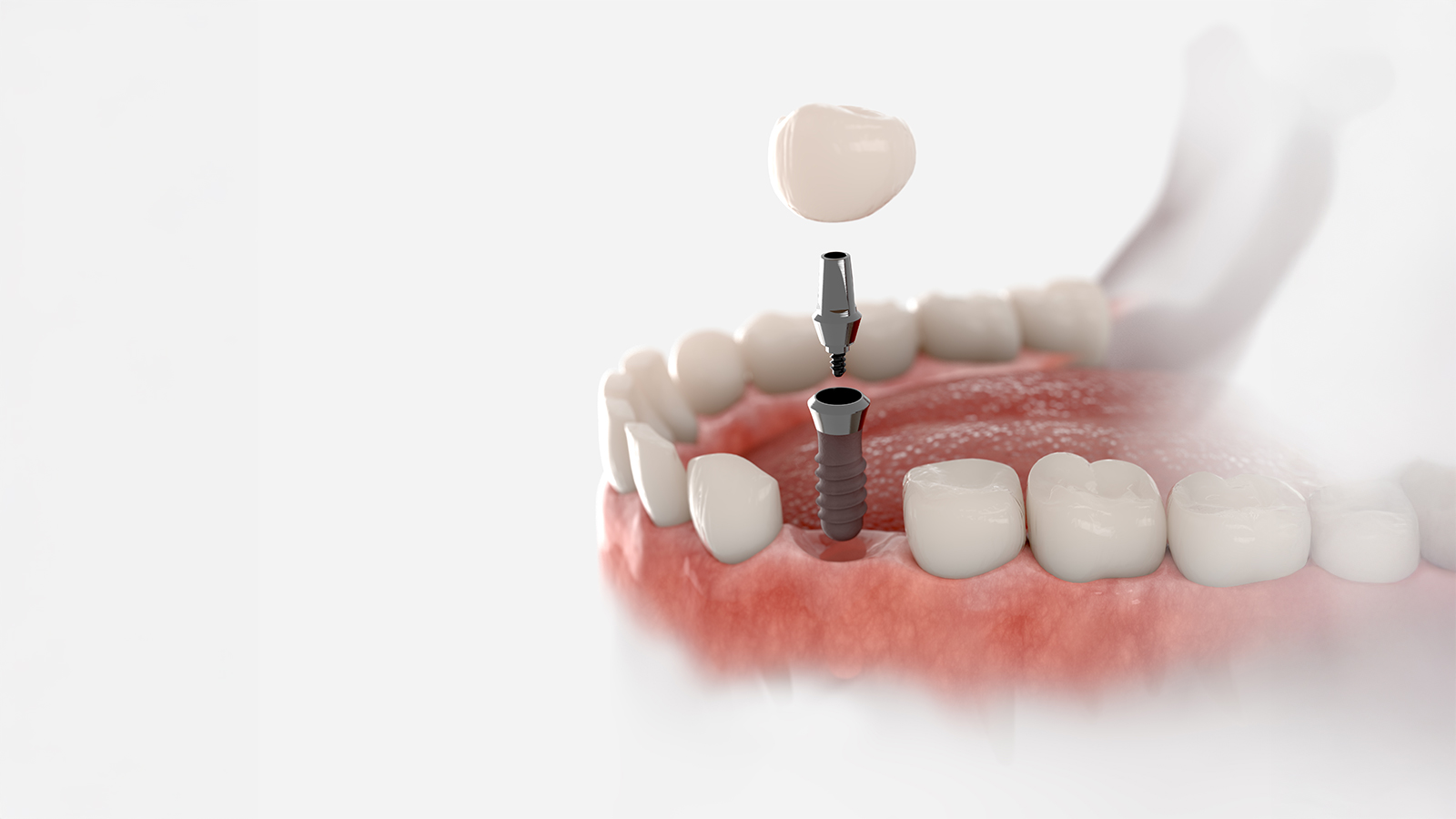
Dental implants are titanium posts surgically placed into your jawbone. Over several months, your bone fuses with the implant through a process called osseointegration, creating a permanent anchor. A custom crown, bridge, or full-arch prosthesis is then attached to those anchors. The result functions like natural teeth.
Dentures are removable prosthetic devices that sit on top of your gums. They are held in place by suction, adhesive paste, or metal clasps that hook onto remaining natural teeth. Modern dentures are custom-molded from acrylic resin and can replace some or all of your teeth.
The fundamental distinction is this: implants replace both the root and the visible tooth. Dentures replace only the visible tooth and rest on the surface of your gums. That single difference drives nearly every other comparison between the two.
How do dental implants and dentures compare on comfort and daily function?
Implants feel and function closest to natural teeth. Because they are anchored in bone, they do not shift when you eat or speak. You brush and floss them the same way you would natural teeth. There is no nightly removal, no soaking solution, and no adhesive paste.
Dentures require a daily routine. You remove them at night, soak them in a cleaning solution, and reinsert them each morning. Many denture wearers use adhesive paste to prevent slipping during meals and conversation. Even with adhesive, dentures can shift or click during eating, particularly with harder or stickier foods.
Chewing ability
Traditional dentures reduce chewing force by roughly 50% to 75% compared to natural teeth. That means foods like steak, raw vegetables, apples, and nuts become difficult or off-limits entirely. Implants restore nearly full chewing function, allowing you to eat without restrictions.
Speech
Loose-fitting dentures can cause slurring or clicking sounds because the prosthetic shifts against your palate and gums. Implants stay fixed in place, so speech is unaffected.
Bone health
This is the factor most patients do not hear about until it is too late. When you lose a tooth, the jawbone beneath it begins to resorb because it no longer receives stimulation from a tooth root. Implants replace that root and stimulate the bone, preserving its structure. Dentures sit on top of the gums and do nothing to stop bone loss. Over time, this leads to a sunken facial appearance and increasingly poor denture fit, which is why dentures need to be relined or replaced every five to ten years.
How much do dental implants cost compared to dentures?
On an upfront basis, dentures are significantly less expensive. A full set of traditional dentures typically costs $1,000 to $3,000 per arch. Higher-quality materials and custom fabrication can push that to $4,000 to $8,000 per arch.
A single dental implant costs between $3,000 and $6,000, depending on your location, the implant brand, and the materials used. Full-arch implant treatment, such as All-on-4, ranges from $15,000 to $30,000 or more per arch.
The 10-year cost picture
The upfront price gap narrows considerably when you look at total cost of ownership over a decade.
Dentures need relines every one to two years, and most require full replacement every five to ten years. Add in adhesive costs, cleaning supplies, and the potential for bone grafting if you eventually switch to implants, and the 10-year cost of dentures can reach $8,000 to $15,000 or more per arch.
Implants, by contrast, have very low ongoing costs after the initial placement. The titanium post itself can last a lifetime with proper care. The crown on top may need replacement after 10 to 15 years at a cost of $800 to $1,500. Routine dental checkups are the only ongoing expense.
The cheapest option on day one is not always the cheapest option over time.
Who is a good candidate for dental implants versus dentures?
Not everyone is a candidate for implants, and dentures are not the right fit for every patient either. The decision depends on several clinical and personal factors.
You may be a strong candidate for dental implants if:
- You have adequate jawbone density to support implant posts (or are willing to undergo bone grafting)
- You are in good overall health and can undergo a surgical procedure
- You do not smoke, or are willing to quit (smoking significantly increases implant failure rates)
- You want a permanent, fixed solution that does not require daily removal
- You prioritize long-term value over the lowest upfront cost
Dentures may be a better fit if:
- You have significant bone loss that makes implant placement complex or impossible without extensive grafting
- You have health conditions that make surgery inadvisable
- Your budget does not allow for implant treatment, even with financing
- You need a faster solution (dentures can be fabricated in weeks, while implants require months of healing)
- You are comfortable with a removable prosthetic and the maintenance it requires
If you are considering full-arch treatment and are unsure whether you qualify for implants, understanding the clinical requirements is an important first step. Our guide on whether you are a candidate for All-on-4 dental implants covers the bone density, health, and lifestyle factors your provider should be evaluating.
What about implant-supported dentures? Is there a middle ground?
Yes. Implant-supported dentures (sometimes called overdentures or snap-on dentures) are a hybrid option that combines elements of both approaches. Two to four implants are placed in the jawbone, and a removable denture snaps onto those implants for added stability.
This option costs less than a full fixed-implant restoration (typically $10,000 to $20,000 per arch) while offering significantly better stability than traditional dentures. The denture still needs to be removed for cleaning, but it does not slip during meals or conversation.
Implant-supported dentures also provide some degree of bone stimulation, though less than a fully fixed implant prosthesis. For patients who want more stability than traditional dentures but cannot afford or do not qualify for a full implant solution, overdentures are worth discussing with your provider.
What questions should I ask my provider about implants versus dentures?
The right provider will not push you toward one option. They will evaluate your specific anatomy, health history, and goals before recommending a treatment plan. Here are seven questions to bring to your consultation:
- Based on my bone density and oral health, am I a candidate for implants, dentures, or both?
- What are the total costs for each option, including follow-up care and potential replacements over the next 10 years?
- Which implant brand do you use, and what is its track record?
- If I start with dentures, how difficult and expensive would it be to switch to implants later?
- What prosthetic material do you recommend for my situation (acrylic, composite, or zirconia)?
- Do you use 3D CBCT imaging to plan treatment?
- Can I see before-and-after photos of patients you have personally treated with each option?
A provider who takes the time to answer these questions thoroughly is demonstrating the kind of transparency you want from someone making decisions about your oral health. For a deeper list of questions and red flags to watch for during consultations, see our guide on how to choose a dental implant provider.

What should I know about recovery before making my decision?
Denture fabrication does not require surgery. You may need extractions to prepare for dentures, but the process is generally faster and less invasive. Most patients adjust to wearing dentures within a few weeks, though some discomfort and a learning curve with eating and speaking are normal.
Dental implant placement is a surgical procedure. Recovery involves an initial healing period of one to two weeks (during which swelling and discomfort are common) followed by a longer osseointegration period of three to six months while the bone fuses with the implants. During this time, you may wear temporary teeth.
For patients considering full-arch implant treatment, understanding the full recovery timeline before you commit is essential. Our All-on-4 Recovery Guide walks through what to expect from day one through final prosthetic delivery, including dietary restrictions and healing milestones at each stage.
How do I find a qualified provider for either option?
Whether you choose implants or dentures, the provider matters as much as the treatment itself. For implants, look for oral surgeons, periodontists, or prosthodontists with specialty training and high annual case volume. For dentures, a prosthodontist is the specialist most trained in designing and fitting prosthetic teeth.
The biggest challenge is that the providers who appear first in search results are not necessarily the most qualified. They are the ones with the largest advertising budgets. A specialist with decades of experience may not appear until page three of Google, while a general dentist running aggressive ads dominates the top spots.
Dental Implant Directory was built to solve this problem. It is an independent directory organized by specialty, location, and credentials rather than by advertising spend. Whether you are leaning toward implants or still comparing your options, you can filter by provider type, review qualifications, and build a shortlist of qualified providers in your area.
The Bottom Line
Dental implants and dentures both restore missing teeth, but they do it in fundamentally different ways with different tradeoffs in comfort, longevity, bone health, and cost. Implants are the closer match to natural teeth and the better long-term investment for most patients, but they require surgery, adequate bone, and a higher upfront commitment. Dentures offer a faster, less invasive, and more affordable starting point, with the understanding that ongoing maintenance and replacement costs add up over time.
The right choice is the one that matches your clinical situation, your lifestyle, and your financial reality. Do not let marketing or pressure tactics make the decision for you. Consult with multiple qualified providers, compare written treatment plans, and give yourself time to decide. And when you are ready, find qualified providers near you at Dental Implant Directory.
Ready to find a qualified provider?
Search our independent directory of dental implant providers organized by specialty, location, and credentials.