Severe upper jaw bone loss has historically left patients with two options: years of bone grafting and sinus lifts before any implant work can begin, or living with dentures for the rest of their life. Zygomatic implants are the third option, and for the right candidate they collapse what used to be an 18 to 24 month rebuild into a single surgical day with same-day teeth. They are also one of the most technically demanding procedures in modern implant dentistry, which means the gap between a great outcome and a serious complication comes down almost entirely to surgeon selection.
This guide covers what zygomatic implants actually are, the bone-loss patterns that make someone a candidate, what the procedure costs, success rates from the clinical literature, what recovery looks like, and the specific credentials to look for before agreeing to surgery.
What are zygomatic dental implants?
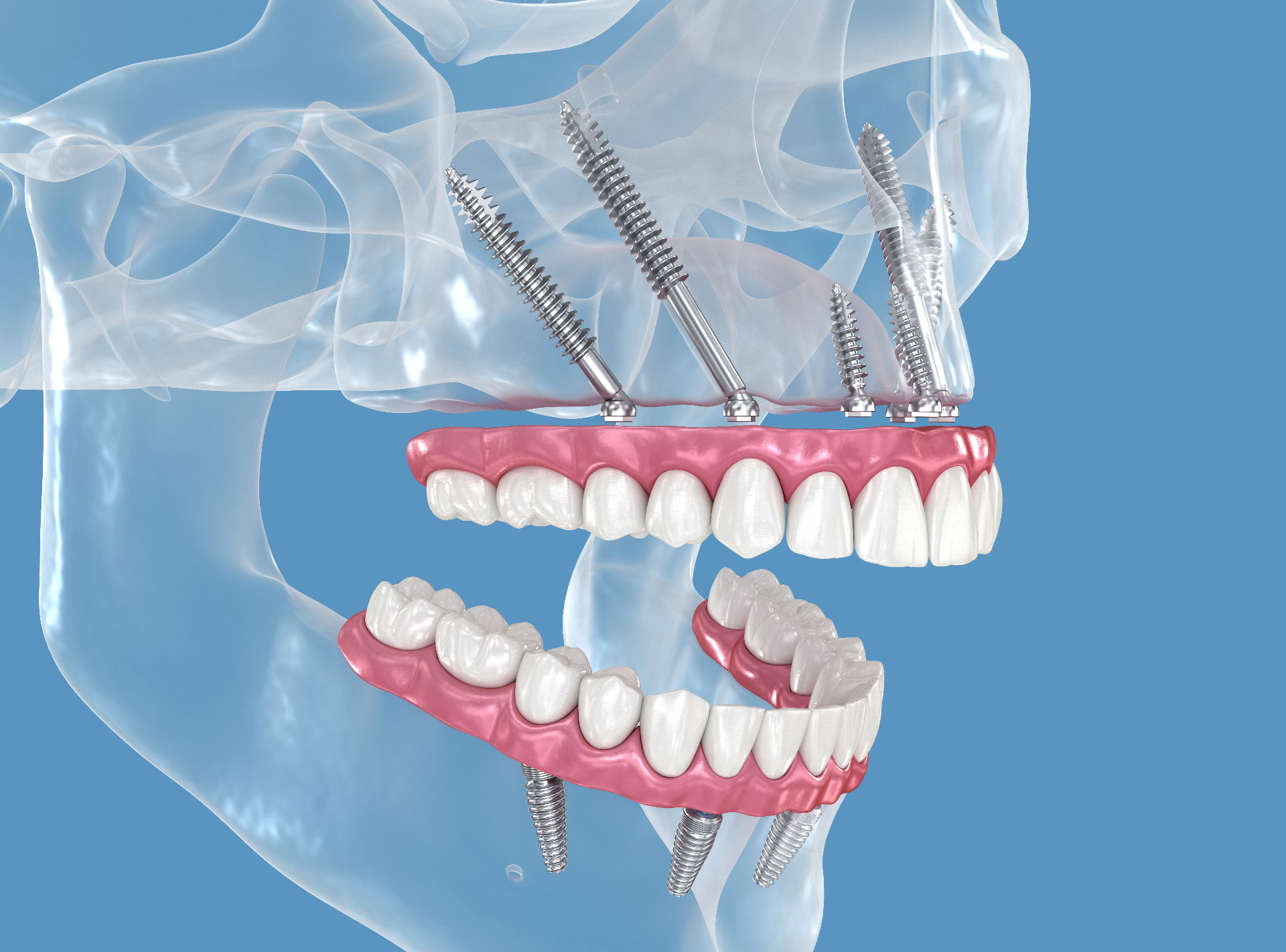
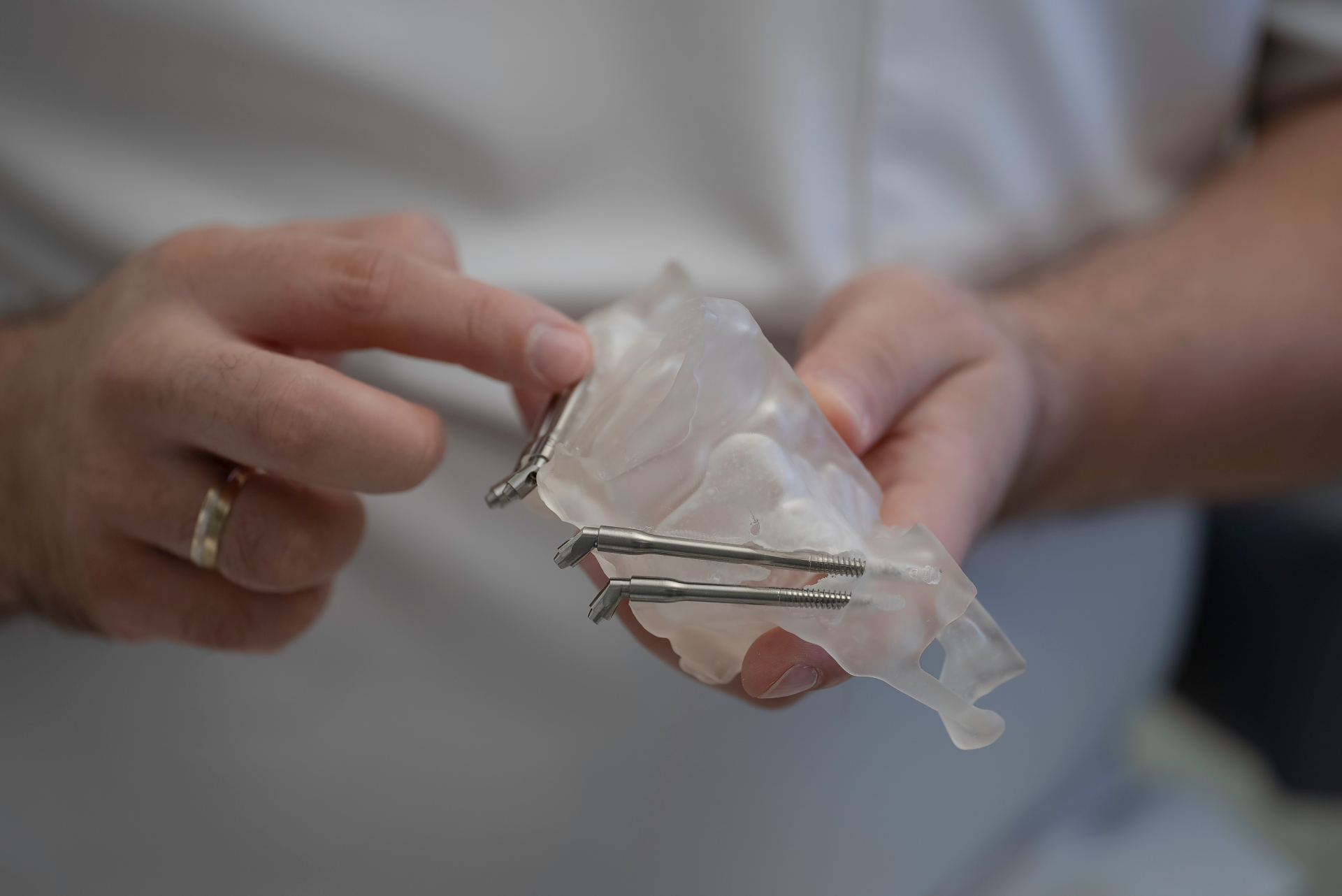
Zygomatic implants are extra-long titanium implants, typically 30 to 55 millimeters in length, that anchor into the zygomatic bone (the cheekbone) instead of the upper jawbone. A standard dental implant is 8 to 16 millimeters long and relies on the maxilla (upper jaw) for stability. When the maxilla has resorbed to the point where it can no longer hold a conventional implant, the zygoma offers an alternate anchor site that is dense, predictable, and reachable through a controlled surgical approach.
The technique was developed by Swedish surgeon Per-Ingvar Brånemark, the same researcher who established modern osseointegration, and has been in clinical use since the late 1990s. A full-arch upper restoration typically uses either two zygomatic implants combined with two or four conventional anterior implants, or four zygomatic implants total in the most severe atrophy cases (the so-called "quad zygoma" approach).
Because the implants engage dense cheekbone rather than soft, resorbed maxillary bone, primary stability at placement is usually high enough to load a temporary fixed bridge the same day as surgery. This is the same immediate-loading principle that makes All-on-4 attractive, applied to patients who would otherwise be ineligible for All-on-4 at all.
Who is a candidate for zygomatic implants?
The clearest candidate is a patient with severe maxillary atrophy who has been told they need extensive bone grafting before conventional implants are possible. Specific clinical situations that commonly lead to a zygomatic referral:
- Long-term denture wearers with significant upper jaw bone resorption. Wearing an upper denture for 10 or more years almost always produces enough bone loss to disqualify a patient from standard implants in the posterior maxilla.
- Failed previous implants in the upper jaw, particularly when failure left behind a thinner ridge than the patient started with.
- Severe periodontal disease that destroyed the supporting bone before the teeth themselves were extracted.
- Trauma or pathology (tumor resection, cysts, infection) that removed a section of the maxilla.
- Patients who have already had sinus lifts or bone grafts fail or who are not medically suitable for those procedures.
- Patients who want a fixed full-arch upper restoration but cannot or will not commit to the 12 to 18 month timeline that grafting and conventional implants require.
A zygomatic candidate is almost never someone with only mild to moderate bone loss. If a conventional All-on-4 case is achievable, that is usually the right path: it is less invasive, less expensive, and performed by a much larger pool of qualified surgeons. Zygomatic implants are the answer when All-on-4 is not on the table.
Disqualifying factors include active sinus infection or uncontrolled chronic sinusitis, untreated severe systemic disease, current heavy smoking with no plan to stop, and certain bone disorders that affect the zygomatic bone itself. A 3D CBCT scan and a sinus and medical workup are non-negotiable parts of candidacy evaluation.
What is the difference between zygomatic implants and All-on-4?
Both procedures restore a full upper arch with a fixed bridge anchored on a small number of implants placed the same day. The difference is where the implants land and how much native bone the patient needs to have left.
Standard All-on-4 uses four conventional implants placed entirely within the maxilla, with the two posterior implants tilted at an angle to avoid the sinus and engage available bone. This requires a maxilla with enough remaining bone height and density (usually at least 5 millimeters in the anterior region and adequate posterior bone for the tilted implants).
Zygomatic protocols, by contrast, anchor one or two implants per side into the cheekbone, bypassing the resorbed maxilla entirely. Common configurations:
- Hybrid zygomatic: two conventional anterior implants plus one zygomatic implant on each side (four implants total).
- Quad zygoma: two zygomatic implants on each side and no conventional implants (four zygomatic implants total). Reserved for the most severe atrophy cases where even the anterior maxilla cannot hold a conventional implant.
The surgical complexity, anesthesia requirements, and surgeon credentials scale up sharply with each step toward more zygomatic implants. Patients who can be restored with conventional All-on-4 should be, and patients who genuinely need zygomatic implants should be sent to a surgeon who places them weekly, not occasionally.
How much do zygomatic implants cost?
Zygomatic full-arch restoration in the United States typically runs $40,000 to $90,000 per arch, with most cases landing between $50,000 and $75,000. The wide range reflects four variables: how many zygomatic implants are used, whether one or both arches are being restored, the prosthetic material (acrylic, zirconia, porcelain-fused-to-metal), and the surgeon's market and case volume.
Representative pricing for the most common configurations:
- Hybrid zygomatic full arch (two zygomatic plus two conventional implants, single arch): $40,000 to $65,000.
- Quad zygoma full arch (four zygomatic implants, single arch): $55,000 to $90,000.
- Zirconia prosthetic upgrade: add $5,000 to $15,000 per arch versus acrylic.
- CBCT scan and surgical planning: $400 to $1,200, often bundled into the case fee.
- IV sedation or general anesthesia: $1,500 to $4,000 depending on duration and provider.
A few honest cost comparisons matter here. The alternative to zygomatic surgery is usually extensive bone grafting followed by conventional implants, and when that pathway is realistically priced (multiple grafting procedures, 12 to 18 months of provisional dentures, the conventional implant case itself, and the final prosthesis) the total often lands within $10,000 to $20,000 of what zygomatic implants cost in a single surgical day. The zygomatic pathway is typically faster and avoids the unpredictability of graft success or failure.
Dental insurance generally does not cover zygomatic implants meaningfully. Some PPO plans will reimburse a portion against the maximum annual benefit (typically $1,500 to $2,500), and medical insurance occasionally covers a portion when the case stems from trauma, tumor resection, or congenital defect. Most patients finance through CareCredit, LendingClub, Proceed Finance, or in-house clinic plans.
What is the success rate of zygomatic implants?
Published clinical data on zygomatic implants is consistently strong. Long-term studies typically report cumulative success rates between 96 and 98 percent over five to ten years, comparable to or slightly higher than conventional implants placed in well-grafted maxillary bone.
The most cited long-term datasets, including multi-center reviews tracking thousands of zygomatic implants, generally show:
- Less than one year: roughly 98 to 99 percent success.
- One to three years: roughly 97 to 98 percent.
- Three to five years: roughly 96 to 97 percent.
- Five years and beyond: roughly 95 to 96 percent.
Two caveats are important. First, these figures are reported by surgeons who place zygomatic implants regularly and who have the case selection discipline to turn down patients who are not good candidates. Outcomes in low-volume hands are not necessarily comparable. Second, "success" in the zygomatic literature usually means the implant is still in place and supporting a functional prosthesis, not that no complications occurred along the way. Sinus complications, soft-tissue irritation, and the need for prosthetic adjustments are tracked separately and occur in a meaningful minority of cases.
The single biggest predictor of a successful outcome is surgeon experience with the specific protocol being used.
What is recovery like after zygomatic implant surgery?
The first 48 to 72 hours involve significant facial swelling, bruising that often extends below the eyes, and moderate discomfort managed with prescription pain medication for the first few days and over-the-counter analgesics after that. Most patients describe the recovery as more involved than a conventional All-on-4 but less prolonged than they expected, largely because the temporary fixed bridge is in place the same day.
A realistic recovery timeline:
- Days 1 to 3: significant swelling and facial bruising, soft and cold foods only, head elevated when sleeping, no exertion. Most patients take prescription pain medication.
- Days 4 to 7: swelling peaks around day 3 and begins resolving by day 5 to 7. Most patients transition to over-the-counter pain management. Soft food diet continues.
- Weeks 2 to 4: visible bruising fades, swelling resolves, and patients return to most normal activities. Diet expands to soft and moderate-texture foods.
- Months 1 to 4: osseointegration period. The temporary bridge stays in place, the patient eats a modified diet, and follow-up visits track healing.
- Months 4 to 6: final prosthesis is fabricated and placed. The patient transitions to full chewing function.
Sinus precautions matter more after zygomatic surgery than after conventional implants because the implants pass through or near the maxillary sinus. Patients are typically told to avoid blowing the nose forcefully for 2 to 4 weeks, sneeze with the mouth open, avoid air travel for 7 to 14 days, and avoid drinking through straws or using CPAP without specific surgeon clearance during the early healing window.
A more detailed walkthrough of the broader full-arch recovery process is available in the DID All-on-4 recovery guide, and most of the same milestones apply to zygomatic cases with the added sinus and swelling considerations described above.
What are the risks and complications of zygomatic implants?
The genuine risks, in roughly the order they actually occur:
- Sinus complications. Because the implants engage or traverse the maxillary sinus, sinusitis is the most common complication, reported in roughly 3 to 7 percent of cases in the long-term literature. Most cases resolve with antibiotics and time; a small minority require additional intervention.
- Soft tissue irritation around the implant emergence. The angle at which zygomatic implants exit the gum tissue can create chronic irritation that requires prosthetic adjustment or, occasionally, a soft-tissue revision.
- Implant failure. At 2 to 4 percent over five to ten years, zygomatic implant failure is uncommon but consequential when it occurs because the salvage options are more limited than with conventional implants.
- Facial swelling and bruising. Universal in the first week, but extensive bruising below the eyes can be alarming if patients are not warned in advance. It is cosmetic, not dangerous.
- Sensory disturbance. Temporary numbness or altered sensation in the cheek, gum, or upper lip occurs in a meaningful minority of cases and almost always resolves within weeks to months. Permanent sensory change is rare.
- Orbital or skull-base injury. Extremely rare in experienced hands but theoretically possible with anatomically aggressive placement. This is the single most important reason that surgeon credential and case volume matter so much for zygomatic surgery.
- Prosthetic complications. Chipped acrylic, loose screws, and occasional bridge fractures are routine across all full-arch restorations and are not unique to zygomatic cases.
The right way to read this list is not as a reason to avoid zygomatic implants but as the basis for the credentialing conversation in the next section.
What credentials should a zygomatic implant surgeon have?
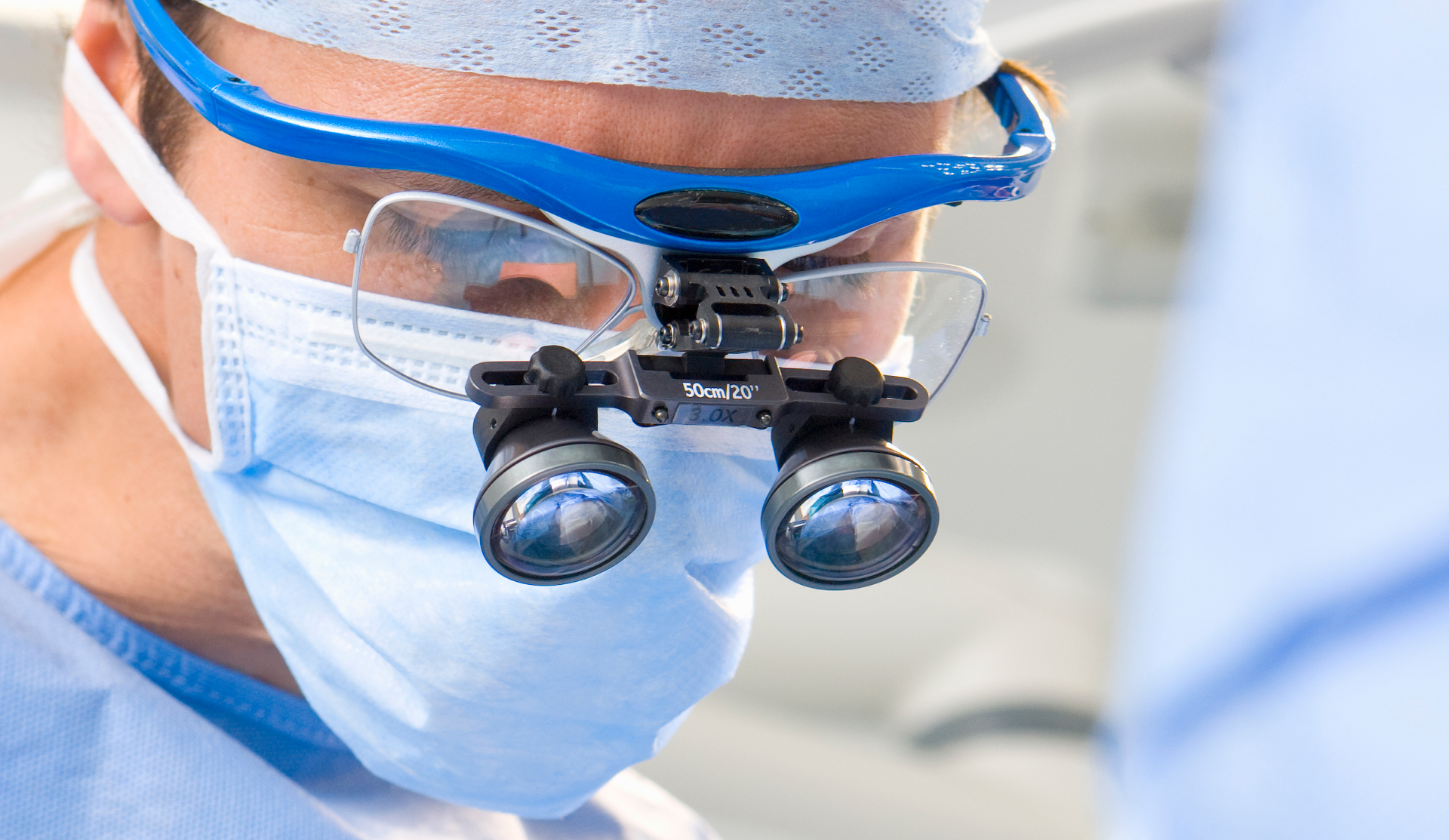
Zygomatic implants are not a procedure that a generalist or a part-time implantologist should be performing. The anatomy is unforgiving, the consequences of a complication are larger, and the learning curve is measured in dozens of cases, not a weekend course. Specific things to verify:
- Specialty training. The strongest credential is board certification through the American Board of Oral and Maxillofacial Surgery (ABOMS), which signals four to six years of hospital-based surgical residency. Board-certified periodontists (ABP) with documented zygomatic training and high case volume are the other defensible credential. A general dentist with a weekend course is not.
- Documented case volume. Ask how many zygomatic cases the surgeon has placed in their career, and how many they perform per month or per year. Surgeons who do this work seriously typically place zygomatic implants weekly. A surgeon who has done "a few" is a different conversation.
- Hospital privileges. Many zygomatic cases are performed in a hospital setting or in an accredited ambulatory surgery center under general anesthesia. Hospital privileges are both a credentialing signal and a safety infrastructure that matters when something unexpected happens.
- CBCT planning and surgical guides. Modern zygomatic surgery uses 3D CBCT imaging, virtual surgical planning, and often patient-specific surgical guides. A surgeon who is planning these cases on a panoramic X-ray is using the wrong tools.
- Anesthesia setup. Zygomatic surgery is typically performed under IV sedation administered by a dental anesthesiologist or MD anesthesiologist, or under general anesthesia in a hospital. Confirm who is administering anesthesia and what their credential is, and confirm that the facility has emergency airway and resuscitation equipment.
- Manufacturer system and training. Major zygomatic implant systems include Nobel Biocare (Brånemark, NobelZygoma), Southern Implants (Co-Axis, External Zygoma), Straumann, and Neodent. Ask which system the surgeon uses and where they received manufacturer-specific zygomatic training.
- Written treatment plan and warranty. A serious surgeon provides a written treatment plan covering the case, the temporary prosthesis, the final prosthesis, follow-up visits, and what is covered if a complication develops. Warranty terms vary, but the existence of a written warranty is itself a credentialing signal.
The general principles for evaluating any implant provider apply here in a more demanding form, because the consequences of choosing the wrong provider for zygomatic surgery are correspondingly larger.
How do I find a zygomatic implant surgeon near me?
Zygomatic surgeons are concentrated in major metropolitan areas because the case volume needed to maintain the skill set requires a population base. Most US patients will travel at least some distance for this procedure, and that is normal. A practical sequence:
- Get a 3D CBCT scan and a written assessment from a credentialed implant surgeon, even if you do not intend to have surgery there. The scan establishes whether zygomatic implants are actually indicated.
- Shortlist three surgeons who place zygomatic implants regularly. Search by credential (ABOMS-certified oral and maxillofacial surgeons or board-certified periodontists), then filter for documented zygomatic experience.
- Request consultation reviews of your CBCT from each shortlisted surgeon. Many will do this remotely.
- Ask each surgeon directly: how many zygomatic cases have you placed, what is your complication rate, what is your protocol if a complication develops after I have returned home, and what is the written warranty.
- Verify board certification on the relevant specialty board website (ABOMS for oral and maxillofacial surgeons, ABP for periodontists).
- Confirm anesthesia and facility setup before committing.
The Dental Implant Directory lists implant providers organized by specialty and location, which is a reasonable place to begin building that shortlist and to compare credentialed surgeons in your region against any single recommendation you receive.
The Bottom Line
Zygomatic implants are the right answer for a specific patient: severe upper jaw bone loss, no realistic path to conventional implants without years of grafting, and a desire for a fixed full-arch restoration in a single surgical day. The clinical data is strong, success rates rival conventional implants, and the procedure has been in widespread use for more than two decades. The variable that determines outcome is surgeon selection, and that selection is more consequential here than for almost any other restorative procedure. A board-certified oral and maxillofacial surgeon or periodontist placing zygomatic implants weekly in a properly equipped facility is a different decision than a general dentist who took a course. And when you are ready, find qualified providers near you at Dental Implant Directory.
Ready to find a qualified provider?
Search our independent directory of dental implant providers organized by specialty, location, and credentials.