Search for the cost of a dental implant and the first ten answers disagree by thousands of dollars. Some quote the implant alone, some quote the implant with its crown, some quote a full arch and call it "implants," and the advertised specials leave out the parts you cannot skip. Patients walk into consultations with a number in their head that has nothing to do with what they will be asked to pay.
The honest answer is a range, and the range is wide for reasons that are knowable: where you live, what part of the procedure the number covers, how much preparation your mouth needs, and who is doing the work. Once you know what moves the number, a quote either makes sense or it does not.
This guide gives the 2026 ranges for each kind of implant treatment, explains what each range includes, and shows you how to check a quote against it.
How much does a single dental implant cost?
A single implant fixture averages about $2,143 across the United States in 2026, based on the state-level pricing behind the Dental Implant Directory cost estimator, and the complete tooth, meaning fixture plus abutment plus crown, typically runs $3,500 to $6,500. Add $500 to $3,000 if you need an extraction, a bone graft, or sedation.
What the fixture price covers
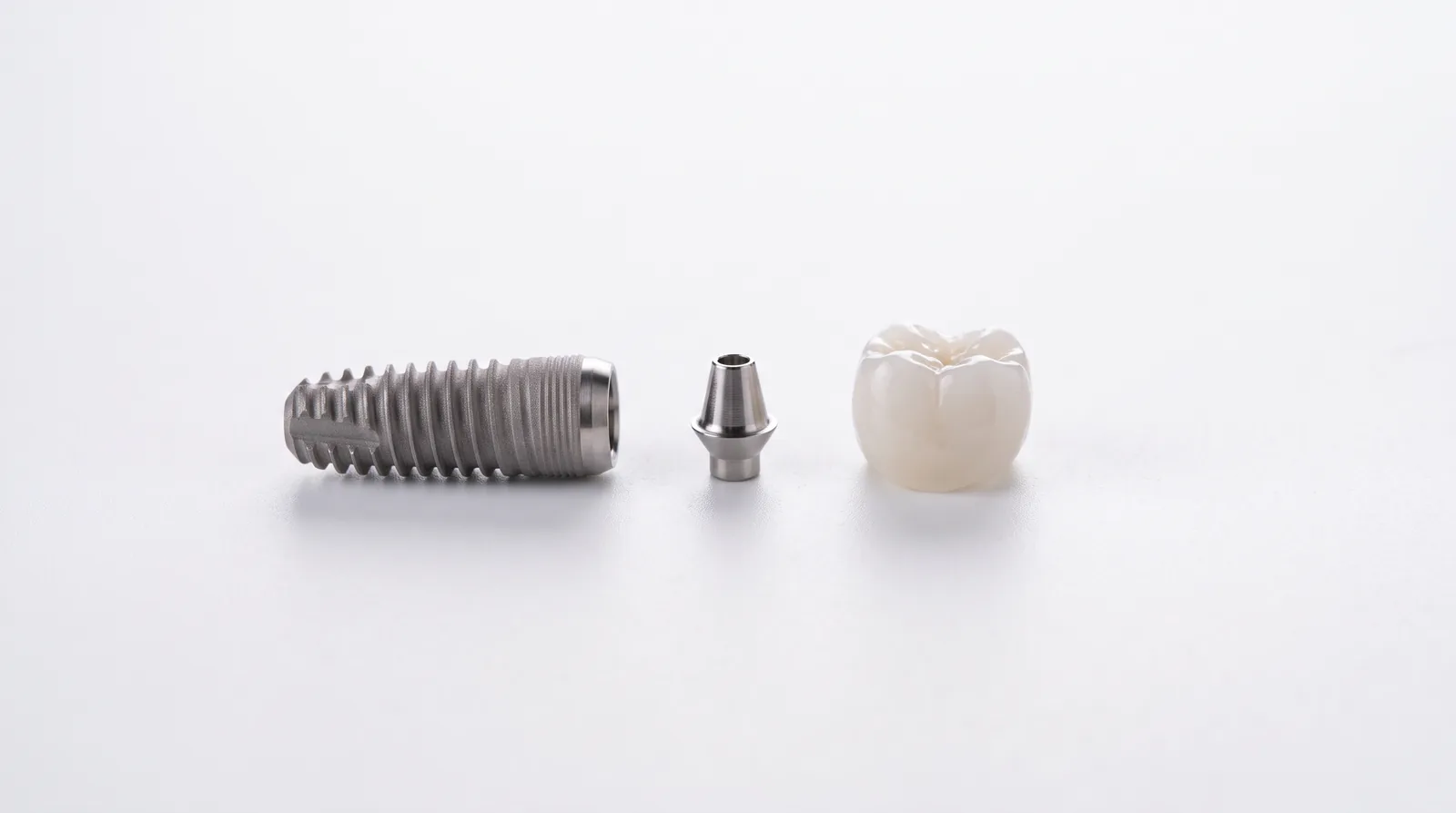
The fixture is the titanium post placed in the bone. Its price includes the surgery to place it and usually the follow-up visits during healing. It does not include the abutment, the connector that rises through the gum, or the crown, the visible tooth. Some practices quote all three as one number. Many quote the fixture and treat the rest as separate line items, which is where most of the sticker shock comes from.
The state spread
The same fixture averages $1,790 in Alabama and $3,565 in Hawaii, with most states between $1,850 and $2,500. Cost of living, provider density, and lab costs drive the gap. The state-by-state cost guide lists every state with links to local providers.
What the crown adds
An implant crown runs $1,000 to $2,500 depending on material and lab. Zirconia and layered porcelain sit at the top of the range. The abutment adds $300 to $800 more, less if it is a stock part and more if it is custom milled.
How much do multiple dental implants cost?
Two to four implants replacing individual teeth cost roughly the single price multiplied, with modest savings on surgery time and imaging. An implant-supported bridge, which replaces three or four adjacent teeth on two implants, costs less than three separate implants because two fixtures do the work of three.
Implant bridge versus separate implants
Three adjacent missing teeth can be restored with three implants and three crowns, roughly $10,000 to $18,000, or with two implants supporting a three-unit bridge, roughly $7,000 to $12,000. The bridge saves a fixture and a surgery site. The trade is that the middle tooth has no implant beneath it, so the bridge depends on the two that do.
When multiple implants become a full-arch conversation
Once a patient is missing six or more teeth in one arch, or the remaining teeth are failing, most providers start comparing the cost of saving what is left against replacing the arch. That comparison is where a lot of patients get steered toward a bigger plan than they need, and a second opinion is worth its fee.
How much do full mouth dental implants cost?
A fixed full-arch bridge on four to six implants runs from the mid teens to the high thirties of thousands per arch in 2026, with the national average for All-on-4 sitting around $30,352 per the state data behind the estimator. Both arches double that. A removable implant-supported denture on two to four implants runs well below a fixed bridge.
The All-on-4 cost breakdown covers what a full-arch quote includes and why advertised prices are rarely the final number. The full mouth cost guide compares the fixed and removable options side by side.

What drives the price of a dental implant up or down?
Location, the provider's specialty, the amount of preparation your mouth needs, the materials, and whether the practice bundles or itemizes. Two of these you cannot change. Three of them you can shop.
Location
Prices track cost of living. Metro areas cost more than small cities in the same state, and coastal states cost more than the interior. Driving an hour can save a meaningful amount on a single implant and a large amount on a full arch.
Specialty
Oral surgeons and periodontists usually charge more to place an implant than a general dentist does, and the crown is often made by a different dentist, which means two bills. Some general dentists with advanced training place and restore implants at a single fee. The guide to which specialist should place your implants explains what you are paying for with each.
Preparation
An extraction with socket preservation, a bone graft, a sinus lift, or a ridge augmentation each add hundreds to a few thousand dollars and months to the timeline. A CT scan tells the provider what you need before a quote is written. A quote given without one is a guess.
Materials
Titanium implants are the standard. Zirconia implants cost more and have a shorter track record. Crown material moves the price by a few hundred dollars. Brand matters less to the price than patients expect, but a provider should be able to name the implant system they use.
Bundling
A bundled quote covers surgery, abutment, crown, and follow-up in one number. An itemized quote lists each. Neither is better, but they cannot be compared until both are in the same form. Ask every provider for an itemized plan even if they quote a bundle.
What should a dental implant quote include?
Every quote should list the CT scan, the extraction if needed, any grafting, the implant fixture, the abutment, the crown, sedation, and follow-up visits, each with its own price. If a line is missing, ask whether it is included or not needed. The dental implant cost calculator guide walks through building the total line by line and the add-ons patients most often miss.
How do you know if a dental implant price is fair?
Compare it to your state's average, ask what it includes, and get a second quote from a provider of a different type. A price well below the state average usually leaves something out or reflects a provider with little implant experience. A price well above it should come with a reason you can see on your scan.
- Look up your state's average on the state cost guide.
- Ask for an itemized plan that includes the crown and any grafting.
- Get a second itemized quote, ideally from a specialist if the first was a general dentist or the reverse.
- Ask each provider how many implants they placed last year and what happens if yours fails.
- Ask what the price would be at a dental school clinic in your area if cost is the deciding factor.
Why do advertised dental implant prices look so much lower?
Because the advertisement prices the part of the procedure that costs the least. A "$999 implant" special is the fixture alone, quoted without the abutment, the crown, the CT scan, the extraction, or the grafting most patients need. By the time the treatment plan is written, the number has tripled, and the practice will say, accurately, that the implant itself was $999.
The three common versions
The fixture-only special is the most frequent. The second is the "free consultation" that exists to get you into a financing conversation before you have a full quote. The third is a full-arch package that includes the temporary teeth but not the final bridge, which is the most expensive single component. None of these are illegal. All of them are designed to make the first number small.
How to read one
Ask a single question: what is the total for a finished tooth, or a finished arch, with nothing left to add? A practice that answers with a complete itemized number is quoting honestly. A practice that keeps returning to the advertised figure is not. The guide to choosing a dental implant provider covers the other signals that separate a careful practice from a sales operation.
Does insurance or financing change the price?
Insurance rarely changes it much. A plan that covers implants pays 50 percent up to an annual maximum of $1,000 to $2,500, and many plans exclude the implant while covering the crown or the extraction. The guide to dental insurance and implants explains the clauses that decide it. Financing changes when you pay rather than what you pay, and the comparison of dental lenders covers the terms that matter.
The Bottom Line
A single dental implant fixture averages about $2,143 nationally in 2026, a complete single tooth runs $3,500 to $6,500, and a fixed full arch runs from the mid teens to the high thirties of thousands, with your state and your mouth's preparation needs moving the number more than anything else. A fair quote is itemized, includes the crown and any grafting, sits near your state's average, and comes from a provider who can show you on a CT scan why it is what it is. And when you are ready, find qualified providers near you at Dental Implant Directory.
Ready to find a qualified provider?
Search our independent directory of dental implant providers organized by specialty, location, and credentials. Find Providers Near You.
Ready to find a qualified provider?
Search our independent directory of dental implant providers organized by specialty, location, and credentials.