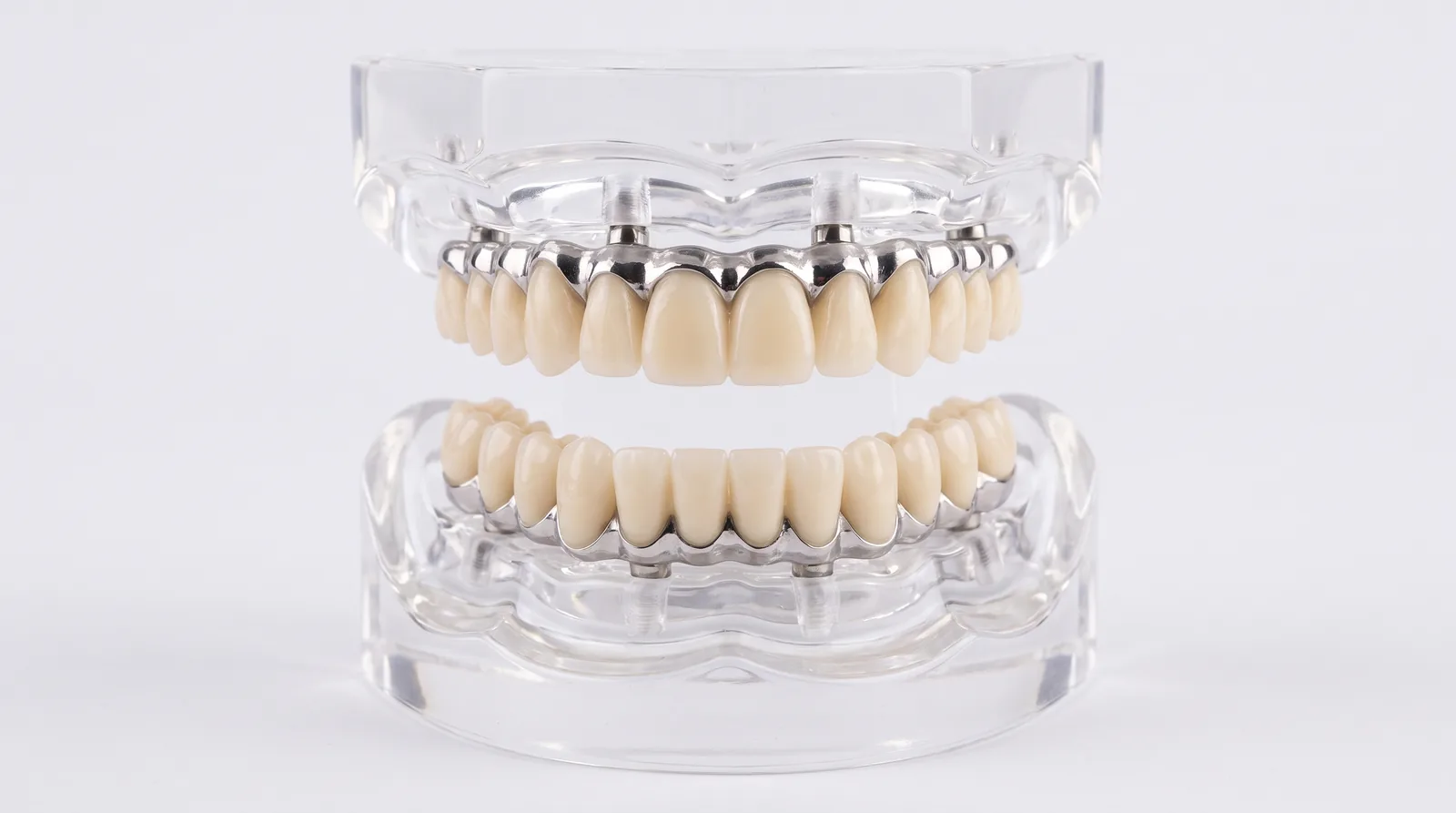
"Full mouth dental implants" is the most expensive phrase in dentistry and the least precise. It can mean a fixed bridge on four implants per arch, a removable denture that snaps onto two implants, or twenty-eight individual implants with twenty-eight crowns. The prices for those three range from a used car to a house down payment, and the advertised numbers almost never say which one they describe.
That imprecision costs patients money in both directions. Some assume full mouth means the six-figure version and never book a consultation. Others see a low advertised price, book, and discover it covers one arch of the cheapest option with the final teeth billed separately.
This guide lays out each full mouth option, what it costs in 2026, what each price includes, and how to decide between them.
What does "full mouth dental implants" actually mean?
It means replacing all the teeth in one or both arches using implants for support, and there are three ways to do it. A fixed full-arch bridge is a row of teeth screwed permanently onto four to six implants per arch. An implant-supported overdenture is a removable denture that snaps onto two to four implants. Individual implants replace each tooth with its own fixture and crown, which is rare for a whole mouth because of the cost and the number of surgeries.
When a provider quotes full mouth implants, the first question is which of these three they mean, and the second is whether the quote is for one arch or two.
How much does a fixed full-arch bridge cost?
A fixed bridge on four to six implants runs from the mid teens to the high thirties of thousands per arch in 2026, with the national average for All-on-4 around $30,352 per the state pricing data behind the Dental Implant Directory estimator. Both arches run from roughly $30,000 to well over $60,000, and premium practices using zirconia on both arches can exceed $70,000.
What moves the price
The bridge material is the largest variable after location. An acrylic hybrid bridge sits at the low end and a zirconia bridge adds $8,000 to $15,000 per arch. Implant count matters next: six implants cost more than four. Then extractions, grafting, and sedation, which are sometimes bundled and sometimes not. The All-on-4 cost breakdown explains each line, and the zirconia versus acrylic comparison covers the material decision.
The temporary-to-final trap
Most fixed full-arch quotes include the temporary teeth placed on surgery day. Not all include the final bridge made months later, which is the expensive part. Ask directly whether the final is in the number. The guide to temporary versus final teeth explains why they are different and what to expect at the switch.
How much does an implant-supported denture cost?
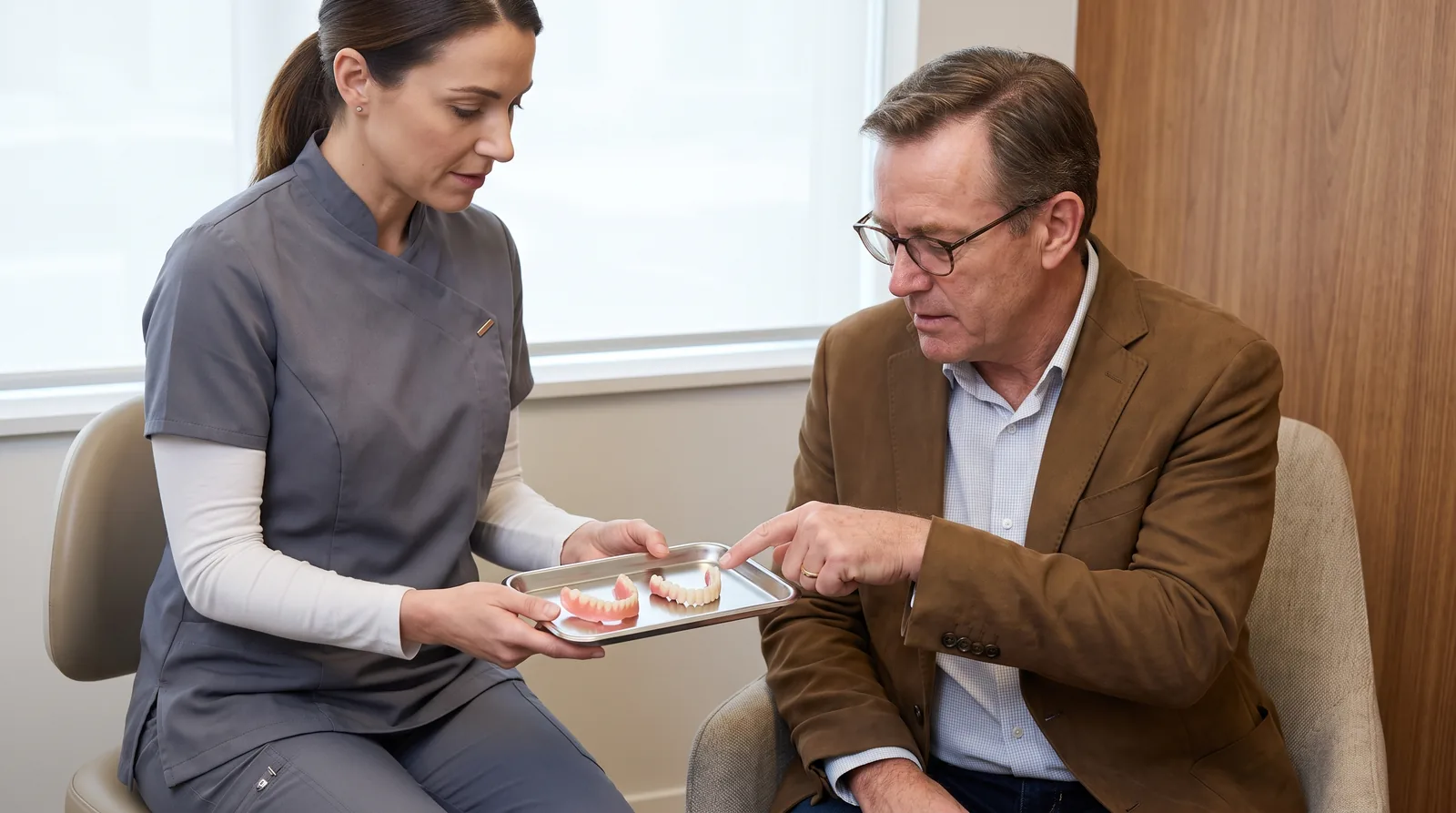
A removable overdenture on two to four implants runs well below a fixed bridge per arch, typically in the range of a few thousand dollars per implant plus the denture itself. It is the most common full-mouth option for patients whose priority is stability at a lower price, and it is often the only fixed-or-removable implant option that fits in a limited budget.
What you give up
The denture comes out at night and for cleaning. Chewing force is much better than a conventional denture but below a fixed bridge. The snap attachments wear and are replaced periodically, and the denture itself is replaced on a cycle closer to a conventional denture than to a fixed bridge. The guide to implant-supported dentures covers the daily experience and the maintenance.
When it is the right choice
Patients with limited budgets, patients who prefer a removable appliance they can clean thoroughly, and patients whose bone will support two implants but not four are the usual candidates. Some patients start with an overdenture and convert to a fixed bridge later by adding implants.
How much do individual implants for every tooth cost?
Replacing every tooth with its own implant and crown is the most expensive route and the least common. At $3,500 to $6,500 per complete tooth, a full mouth of individual implants can reach six figures, and it requires bone at every site, which few patients missing all their teeth have. Most providers reserve individual implants for patients who are missing several teeth in different places rather than an entire arch.
A middle path exists. Implant-supported bridges, where two implants hold three or four teeth, can restore a mouth with eight to twelve implants rather than twenty-eight. The cost sits between a fixed full-arch bridge and individual implants, and the result is closer to natural teeth than a single-piece bridge. It requires more bone and more surgeries than All-on-4.
How do the three options compare?
The fixed bridge wins on function and convenience and costs the most of the two common options. The overdenture wins on price and cleanability and asks you to accept a removable appliance. Individual implants win on feel and cost the most of all, and few full-mouth patients qualify.
Chewing and speech
Fixed bridges restore chewing close to natural teeth. Overdentures restore most of it. Both take a few weeks of speech adjustment, and a bulky bridge can take longer than a well-made overdenture.
Bone
All three options stop the bone loss that a conventional denture accelerates, because all three load the bone through implants. An overdenture on two implants preserves bone around those two but less across the rest of the ridge than a fixed bridge on four to six.
Maintenance
A fixed bridge is cleaned in place with a water flosser and specialized brushes and is removed by the provider every year or two for a deep cleaning. An overdenture is cleaned like a denture, with the attachments checked at visits. Individual implants are brushed and flossed like teeth. The guide to All-on-4 problems and failure explains why cleaning under a fixed bridge is the habit that decides its lifespan.
Twenty-year cost
A fixed bridge replaced once at year ten costs more over twenty years than an overdenture relined and replaced on schedule, but less than most patients expect once denture relines and replacements are added up. The guide to whether implants are worth the cost runs the numbers.
Who is a candidate for each option?
Bone, health, and budget decide. A fixed full-arch bridge needs enough front-jaw bone for four implants, or a surgeon who places zygomatic implants where it is missing. An overdenture needs bone for two. Individual implants need bone at every site. Health conditions that affect healing apply to all three, and the guide to what disqualifies patients from implants covers which ones are fixable.
The All-on-4 with severe bone loss guide explains what happens when the bone is not there for a fixed bridge and what the surgeon can do about it.
How long does each full mouth option take?
A fixed full-arch bridge takes one surgery day plus four to six months of healing before the final bridge, with temporary teeth in place the whole time. An overdenture takes a surgery day, a healing period of three to six months, and then the attachment of the denture, often with a modified existing denture worn meanwhile. Individual implants across a mouth take the longest, because sites are usually staged across several surgeries and each needs its own healing period.
The fixed bridge timeline
Extractions, implant placement, and temporary bridge on day one. Soft diet for weeks, with the temporary adjusted as needed. Final impressions after healing, then several fitting visits for the final bridge. The week-by-week recovery guide covers each stage.
The overdenture timeline
Implants are placed and usually left to heal under the gum or beneath a modified denture. Once integrated, the attachments are fitted and the denture is converted or remade to snap on. Some patients receive immediate attachments when bone quality allows.
Why the timeline matters for cost
Longer timelines mean more visits and more temporaries, which is one reason individual implants cost so much more for a full mouth. They also matter for insurance and pre-tax accounts, since a case that spans two benefit years can draw on two annual maximums and two FSA elections.
How do you get an accurate full mouth quote?
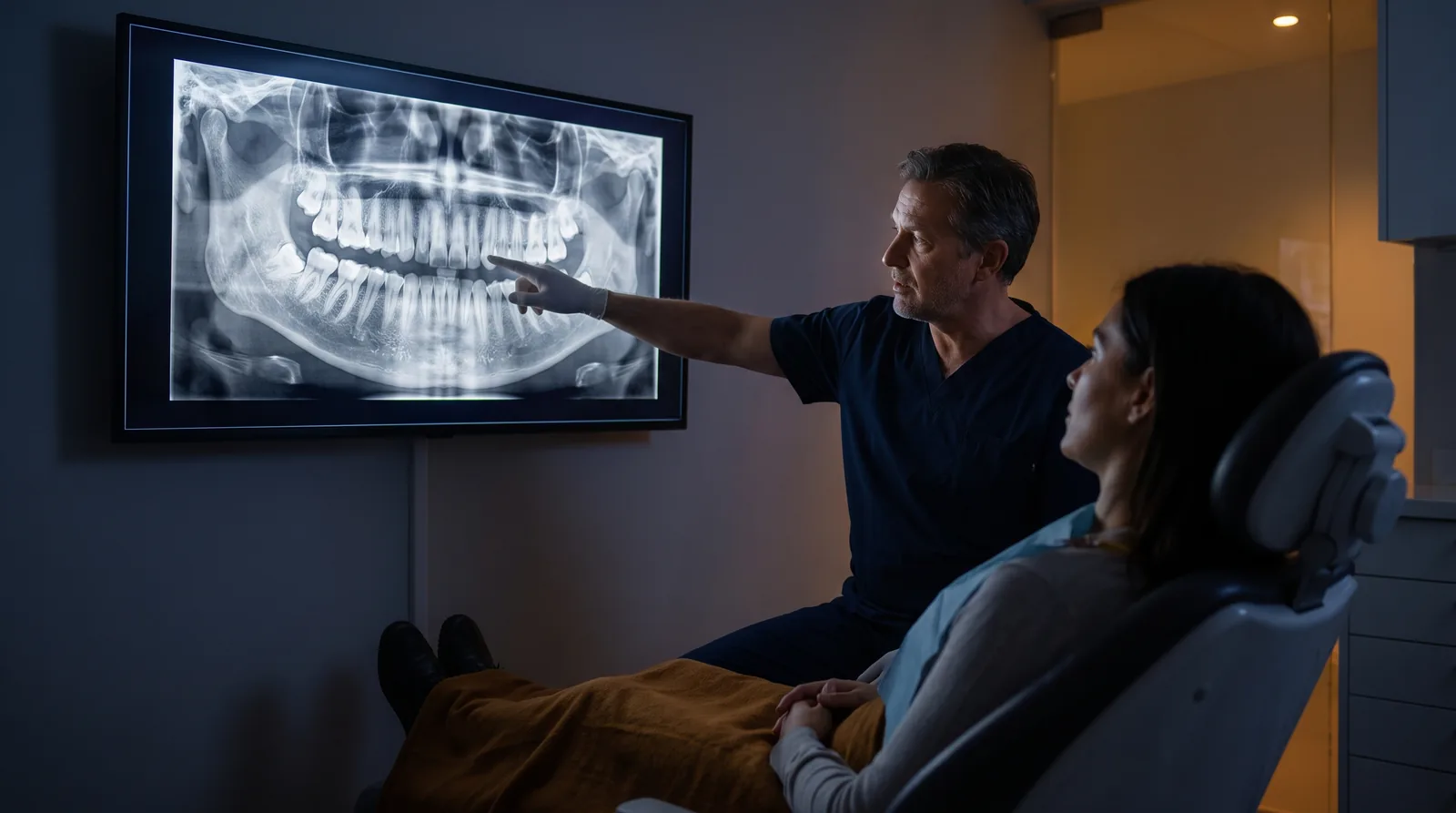
Get a CT scan, ask for an itemized plan for each option you are considering, confirm whether each quote covers one arch or two and whether the final teeth are included, and get a second opinion before any plan that removes teeth that could be saved.
- Ask which of the three options the provider is quoting and why it fits your scan.
- Confirm one arch or both.
- Confirm the final bridge or denture is in the number, not just the temporary.
- Ask what extractions, grafting, and sedation add if they are not bundled.
- Ask what maintenance costs per year and what a replacement bridge or denture costs later.
- Get the same itemized plan from a second provider.
How do people pay for full mouth implants?
Mostly through financing, since insurance contributes little toward a cost this size. Dental plans that cover implants cap out at $1,000 to $2,500 per year, and the guide to insurance and All-on-4 explains how to get the most from one. The comparison of CareCredit, LendingClub, and Proceed Finance covers the lenders most full-arch practices offer and the terms that matter on a $30,000 case.
The Bottom Line
Full mouth dental implants means one of three things: a fixed bridge on four to six implants per arch at the mid teens to high thirties of thousands per arch, a removable overdenture on two to four implants at a fraction of that, or individual implants for every tooth at a price few patients pay and few mouths support. The fixed bridge is the best function for the money for most patients who can afford it and maintain it, the overdenture is the right answer for many who cannot, and every quote needs to say which option, how many arches, and whether the final teeth are included. And when you are ready, find qualified providers near you at Dental Implant Directory.
Ready to find a qualified provider?
Search our independent directory of dental implant providers organized by specialty, location, and credentials. Find Providers Near You.
Ready to find a qualified provider?
Search our independent directory of dental implant providers organized by specialty, location, and credentials.