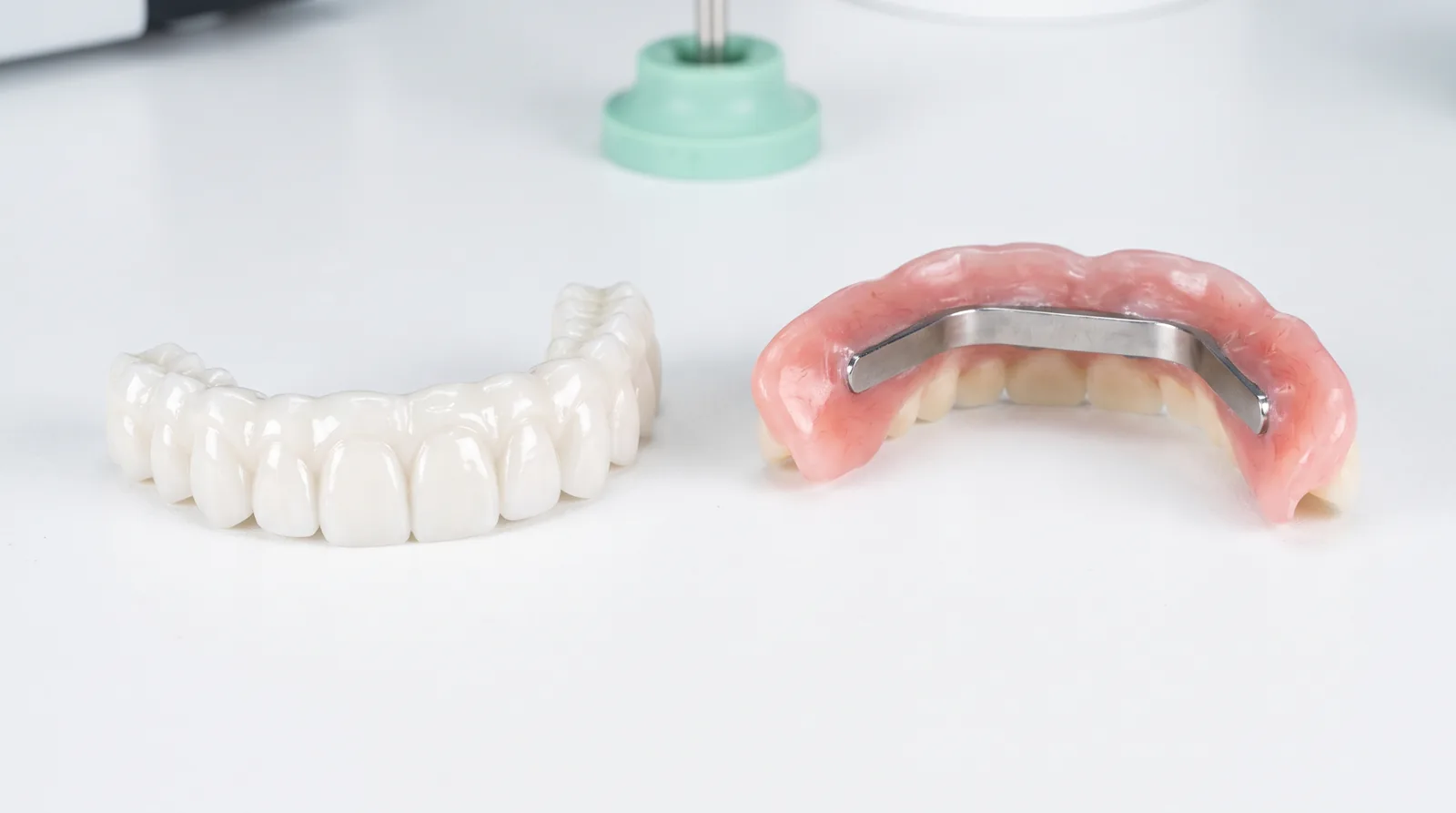
The material of your final All-on-4 bridge is the single decision that changes the price the most after the implant count, and it is the one most patients make in thirty seconds at the end of a consultation. Zirconia can add $8,000 to $15,000 per arch over acrylic. Acrylic can send you back for repairs and a full replacement within a decade. Either choice is defensible, and either choice is wrong for some patients.
Providers tend to have a preference and present it as the obvious answer. Practices built around volume lean toward acrylic because it is faster and cheaper to make. Practices that position themselves as premium lean toward zirconia because it justifies the fee. What the patient needs is the actual trade: what each material costs over ten years, not just on day one, and which problems each one is prone to.
This guide lays out that trade so you can choose the material for your mouth rather than the material your provider prefers.
What are All-on-4 bridges made of?
Nearly all final All-on-4 bridges are made of one of two materials: acrylic denture teeth and pink acrylic fused to a titanium support bar, or a single piece of milled zirconia with color applied to the teeth and gums. A third option, porcelain fused to metal, was common a decade ago and is now rare in full-arch work because it chips easily and is heavy. A newer category of high-performance polymers and hybrid materials exists but has a short track record.
Acrylic on a titanium bar
This is the traditional hybrid bridge. A titanium bar is milled to fit the implants precisely, and denture teeth and pink acrylic are processed onto it. The bar provides the strength, and the acrylic provides the teeth and gum appearance. It is the same construction as most temporary bridges, done to a much higher standard.
Monolithic zirconia
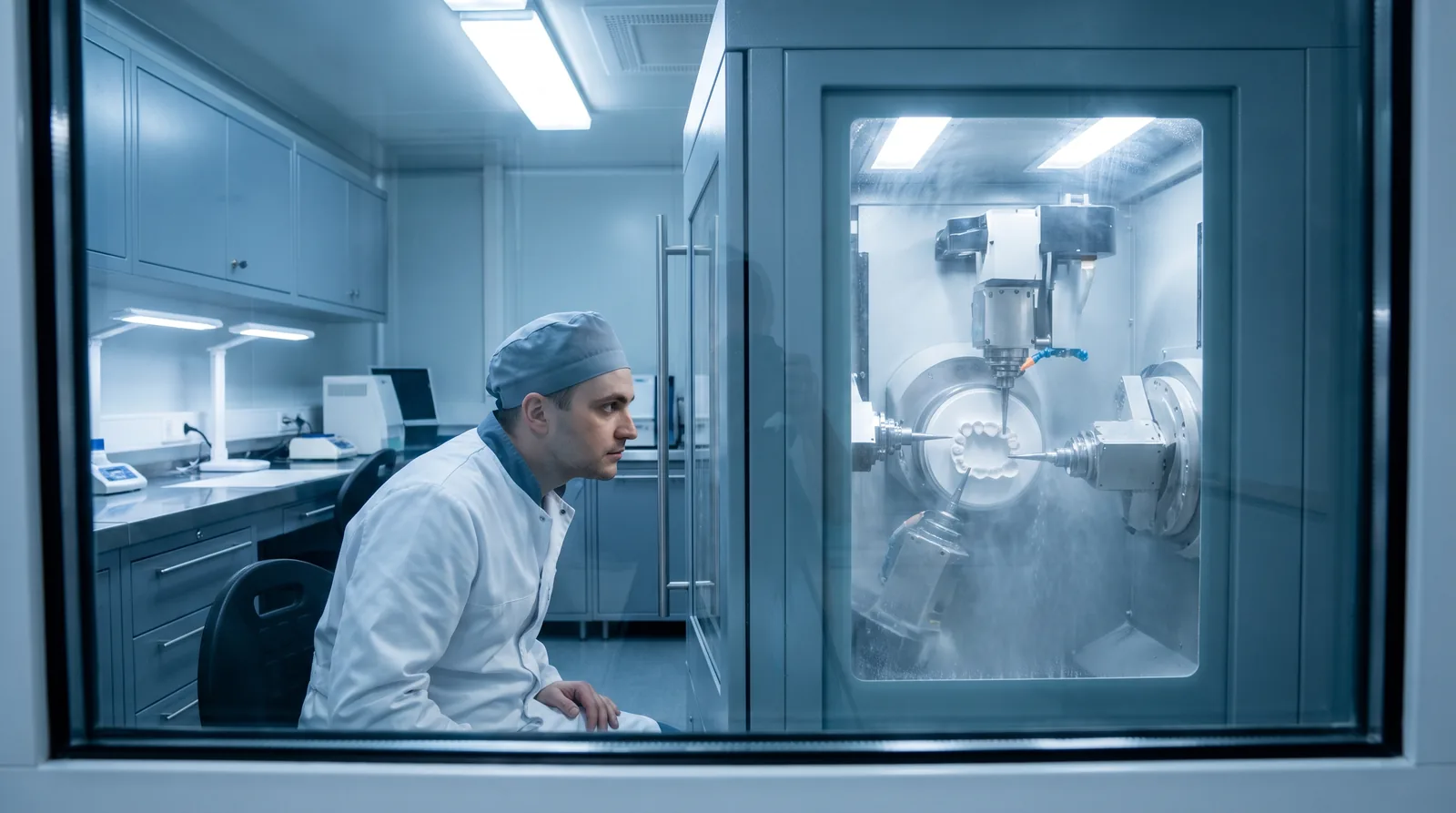
Zirconia is a ceramic milled from a solid block into the full bridge shape, including the teeth and the gum portion, then colored and glazed. Most zirconia bridges are attached to the implants through a titanium base or bonded to a titanium bar for added strength. The result is a single rigid piece with no separate teeth to loosen.
How much more does a zirconia All-on-4 bridge cost?
Zirconia adds roughly $8,000 to $15,000 per arch compared with an acrylic hybrid at the same practice, and in some markets the gap is wider. In 2026 an acrylic arch typically runs in the mid teens to mid twenties of thousands, while a zirconia arch runs from the mid twenties to the high thirties. A full mouth in zirconia can approach or exceed $70,000 at premium practices.
The difference reflects the material cost, the milling time, the lab skill required, and the fact that zirconia is harder to adjust chairside. It does not reflect a difference in the implants or the surgery, which are the same for both. The All-on-4 cost breakdown explains what else moves the price and why advertised numbers usually leave the final bridge out entirely.
Why the ten-year cost is closer than the sticker price
An acrylic bridge typically needs teeth replaced, a reline, or a full remake within five to ten years, and the replacement runs several thousand dollars each time. A zirconia bridge that does not chip can last well beyond ten years with only cleaning and screw maintenance. Over a decade, a patient who chooses acrylic and replaces it once has often spent close to what zirconia would have cost, without ever having had zirconia's strength or appearance. That math shifts back toward acrylic for patients who expect to change the design anyway, or who are managing a tight upfront budget.
Which material lasts longer, zirconia or acrylic?
Zirconia lasts longer under normal use. It does not wear down, does not stain from coffee or wine, and does not absorb odors the way acrylic can. Acrylic teeth wear measurably over years of chewing, especially against natural teeth or another acrylic arch, and the pink acrylic can discolor and pick up plaque. Most providers describe an acrylic hybrid as a five-to-ten-year prosthesis and a zirconia bridge as a ten-to-twenty-year one, with the caveat that zirconia's history in full-arch work is shorter than acrylic's.
How each one fails
Acrylic fails gradually. Teeth wear flat, chip, or pop off the bar, and the bite changes as the material thins. These are annoyances rather than emergencies, and they are cheap to fix one at a time. Zirconia fails rarely but suddenly. A chip at the edge of a tooth or a crack through the bridge cannot be patched the way acrylic can, and a fractured zirconia bridge usually has to be remade in full. The risk of that outcome is low with modern materials but not zero, and it is higher in patients who grind.
What grinding does to each
Bruxism is the deciding factor for many patients. Acrylic absorbs some of the force of grinding, which protects the implants but wears the teeth quickly. Zirconia does not wear, but it transmits the full force to the implants and to the opposing teeth, and a heavy grinder can chip it. Most surgeons treating a grinder recommend zirconia for durability, six implants rather than four to spread the load, and a night guard worn over the bridge without exception. The comparison of All-on-4 and All-on-6 covers when the extra implants are worth it.
Which material looks more natural?
Zirconia, in most cases. Because it is milled as one piece and colored in layers, a skilled lab can produce translucency at the tooth edges, subtle shade variation from tooth to tooth, and gum contours that look like tissue rather than plastic. Acrylic denture teeth are manufactured in standard shapes and shades, and the pink acrylic has a uniform color that reads as artificial up close.
That said, the gap depends heavily on the lab. A well-made acrylic hybrid from an experienced technician looks better than a poorly designed zirconia bridge. Ask to see photographs of finals the practice has delivered in each material, on patients rather than on models, before you decide on appearance alone.
Which material is easier to repair?
Acrylic, by a wide margin. A chipped acrylic tooth can be replaced or repaired in the office or with a quick lab turnaround, often for a few hundred dollars. The bridge can be relined if the gums change. A worn set of teeth can be replaced on the existing bar.
Zirconia repairs are limited. A small chip can sometimes be smoothed or bonded, but a significant fracture means a new bridge. That is why many providers keep the patient's temporary as a backup, so there is something to wear while a zirconia remake is made. It is also why zirconia bridges are increasingly attached to a titanium bar: if the bar survives, the remake is less expensive than starting from scratch.
Which material is better for your health and comfort?
Both are biocompatible and well tolerated. Zirconia is smoother and less porous, which means it collects less plaque and is easier to keep clean, a meaningful advantage over a decade of maintenance. Acrylic is lighter, which some patients with a strong gag reflex or a small mouth prefer, and it is slightly softer against opposing natural teeth.
Cleaning under the bridge is required with both materials, and the design of the bridge, meaning how much gap it leaves against the gum and how the undersides are contoured, matters more for hygiene than the material itself. The guide to All-on-4 problems and failure explains why plaque under the bridge is the most common cause of late trouble regardless of material.
Can you switch from acrylic to zirconia later?
Yes, and many patients do. The implants do not care what the bridge is made of, so an acrylic hybrid can be replaced with a zirconia bridge on the same implants at any point, usually when the acrylic wears out or the patient decides they want the upgrade. The cost is the bridge alone, without surgery, which typically runs well below the original per-arch fee.
The reverse is also possible but rare. What you cannot easily change later is the implant count or position, which is why the surgical decisions deserve more scrutiny at the consultation than the material does. Starting with acrylic is a reasonable way to spread the cost if the practice will store your records and the bridge design so the zirconia version can be made from a known fit.
How do you decide between zirconia and acrylic?
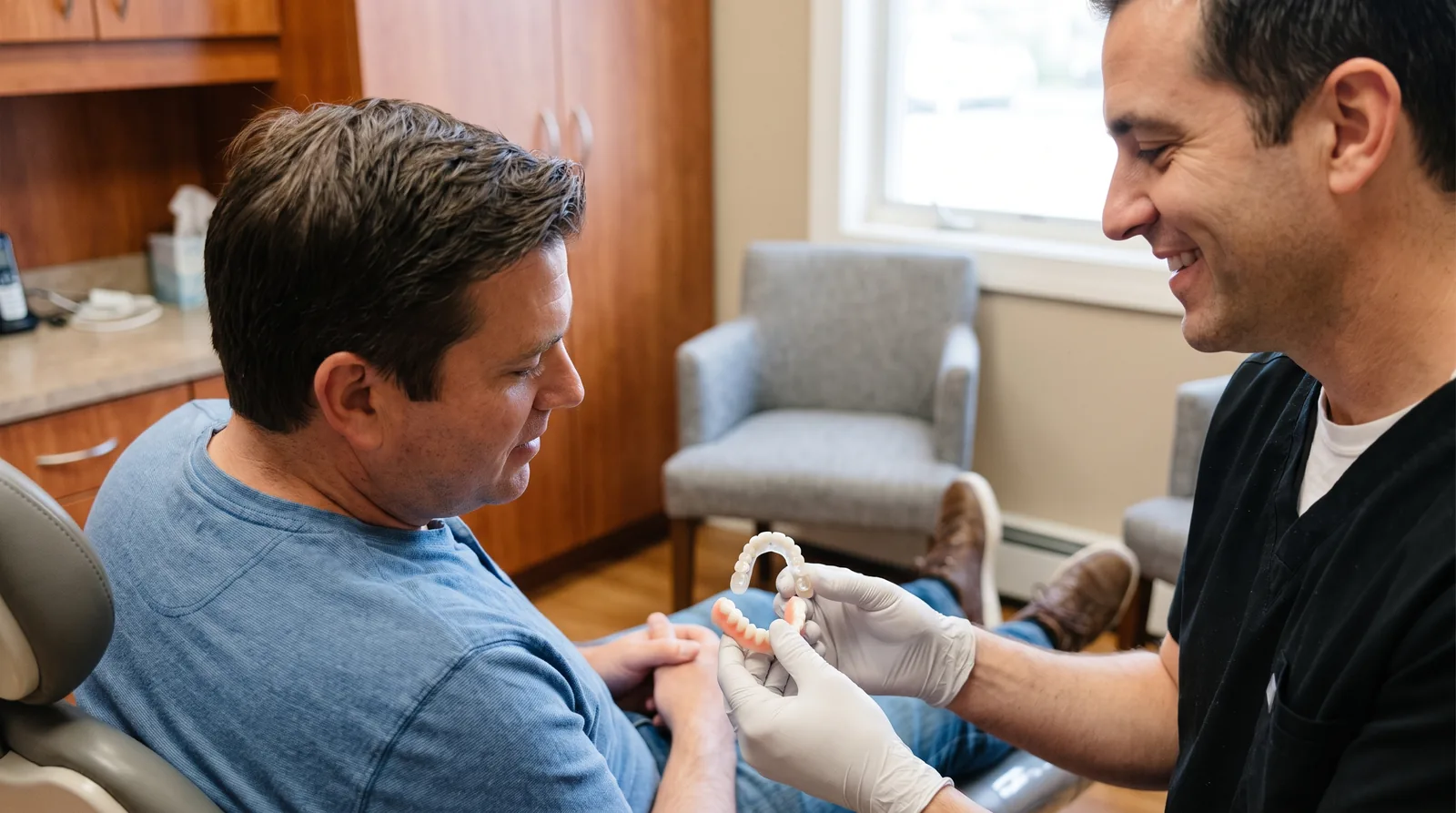
Choose zirconia if you can afford the upfront difference, if you grind or have a heavy bite, if appearance is a priority, or if you want the lowest maintenance over the long run. Choose acrylic if the budget is fixed, if you want a lighter bridge, if you expect to want design changes after living with the teeth, or if your provider is more experienced delivering it. Some patients do acrylic on the first final and move to zirconia when the acrylic wears out, which spreads the cost over years.
Ask each provider these questions before you choose.
- Which material do you deliver more often, and can I see photographs of both on real patients?
- What does each material add to my total price, and is the final included in the quote?
- If my bridge chips or breaks, what does a repair or remake cost for each material?
- Will you keep my temporary as a backup?
- Given my bite and habits, which material would you choose for yourself?
The last question often produces the most honest answer of the consultation. The checklist for choosing an implant provider covers what else to ask before you commit.
The Bottom Line
Zirconia costs more up front, lasts longer, looks more natural, and is harder to repair. Acrylic costs less, wears faster, is easy to fix, and often needs replacing within a decade. Grinders and patients who prioritize appearance usually land on zirconia; patients on a fixed budget or who want a lighter, adjustable bridge usually land on acrylic. Either way, get the material and its price in writing before surgery, and ask what a repair costs, because that is the number that decides the ten-year cost. And when you are ready, find qualified providers near you at Dental Implant Directory.
Ready to find a qualified provider?
Search our independent directory of dental implant providers organized by specialty, location, and credentials. Find Providers Near You.
Ready to find a qualified provider?
Search our independent directory of dental implant providers organized by specialty, location, and credentials.