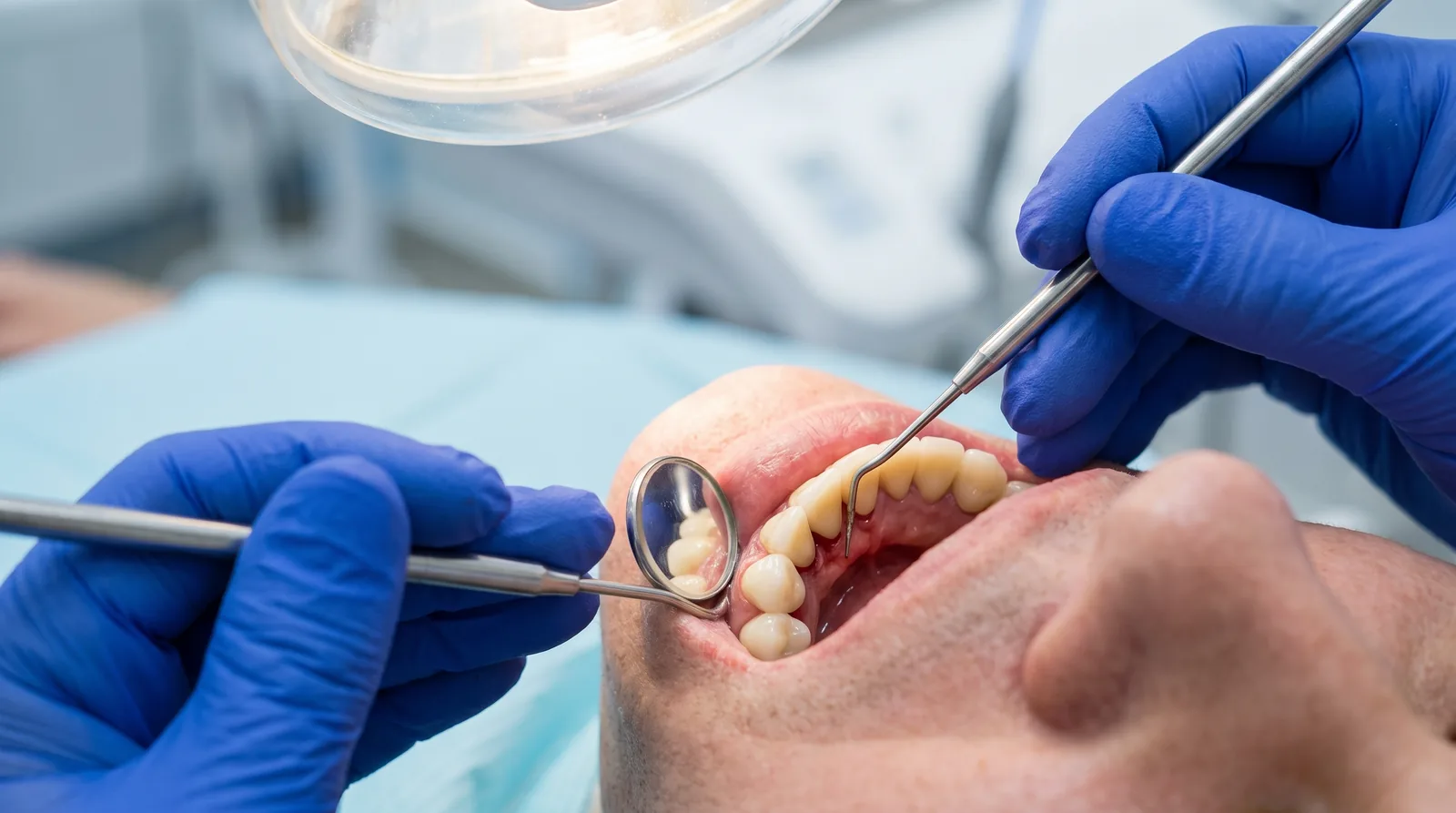
All-on-4 marketing shows the smile on surgery day. It does not show the patient six months later who cannot pronounce certain words, the patient whose acrylic bridge cracked at year three, or the patient whose rear implant loosened and took the whole arch out of service. These are not common outcomes, but they are real ones, and a patient who spends $25,000 or more on an arch deserves to know what can go wrong before it does.
The difficulty is that the information exists in two unhelpful forms. Provider websites minimize problems because they are selling the procedure. Online forums amplify them because the people who post are the ones with complaints. Neither tells you how likely each problem is, which ones are fixable in an afternoon, and which ones mean the case has failed.
This guide sorts the problems by type, gives you the honest odds where they are known, and explains what a good provider does about each one.
How often does All-on-4 fail?
Implant-level failure is uncommon. Long-term studies of the technique report implant survival in the low to mid 90s at ten years, and survival of the bridge itself higher than that because a bridge can survive the loss of one implant in some configurations. Most of the implant failures that do occur happen in the first year, before or shortly after the implants have integrated with bone. Failures after that are usually driven by infection around the implant, heavy bite forces, or a combination of the two.
Those numbers describe implants and bridges surviving, not problems being absent. A patient can keep all four implants and every bridge for twenty years and still deal with a fractured tooth, a loose screw, or food trapping along the way. The useful distinction is between complications, which are managed with maintenance, and failures, which require re-treatment.
What early failure looks like
An implant that fails to integrate in the first months becomes mobile, may be painful, and shows up on an X-ray as a dark line around the fixture. It has to be removed. In an All-on-4 case, the remaining three implants usually cannot support a fixed bridge alone, so the patient goes back to a temporary or a removable denture while the site heals and a new implant is placed. This is the outcome most patients fear, and it is the reason the first four months are treated carefully. The week-by-week recovery guide explains what that period involves.
What late failure looks like
Late failure is almost always peri-implantitis, an infection and inflammation of the bone around an implant. It develops slowly, often without pain, as plaque trapped under the bridge inflames the gum and the bone begins to recede. Caught early, it can be treated by cleaning the implant surface and sometimes grafting the defect. Caught late, the implant loses too much support and has to come out. The guide to the signs of a failing implant covers what to watch for.
What are the most common All-on-4 problems that are not failures?
The problems patients report most often are prosthetic, meaning they involve the bridge rather than the implants. Fractured or worn acrylic teeth, loose retaining screws, food trapping under the bridge, and difficulty cleaning are the everyday complications of full-arch dentistry. None of them means the case has failed, and all of them are fixable, but some of them recur unless the underlying cause is addressed.
Fractured or worn teeth on the bridge
Acrylic bridges are the most common first bridge because they are lighter, cheaper, and easier to repair. They also wear and chip. A patient with a heavy bite or a grinding habit can crack an acrylic tooth within a year or two, and most acrylic bridges need significant repair or replacement within five to ten years. Zirconia bridges resist wear far better but can chip at the edges and are harder to repair when they do. The choice of material is a trade between upfront cost and long-term maintenance, and the All-on-4 cost breakdown explains what each one adds to the quote.
Loose screws
The bridge attaches to the implants with small retaining screws that can loosen over time, especially in the first year as the bite settles. A loose screw feels like a slight movement or click when biting and can allow bacteria under the bridge. The fix is a short visit to retighten or replace the screw. A screw that keeps loosening points to a bite problem or a bridge that does not fit passively, and that needs a more careful look.
Food trapping and difficulty cleaning
A full-arch bridge sits on the gum with a small gap beneath it, and food collects there. Every patient has to learn to clean under the bridge with a water flosser, floss threaders, or specialized brushes, and most take a few weeks to get comfortable with it. A bridge with an unusually large gap, or a patient who cannot manage the cleaning, will develop chronic gum inflammation and eventually bone loss. This is the single most controllable risk factor in long-term All-on-4 success.
Speech changes
Many patients lisp or slur certain sounds for the first weeks with a new bridge because the tongue has to relearn the shape of the palate and the teeth. For most, this resolves on its own within a month or two. For a smaller number, a bridge that is too thick behind the front teeth or that extends too far onto the palate causes a lasting problem, and the bridge needs to be adjusted or remade.

What causes All-on-4 implants to fail?
The causes divide into patient factors, surgical factors, and maintenance factors. Patient factors are smoking, uncontrolled diabetes, bruxism, and certain medications that affect bone. Surgical factors are implants placed in bone that was too soft to hold them, implants loaded too heavily before they had integrated, and poor planning of where the implants sit. Maintenance factors are hygiene, missed follow-up visits, and a bite that was never properly balanced.
Smoking
Smoking is the most consistently identified patient-side risk in the implant literature. It reduces blood flow to healing bone and gum, roughly doubles the risk of early implant failure, and raises the long-term risk of peri-implantitis. Most full-arch surgeons ask patients to stop for a period before and after surgery, and some decline to treat active heavy smokers with a fixed bridge.
Grinding and heavy bite forces
Bruxism loads the implants and the bridge repeatedly and can cause screw loosening, bridge fracture, and in some cases bone loss around the implants. Patients who grind are usually advised toward six implants rather than four, a zirconia bridge, and a night guard worn over the bridge. The comparison of All-on-4 and All-on-6 covers when the extra implants are worth it.
Implants placed in poor bone
The tilted rear implants in All-on-4 need dense bone to achieve enough stability to be loaded with a bridge on surgery day. If the surgeon places them in soft bone and loads them anyway, the risk of early failure rises. An experienced surgeon measures the stability of each implant during surgery and will delay loading, or place an extra implant, when the numbers are not there. This is one of the reasons case volume matters when you choose a provider.
Medical conditions and medications
Uncontrolled diabetes, radiation to the jaw, and certain bone medications raise failure risk, and some can be managed before surgery. The guide to what disqualifies patients from dental implants covers which conditions are fixable and which are not.
Which All-on-4 problems can be fixed and which cannot?
Almost every prosthetic problem is fixable, and most implant problems are fixable if caught early. The problems that cannot be fixed without re-treatment are a failed implant in a four-implant case, advanced peri-implantitis with major bone loss, and a bridge that was designed on implants placed in the wrong positions.
Fixable in a visit or two
A loose screw, a chipped acrylic tooth, a sore spot under the bridge, and mild inflammation from missed cleaning are routine maintenance items. A bridge that has worn after years of use is typically replaced with a new one on the same implants, which is a fraction of the original cost because the surgery is not repeated.
Fixable with a procedure
Early peri-implantitis can be treated by removing the bridge, cleaning the implant surface, and sometimes grafting the bone defect. A bridge causing speech or bite problems can be adjusted or remade. An implant that has failed in a six-implant case can be removed and the bridge often kept in place while a replacement is planned.
Requires starting part of the case over
A failed implant in a four-implant case usually means the bridge comes off, the patient goes back to a temporary or removable denture, and a new implant is placed and given months to heal before a bridge returns. Severe late bone loss around several implants can mean removing the implants and considering zygomatic implants or a removable alternative. These are the outcomes a careful provider selection is meant to avoid.
How do you reduce the risk of All-on-4 problems?
Three decisions before surgery and one habit after it account for most of the difference between patients who have a smooth twenty years and patients who do not. Choose a surgeon who places full-arch cases regularly, insist on a CT scan and a bite analysis before the plan is set, tell the provider honestly about smoking and grinding, and then clean under the bridge every day and keep every maintenance visit.
The maintenance schedule matters more than most patients expect. Full-arch bridges should be checked at least twice a year and removed for a deep cleaning and inspection roughly every one to two years, depending on the provider's protocol. A practice that never mentions maintenance in the consultation is a practice to ask more questions of. The checklist for choosing an implant provider includes the questions to ask about long-term care.
What should you ask a provider about complications before surgery?
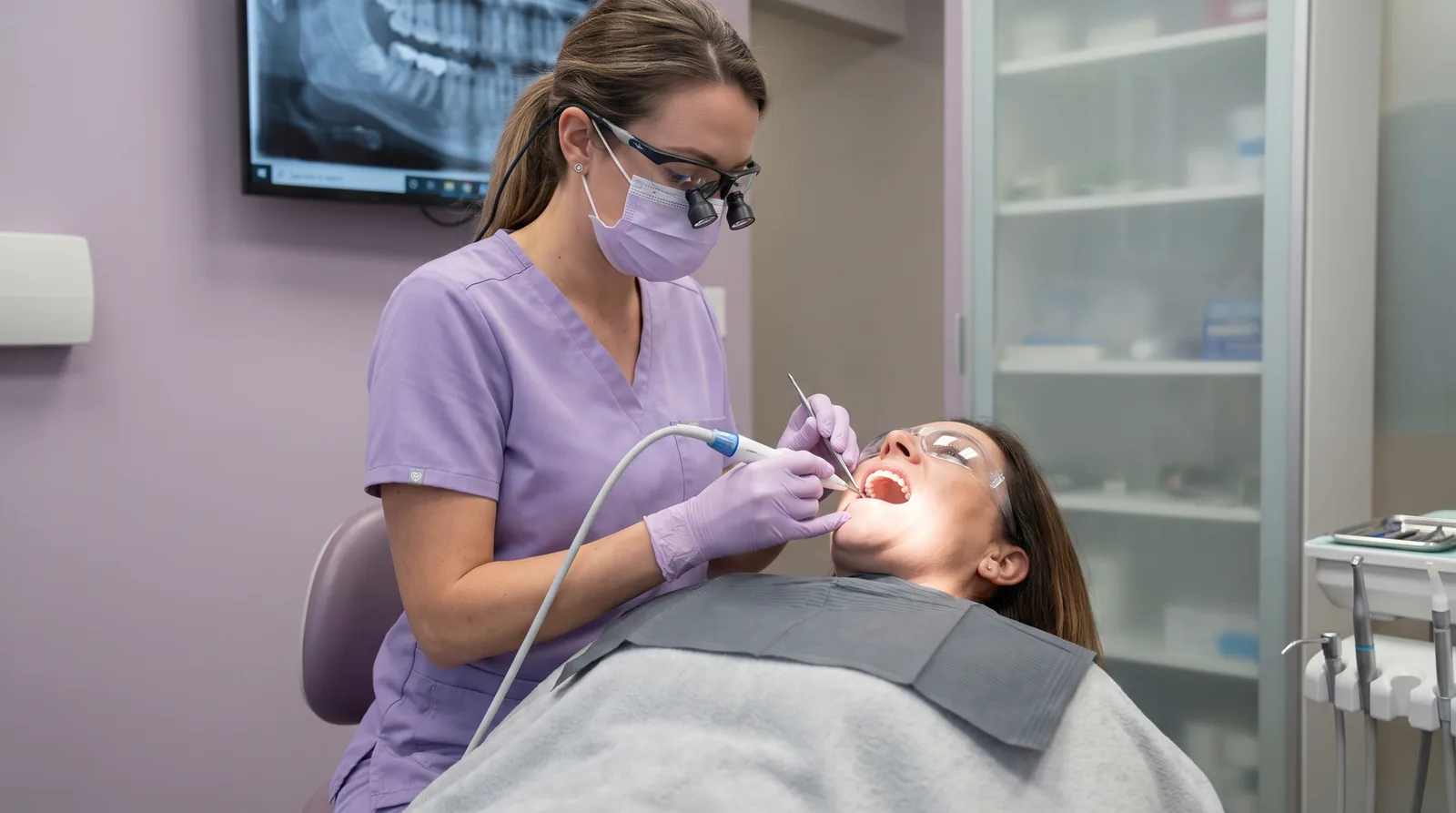
Every full-arch provider has had complications. The ones worth trusting talk about them plainly. Ask these questions and listen for specific answers rather than reassurance.
- What is your implant failure rate in full-arch cases over the past three years?
- If one of my implants fails in the first year, what happens and what does it cost me?
- What is covered by your warranty on the implants and on the bridge, and for how long?
- How often will my bridge be removed for cleaning, and what does that cost?
- If I grind my teeth, how does that change your plan?
- What is the plan if the implants are not stable enough to load on surgery day?
A provider who answers the second and third questions clearly, in writing, is one who has thought about what happens when things go wrong. That is the provider you want.
The Bottom Line
All-on-4 implants fail in a small minority of cases, mostly in the first year or from infection years later, and the everyday problems patients report are prosthetic ones like worn teeth, loose screws, and food trapping that maintenance handles. Smoking, grinding, poor bone at the time of surgery, and skipped cleaning drive most of the serious outcomes, and all four are visible before surgery if the provider looks. Choose a surgeon by case volume and honest answers about complications, then treat daily cleaning and maintenance visits as part of the procedure rather than an afterthought. And when you are ready, find qualified providers near you at Dental Implant Directory.
Ready to find a qualified provider?
Search our independent directory of dental implant providers organized by specialty, location, and credentials. Find Providers Near You.
Ready to find a qualified provider?
Search our independent directory of dental implant providers organized by specialty, location, and credentials.