
Being told you are not a candidate for dental implants sounds final. Most patients hear it the same way they would hear a diagnosis, as a fact about their body that is not going to change. They leave the consultation, cross implants off the list, and start looking at dentures instead. In a large number of cases, that decision was made on incomplete information.
The reason is that almost nothing on the standard disqualification list is permanent. Uncontrolled diabetes, active gum disease, smoking, thin bone, and grinding are all conditions with treatment paths. A surgeon saying no today is usually saying no to your current numbers, not to you. The problem is that consultations rarely make that distinction out loud, and a patient who hears "you don't qualify" has no way of knowing whether that means never or means not for another six months.
This breaks down the nine conditions that most often disqualify patients, what the surgeon is actually measuring in each case, and how long it realistically takes to fix.
What does a surgeon actually check before approving you for implants?
Three things, in roughly this order: whether there is enough bone to hold an implant, whether the surrounding tissue is healthy enough to keep it, and whether your body can heal a surgical wound predictably.
Everything on the list below maps to one of those three. Bone loss is a volume problem. Gum disease is a tissue problem. Diabetes, smoking, and most medications are healing problems. Understanding which category your issue falls into tells you a lot about how hard it is to solve, because volume problems get solved surgically, tissue problems get solved with treatment, and healing problems get solved with time and medical management.
For context on the baseline you are being measured against, international data covering more than 1.2 million implants puts average success above 98%. That number is why surgeons are conservative. When the standard outcome is that good, a provider has little reason to accept a case that carries meaningfully higher risk, and every reason to ask you to fix the risk first.
The 9 conditions that can disqualify you, and how fixable each one is
1. Uncontrolled diabetes
This is the most commonly cited disqualifier and the most commonly misunderstood. Diabetes itself does not disqualify you. Poorly controlled diabetes does.
The number that matters is HbA1c, and the practical threshold in the research is 8%. Below that, implant survival runs roughly 96% to 97% at one year and 87% to 96% at five years, which is comparable to patients without diabetes. Above it, studies show measurably worse marginal bone loss and deeper probing depths around the implant, meaning the implant may survive but the tissue around it degrades faster.
How fixable: Highly, and this is the single most common reversible no. HbA1c reflects roughly three months of blood sugar, so a patient working with their physician can often move from disqualified to qualified in one to two quarters. Ask your surgeon directly what HbA1c they want to see before they will operate.
2. Not enough jawbone
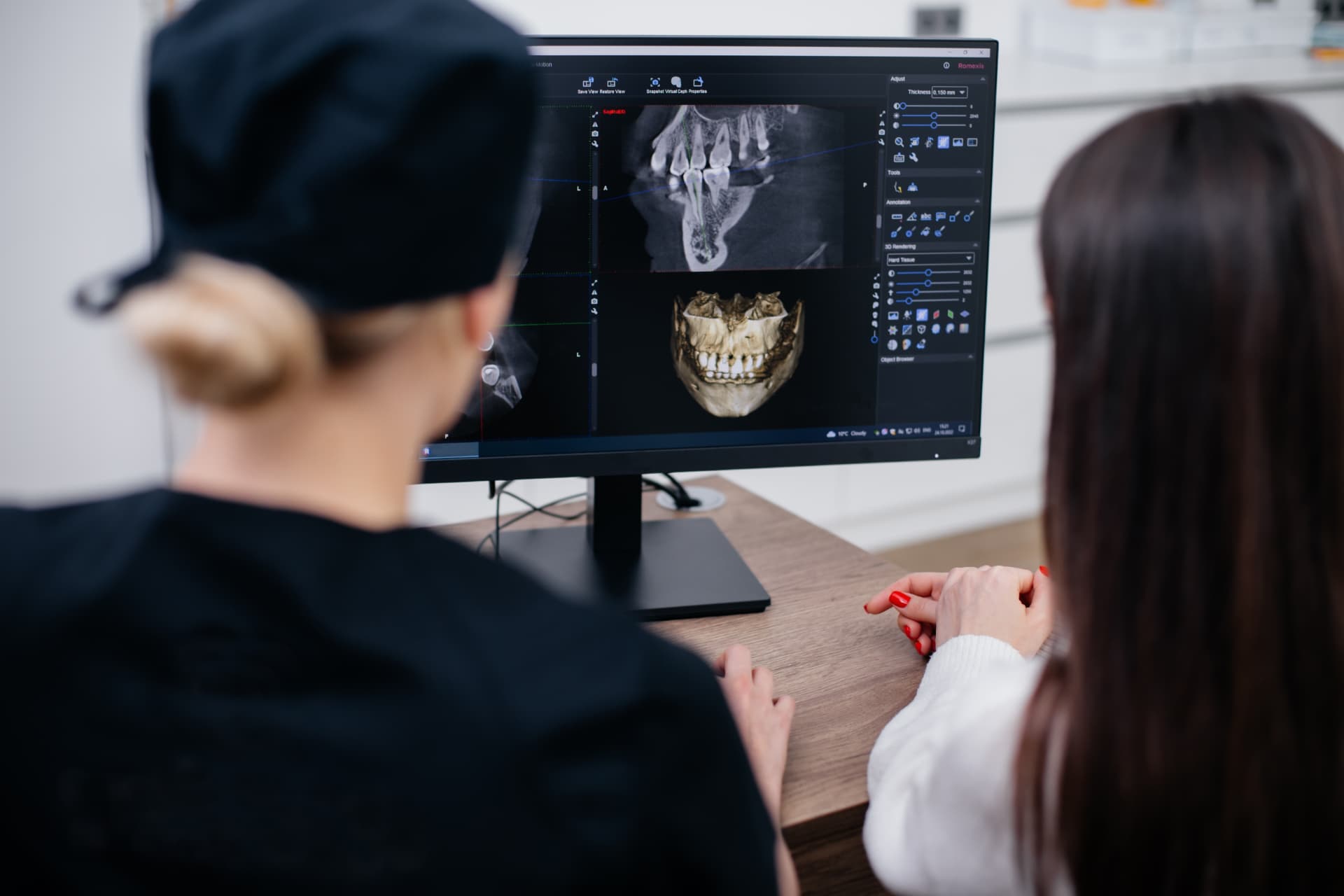
An implant needs bone to fuse with. When a tooth has been missing for years, the bone that used to support it resorbs, sometimes dramatically. Surgeons measure this on a CT scan in millimeters of height and width, and if the numbers come up short, a standard implant has nothing to anchor into.
How fixable: Almost always, though the fix adds time and cost. Bone grafting rebuilds volume over four to nine months depending on the graft type and site. Sinus lifts address the upper back jaw specifically. And when bone loss in the upper jaw is severe enough that grafting is not practical, zygomatic implants anchor into the cheekbone instead, which is exactly the case where a general dentist may tell you no while an oral surgeon experienced in zygomatic placement tells you yes.
This is the disqualifier where a second opinion changes the answer most often, because the ceiling depends heavily on the surgeon's training.
3. Active gum disease
Periodontal disease is a bacterial infection of the tissue and bone around your teeth. Placing an implant into an actively infected mouth is placing it into the same bacteria that destroyed the natural teeth, and the implant is not immune. The peri-implant version of the disease is common enough that it deserves its own attention: peri-implantitis affects somewhere between 19% and 25% of implant patients depending on the diagnostic criteria used. It is also frequently silent in its early stages, which is why knowing the signs of a failing implant matters even when nothing hurts.
How fixable: Yes, but it must come first and it does not fully go away. Periodontal treatment ranges from deep cleaning and scaling to surgical therapy, typically taking three to six months to reach stability. What does not change is that a history of periodontal disease makes you a higher maintenance patient permanently, with more frequent cleanings for the life of the implant.
4. Smoking
Smoking narrows the blood vessels feeding the tissue around the implant site, which compromises the bone healing that osseointegration depends on. The effect is not subtle. Against a baseline success rate above 98%, success in smokers drops to roughly 85%.
How fixable: Entirely within your control, which is what makes it the most frustrating item on this list for both patients and surgeons. Many surgeons ask for cessation starting one to two weeks before surgery and continuing at least eight weeks after, covering the critical healing window. Some will decline to treat active heavy smokers at all. Reducing rather than quitting helps less than most patients expect.
5. Bisphosphonates and other bone medications
Bisphosphonates are prescribed for osteoporosis and some cancers, and they work by slowing bone turnover. That is useful for preventing fractures and unhelpful for healing a surgical site in the jaw. Patients taking them carry roughly a 65% higher risk of implant failure than patients who are not.
How fixable: Complicated, and this is the one item where the honest answer is that it depends on specifics you cannot assess yourself. A 65% higher relative risk is significant but it is not a wall, and the research is clear that bisphosphonates are not an absolute contraindication. Oral bisphosphonates at low doses for a short duration carry very different risk than long-term intravenous therapy for cancer. Appropriate protocols and prophylaxis reduce the risk meaningfully.
What this requires is a surgeon who will coordinate with your prescribing physician rather than one who either dismisses the risk or refuses on sight.
6. Bruxism
Grinding and clenching apply forces an implant was not designed to absorb. A natural tooth sits in a ligament that gives slightly under load. An implant is fused directly to bone with no give at all, so grinding forces transfer straight into the bone and the components, which can loosen screws, fracture crowns, and in severe cases contribute to failure.
How fixable: Manageable rather than curable. A night guard is the standard answer, and treatment planning can compensate with wider implants, more of them, and different materials in the restoration. This rarely disqualifies you outright. It changes the plan and it raises the importance of wearing the guard for as long as you have the implant.
7. Radiation therapy to the head or neck
Radiation to the jaw damages the blood supply in bone and raises the risk of osteoradionecrosis, a serious complication where bone fails to heal after a surgical insult. This is one of the few genuinely high-stakes items on the list.
How fixable: Case by case, and it depends on the radiation dose, which field was treated, and how long ago. Implants are placed in post-radiation patients, sometimes with hyperbaric oxygen protocols, but this belongs in the hands of an oral and maxillofacial surgeon working with your oncology team. It is not a case for a general dentist.
8. Autoimmune conditions and immunosuppressant therapy
Rheumatoid arthritis, lupus, Sjögren's, Crohn's, and the medications used to control them all touch the same two things implants depend on, which are wound healing and infection response. Immunosuppressants specifically raise infection risk during the vulnerable healing window.
How fixable: Usually workable. Well-controlled autoimmune disease is far less of an obstacle than most patients assume, and the deciding factor is disease activity at the time of surgery rather than the diagnosis on your chart. Surgery timed to a period of remission, coordinated with your rheumatologist, is a normal path.
9. Age and incomplete jaw growth
The only item here that is about timing rather than pathology. Implants placed before the jaw finishes growing can end up misaligned as the surrounding bone continues to develop, which is why surgeons wait until growth is complete, generally the late teens to early twenties and later for men than women.
How fixable: It resolves on its own. Worth stating clearly in the other direction too: there is no upper age limit. Healthy patients in their eighties receive implants routinely. Age alone is not a disqualifier and any provider treating it as one is not evaluating you properly.
How long does it take to become a candidate if you are not one today?
For most patients working on a single issue, six months to a year. Diabetes control and periodontal stabilization both run on roughly quarterly timelines, and bone grafting adds four to nine months of healing before placement.
Where it gets longer is when issues stack, and they frequently do. A patient with uncontrolled diabetes and active periodontal disease is not running those two clocks in parallel, because gum disease responds poorly to treatment while blood sugar is uncontrolled. In that situation the realistic path is closer to eighteen months, and a provider who quotes you something dramatically shorter is worth questioning.
None of that is wasted time. Every one of these conditions is also degrading the bone you are trying to preserve, so the interval is not a delay, it is the treatment.

What should you do if a provider tells you that you do not qualify?
Ask four questions before you accept the answer.
- Which specific condition is disqualifying me? A vague "you are not a good candidate" is not usable information. You need the actual finding, whether that is a millimeter measurement, an HbA1c value, or a periodontal diagnosis.
- Is this permanent or is it a threshold I can cross? Ask for the number they want to see, and the timeline they would expect.
- Does this rule out all implant approaches or only the standard one? Insufficient upper jaw bone rules out conventional implants long before it rules out zygomatic placement, and providers tend to describe the limits of what they personally perform.
- Who would I see for a second opinion? The answer to this reveals a lot. A confident surgeon names someone.
That third question matters more than patients realize, because a general dentist, a periodontist, and an oral surgeon do not share the same ceiling on complex cases. If you are being turned away for bone volume, understanding which specialist handles which kind of case is the difference between accepting a no and getting a real evaluation.
It is also worth separating clinical disqualification from the broader question of whether implants are the right choice for you at all. Those are different decisions, and there are legitimate non-clinical reasons to decide against implants even when you qualify on paper.
The Bottom Line
The disqualification list is real, but it is mostly a list of thresholds rather than verdicts. Uncontrolled diabetes, gum disease, bone loss, and smoking are all conditions with defined treatment paths and defined timelines, and the patients who end up with successful implants are frequently the ones who were told no first and asked what would change the answer. Radiation history is the one item that warrants genuine caution, and even that belongs in front of a maxillofacial surgeon rather than in front of a general dentist. If you were turned away without a specific finding, a number, and a timeline, you did not get a complete evaluation.
If you want a sense of where you stand before booking a consultation, the dental implant candidacy quiz walks through bone health, gum condition, overall health, and timing in about a minute. And when you are ready, find qualified providers near you at Dental Implant Directory.
Ready to find a qualified provider?
Search our independent directory of dental implant providers organized by specialty, location, and credentials. Find Providers Near You.
Ready to find a qualified provider?
Search our independent directory of dental implant providers organized by specialty, location, and credentials.