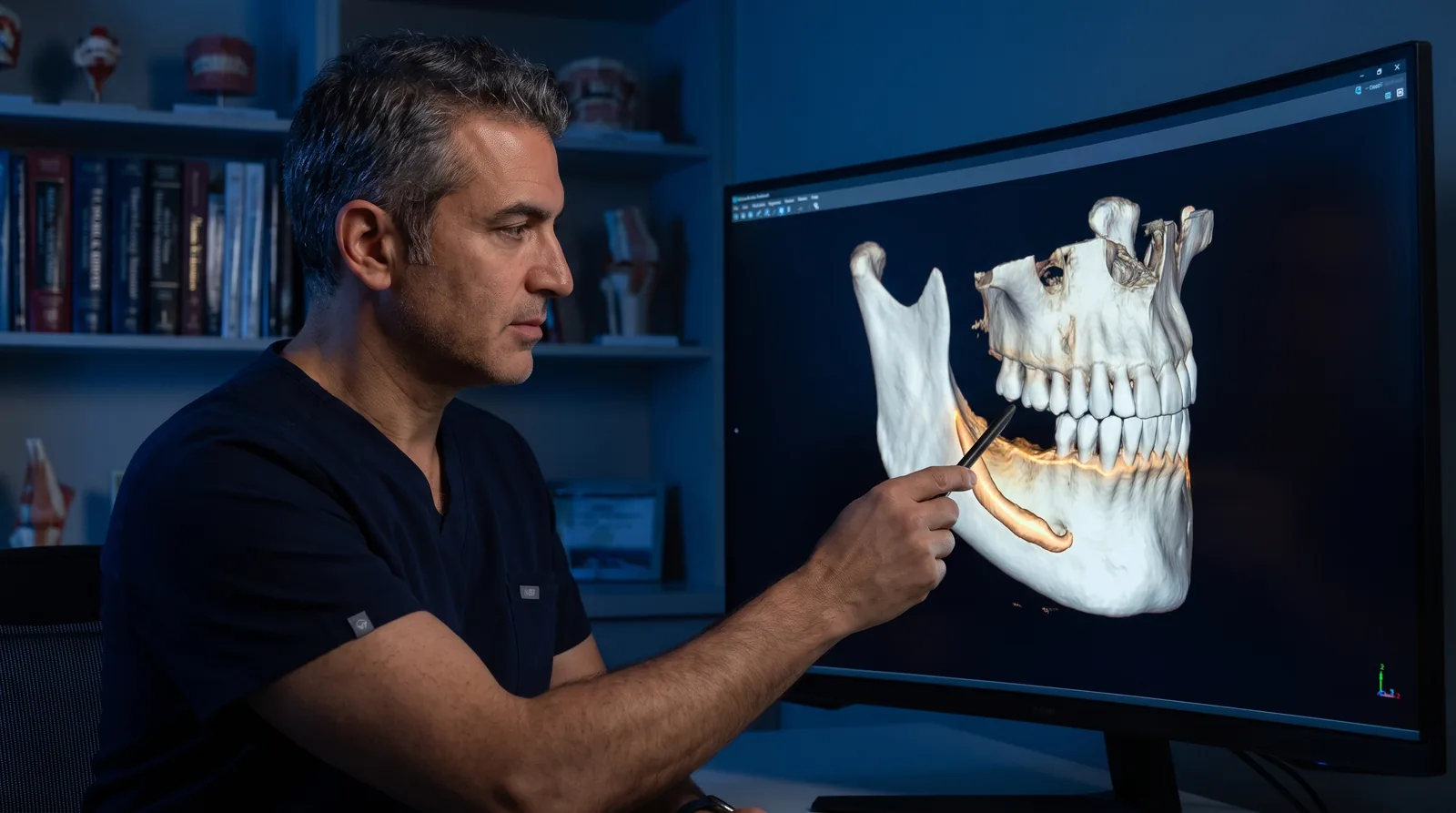
"You will need a bone graft first" adds months and thousands of dollars to an implant plan, and patients hear it often enough that many assume it is standard. It is not. Whether you need grafting depends on where the bone is missing, how much, and which implant technique the provider has in mind. Two surgeons can look at the same scan and give opposite answers, and both can be right for the approach they practice.
The stakes are time and money. A graft adds a surgery, a healing period of four to nine months, and anywhere from several hundred to several thousand dollars per site. Some patients genuinely need it. Others are being planned for grafting because that is how the provider was trained, when a different implant design or position would do the job without it.
This guide explains the kinds of grafting, when each is required, what they cost, and the alternatives that let many patients avoid them.
What is a bone graft for dental implants?
A bone graft adds volume to a jaw that has lost too much bone to hold an implant, by placing bone material into the deficient area and letting it fuse with the existing bone over several months. The material can be your own bone from elsewhere in the mouth or body, processed donor bone, animal-derived bone, or a synthetic substitute. Once it has matured, an implant can be placed in the grafted site.
Bone is lost after a tooth is extracted, faster in the first year and steadily afterward, and faster still under a denture. The longer a tooth has been missing, the more likely a graft is needed at that site, which is one reason implants placed soon after extraction are simpler than implants placed years later.
What are the types of bone grafting before implants?
Socket preservation, ridge augmentation, sinus lift, and block grafting, in roughly increasing order of size and cost. Each addresses a different kind of deficiency, and the name on your treatment plan tells you which problem the surgeon is solving.
Socket preservation
Bone material placed into the socket immediately after a tooth is extracted, to stop the bone from collapsing while the site heals. It is small, quick, and inexpensive, often a few hundred dollars, and it is the most common graft. It is done to make a future implant possible without a larger graft later.
Ridge augmentation
Bone added to a jaw ridge that has become too thin or too short to hold an implant. It can be done at the time of implant placement for small deficiencies or as a separate surgery months earlier for larger ones. Cost runs from several hundred to a few thousand dollars per site.
Sinus lift
Bone added beneath the floor of the sinus in the upper back jaw, where the sinus has expanded into the space left by missing molars. It allows implants to be placed in the upper back jaw where bone height is otherwise insufficient. It is a more involved procedure, typically $1,500 to $3,500 or more per side, with four to nine months of healing before implants in most cases.
Block grafting
A block of bone, from the patient's own jaw or chin or from a donor, fixed to a severely deficient ridge to rebuild it. It is reserved for large defects, costs the most, and requires the longest healing. It has become less common as implant techniques that avoid it have improved.
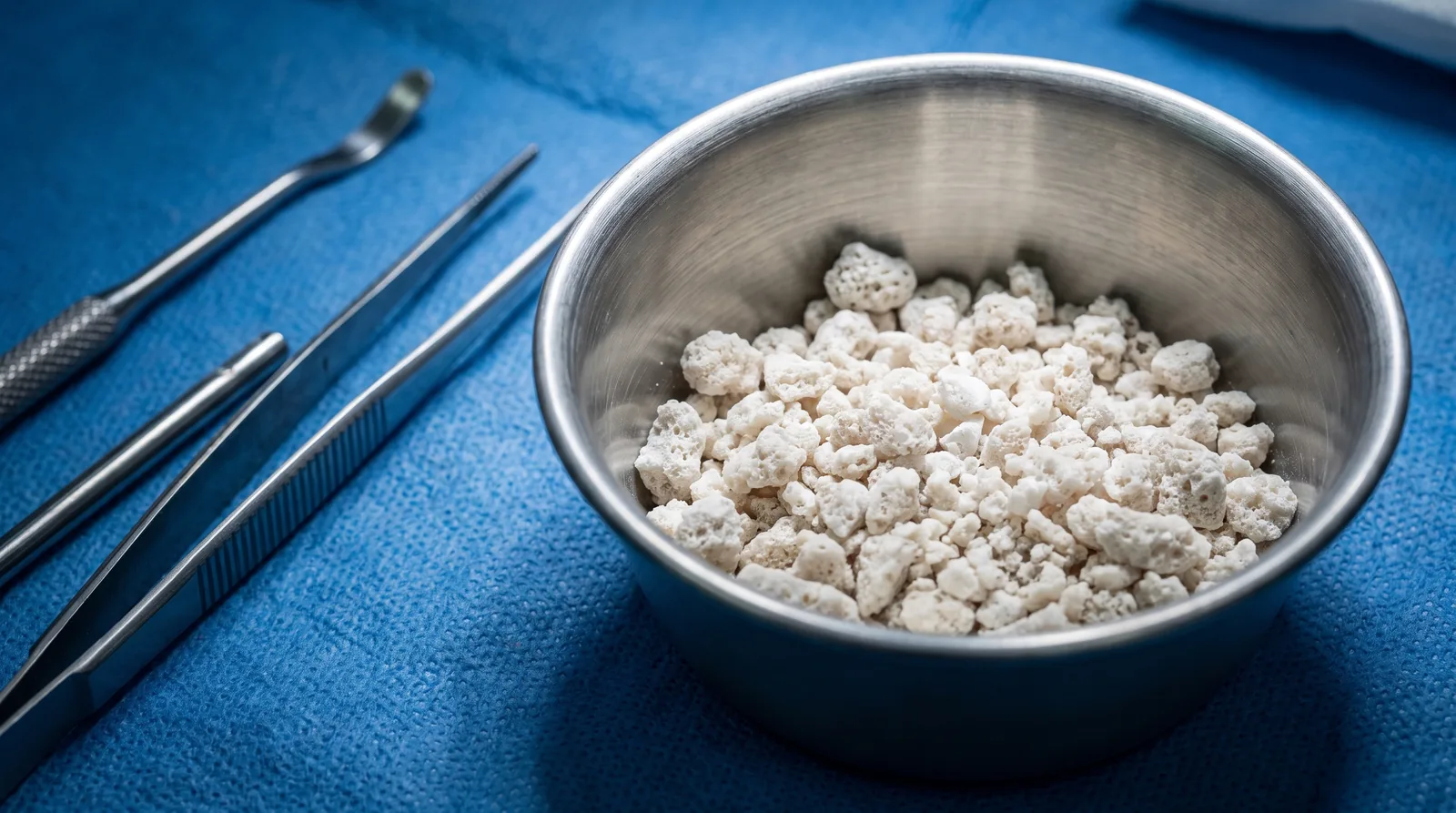
When is a bone graft actually required?
When the bone at the planned implant site is too thin to hold an implant without exposing its threads, too short to place an implant of adequate length without hitting the sinus or the nerve, or too soft to achieve stability at surgery, and when no alternative implant position or design solves the problem. The CT scan answers this. A plan written without one is a guess.
Situations where grafting is usually unavoidable
A single missing tooth in the front of the upper jaw where the ridge has collapsed and the result has to look natural. A back upper tooth where the sinus has dropped and the patient wants a conventional implant in that exact position. A jaw that has lost bone in the front as well as the back, so that tilted implants have nowhere to anchor.
Situations where grafting is often avoidable
Missing back teeth in either jaw when the front bone is intact, which is the situation All-on-4 was designed for. A single missing tooth where a slightly shorter or narrower implant fits the existing bone. A recently extracted tooth where the implant can be placed at the time of extraction. A resorbed upper jaw where zygomatic implants can anchor in the cheekbone.
How can you avoid a bone graft for dental implants?
Tilted implants, short or narrow implants, immediate placement at extraction, and zygomatic implants each avoid grafting in specific situations. Whether one applies to you depends on your scan and on whether the surgeon practices that technique.
Tilted implants
The rear implants in an All-on-4 case are angled to anchor in the dense front bone while emerging further back, which avoids the sinus in the upper jaw and the nerve in the lower jaw without a graft. The guide to All-on-4 with severe bone loss explains when this works and when it does not.
Short and narrow implants
Implants of 6 to 8 millimeters can fit bone that would not accept a standard 10 to 13 millimeter fixture, and narrow-diameter implants fit thin ridges. They have a shorter track record than standard implants, and not every surgeon is comfortable relying on them, but for a single tooth they often avoid a graft.
Immediate placement
An implant placed into the socket at the time of extraction uses the bone before it resorbs, often with a small socket graft around it rather than a separate procedure months earlier. It requires enough intact bone around the socket and an infection-free site.
Zygomatic implants
For an upper jaw that has lost most of its bone, implants anchored in the cheekbone support a full arch with no grafting at all. Fewer surgeons place them and the procedure is more demanding. The guide to zygomatic dental implants covers candidacy.
How much does a bone graft cost, and how long does it take?
Socket preservation runs a few hundred dollars and adds little time if done at extraction. Ridge augmentation runs several hundred to a few thousand dollars per site and adds three to six months when done separately. A sinus lift runs $1,500 to $3,500 or more per side and adds four to nine months. A block graft costs the most and takes the longest. Grafting done at the same time as implant placement adds cost but not a separate healing period.
Insurance sometimes covers grafting done at extraction and rarely covers grafting done to prepare for an implant. The guide to dental insurance and implants explains the distinction. The guide to how much dental implants cost shows where grafting sits in a complete quote.
Who heals well from a bone graft, and who does not?
Grafts heal well in patients with good blood supply, controlled blood sugar, and no smoking. They heal poorly in smokers, in patients with uncontrolled diabetes, and in patients on certain bone medications, and some surgeons will not graft an active smoker at all. The guide to dental implants with diabetes and the guide to dental implants for smokers cover what providers require. For a patient in either group, a technique that avoids grafting is often the safer plan as well as the faster one.
What is a bone graft like to go through?
Minor for socket preservation and small ridge grafts, more involved for sinus lifts and block grafts. Small grafts are done under local anesthetic at the time of extraction or implant placement, add a few minutes to the procedure, and heal with the rest of the site. Sinus lifts and block grafts are separate surgeries with their own recovery.
Recovery from a sinus lift
Swelling and mild discomfort for a few days, a soft diet for a week or two, and instructions not to blow your nose forcefully or sneeze with your mouth closed for a couple of weeks, because pressure in the sinus can disturb the graft. Most patients are back to normal activity within a few days.
Recovery from a block graft
Two surgical sites if the bone came from your own jaw, more swelling, and a longer period on soft food. The graft is left to mature for four to six months before implants, and the surgeon will check it with a scan before scheduling them.
What can go wrong
Grafts can fail to integrate, become infected, or resorb more than expected, especially in smokers and in patients with poor healing. A failed graft is usually removed and redone after healing, which adds months. This is a reason to ask about the surgeon's graft success rate and to prefer a technique that avoids grafting when one exists.
What should you ask when a graft is recommended?
Why, where, what the alternative is, and what the surgeon would do if grafting were not an option. A surgeon who can answer all four on your scan is planning from your anatomy. One who cannot is planning from habit, and a second opinion from a surgeon trained in a different technique is worth the consultation fee. The guide to second opinions on dental implants explains how to get one without repeating the scan.
- Which sites need grafting, and what does the scan show there?
- What kind of graft, what material, and what does it cost?
- How long before implants can be placed, and could the graft be done at the same time?
- Would a tilted, shorter, or narrower implant work at that site instead?
- If I could not have a graft, what would you do?
- What is the graft's success rate in your hands, and what happens if it fails?
The Bottom Line
Bone grafting before dental implants is required when the bone at the implant site is too thin, too short, or too soft and no alternative implant position or design solves it, and it is recommended more often than that because providers plan around the techniques they know. Socket preservation is small and routine; sinus lifts and block grafts add months and thousands of dollars. Tilted, short, and zygomatic implants and immediate placement let many patients avoid grafting entirely. Ask why, ask what the alternative is, and if the answer is habit, get a second opinion. And when you are ready, find qualified providers near you at Dental Implant Directory.
Ready to find a qualified provider?
Search our independent directory of dental implant providers organized by specialty, location, and credentials. Find Providers Near You.
Ready to find a qualified provider?
Search our independent directory of dental implant providers organized by specialty, location, and credentials.