You have been told you do not have enough bone for dental implants. Maybe a dentist said it years ago, maybe a denture has been shrinking your jaw for a decade, and maybe you assumed that closed the door for good. The stakes are real: every year without teeth or with a loose denture, the jaw loses more bone, and the options narrow. Waiting because you think nothing is possible is the most expensive decision a patient in this position can make.
The problem is that "not enough bone" is an incomplete answer. It depends on where the bone is missing, how much is left, which jaw is involved, and which implant technique the dentist had in mind when they said it. All-on-4 was invented for exactly the patient who was told no. It does not work for everyone with bone loss, but it works for far more people than a conventional implant plan would.
This guide explains how much bone All-on-4 actually requires, what your CT scan has to show, when grafting is still necessary, and what the alternatives are when it is not enough.
How much bone do you need for All-on-4?
Less than you need for conventional implants, because All-on-4 places its implants where the bone still exists rather than where the teeth used to be. The two front implants need a strip of bone in the front of the jaw, between the canine positions, that is tall enough and thick enough to hold an implant of roughly 10 millimeters or longer. The two rear implants are tilted up to 45 degrees so they anchor in that same front region while emerging further back along the arch.
That front zone is the last part of the jaw to resorb after tooth loss. In the lower jaw it sits in front of the mental nerves, where the bone is dense and well preserved even in long-term denture wearers. In the upper jaw it sits in front of the sinuses, which is why the tilted implants can avoid a sinus lift that conventional rear implants would require.
Why bone loss in the back does not disqualify you
Most of the bone loss patients worry about happens in the molar region, because those teeth are usually lost first and the sinus expands downward into the space on top. A conventional plan puts implants there and needs grafting to do it. All-on-4 does not put implants there at all. If the back of your jaw is hollowed out but the front still has volume, you are the patient the technique was designed for.
What your CT scan has to show
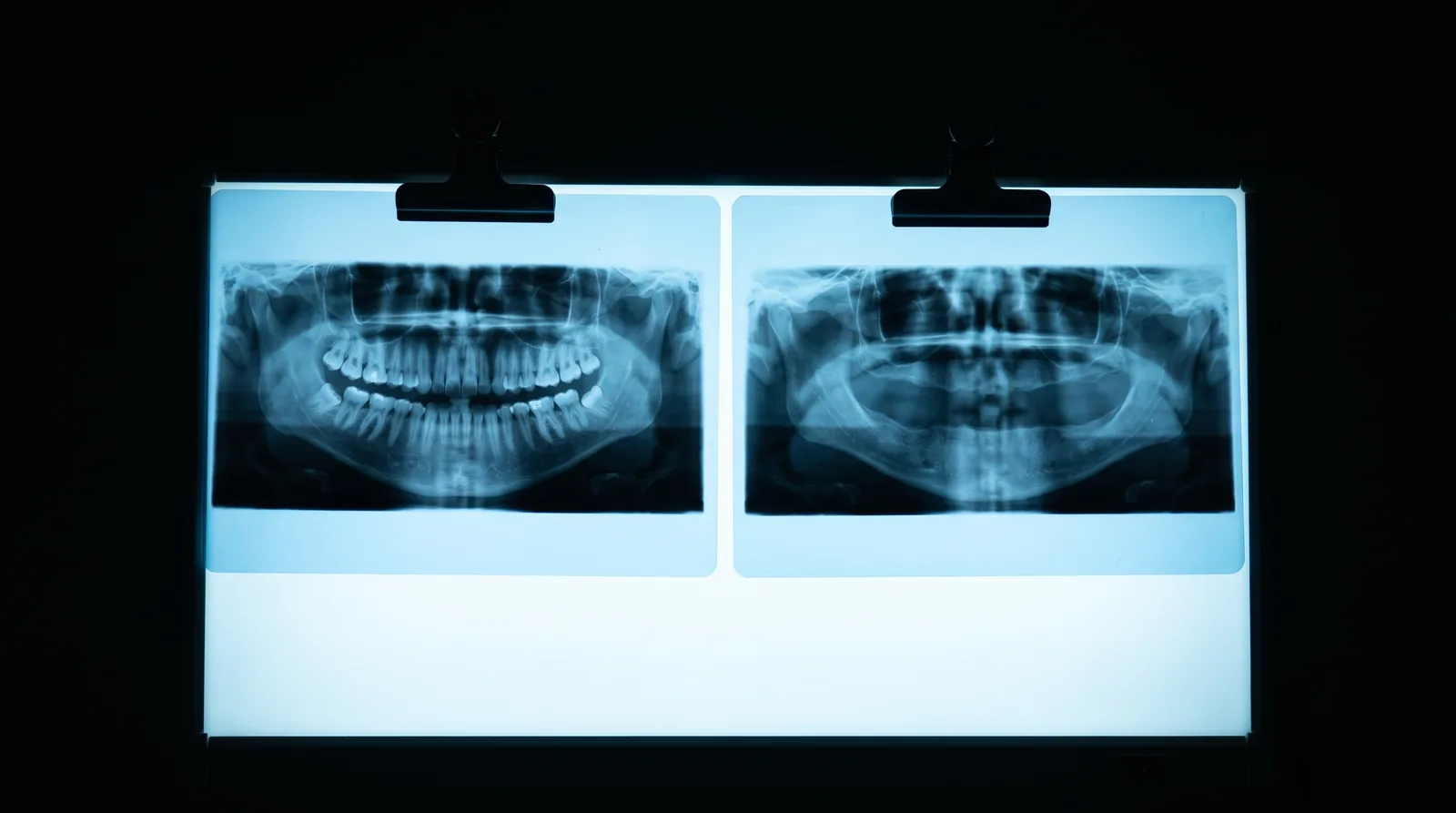
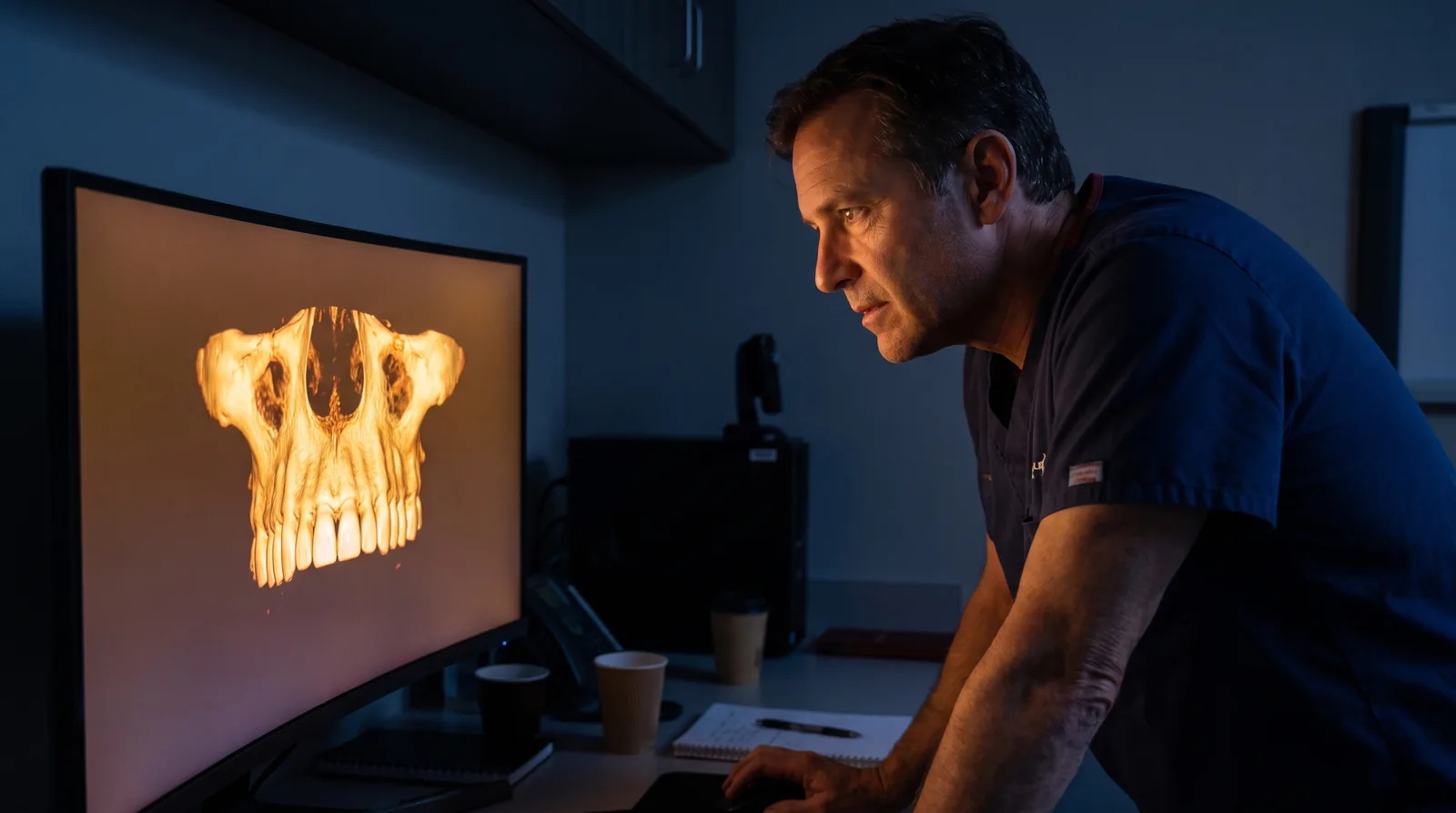
A cone-beam CT scan is not optional before a full-arch plan. It shows bone height, width, and density in three dimensions and lets the surgeon plan implant length and angle before surgery. A panoramic X-ray, the wide flat image most general dentists take, cannot measure bone width and routinely leads to a "not enough bone" verdict that a CT scan reverses. If the provider who told you no did not take a CT scan, the answer is not final.
When is bone grafting still required before All-on-4?
Grafting becomes necessary when the front of the jaw has resorbed as well, when the bone that remains is too thin from cheek to tongue to hold an implant, or when the upper jaw has lost so much height that even tilted implants would enter the sinus. In these cases the surgeon has three choices: graft first and wait, place implants in a different part of the skull, or use a modified implant design.
Grafting before implants
Bone grafting adds volume by placing bone material, either your own, donated, or synthetic, into the deficient area and letting it fuse over four to nine months. It is reliable but it adds a second surgery, a long delay, and several thousand dollars per site. Some surgeons graft at the same time they place the implants when the deficiency is small, which avoids the wait.
Grafting the sinus specifically
A sinus lift raises the floor of the sinus and packs bone beneath it so implants can be placed in the upper back jaw. This is exactly the procedure All-on-4 was designed to avoid, so if a provider proposes All-on-4 plus bilateral sinus lifts, ask why the tilted rear implants are not sufficient. Sometimes the answer is legitimate: the front bone is also compromised. Sometimes it is habit.
Whether the graft is worth waiting for
A patient with moderate loss who can wait six months for a graft to mature often ends up with a straightforward All-on-4 or All-on-6 case afterward. A patient with severe loss, a medical reason to avoid extra surgery, or a strong preference for teeth in one visit is usually better served by one of the approaches below. The guide to what disqualifies patients from implants covers the health conditions that affect how well grafts and implants heal.
What are the options when even All-on-4 will not fit?
When the upper jaw has lost too much bone for tilted implants, surgeons turn to longer implants that anchor in bone outside the jaw, or to shorter and narrower implants that fit what remains. The main options are zygomatic implants, pterygoid implants, and the newer short and extra-narrow implant designs.
Zygomatic implants
Zygomatic implants are long fixtures, often 35 to 55 millimeters, that pass through or beside the upper jaw and anchor in the zygomatic bone, the cheekbone. They can support a full upper bridge on the day of surgery with no grafting, even in patients whose upper jaw has almost no usable bone. The procedure is more demanding, fewer surgeons are trained in it, and the risks include sinus complications. The full guide to zygomatic dental implants explains candidacy and what to ask a provider.
Pterygoid implants
Pterygoid implants anchor in a dense plate of bone at the very back of the upper jaw, behind the sinus. They are sometimes combined with front implants to create a full-arch support without a sinus lift, and they are sometimes used alongside zygomatic implants in the most severe cases. Like zygomatics, they require a surgeon with specific training.
Short and narrow implants
For the lower jaw, where the nerve canal limits implant length, short implants of 6 to 8 millimeters can sometimes be placed in bone that would not accept a standard length. Narrow-diameter implants fit thin ridges. Both have shorter track records in full-arch bridges than standard implants, and not every surgeon is comfortable relying on them for a fixed prosthesis.
The removable alternative
If none of the fixed options fit your anatomy, health, or budget, an implant-supported overdenture on two to four implants is often still possible in bone that cannot support a fixed bridge. It is removable and it is not the same experience as fixed teeth, but it is a large improvement over a conventional denture on a resorbed jaw. The guide to implant-supported dentures explains the trade.
Does bone loss make All-on-4 less likely to succeed?
Bone quantity matters less than bone quality and how the implants are placed in it. Studies of All-on-4 in patients with resorbed jaws report implant survival in the same range as patients with fuller jaws, in the low to mid 90s at ten years, because the technique anchors implants in the dense front bone rather than in the compromised back bone. What does raise the failure risk is placing implants in soft bone without enough initial stability, which is a surgical judgment call made during the procedure.
Two things you control affect the outcome more than your starting bone volume. The first is smoking, which slows bone healing around the implants and is the most common patient-side reason for early failure. The second is hygiene after the bridge is placed, because bone loss around an implant later in life is usually driven by inflammation from plaque trapped under the bridge. The guide to the signs of a failing implant covers what to watch for.
How do you find a surgeon who treats severe bone loss?
Look for a surgeon who places full-arch cases every week, who takes a CT scan before giving an opinion, and who can name the fallback plan if the tilted implants do not achieve enough stability on the day. Severe bone loss is where experience separates providers, because the surgeon has to make decisions during the procedure that a routine case never requires.
Oral surgeons and periodontists complete residencies that include advanced bone management, and some general dentists have completed extensive full-arch training. The credential matters less than the case volume in your specific situation. Ask how many patients with bone loss like yours the surgeon has treated in the past year and what the outcomes were. The guide to which specialist should place your implants explains the differences in training.

What should you bring to a consultation about bone loss?
Bring any prior X-rays or scans, a list of medications, and a clear account of when you lost your teeth and how long you have worn a denture. Ask the provider to take a CT scan or to review one you already have. Then ask these questions.
- Where on my scan is the bone that would hold the front implants, and how tall and wide is it?
- Can the tilted rear implants avoid my sinuses or nerve canal, and by how much?
- Do I need grafting, and if so, could you graft during the implant surgery instead of before it?
- If the implants are not stable enough on surgery day, what is the plan?
- Have you placed zygomatic or pterygoid implants, and would I be a candidate if All-on-4 is not enough?
A provider who answers all five from your scan is one you can trust with a difficult case. A provider who answers from a brochure is not.
The Bottom Line
All-on-4 was built for patients who were told they lacked the bone for implants, and it succeeds in resorbed jaws because it anchors in the front bone that outlasts everything else. Grafting is still required when the front of the jaw has resorbed too, and zygomatic or pterygoid implants exist for the upper jaw when even that is gone. The verdict depends on a CT scan, not a panoramic X-ray, and a surgeon who treats bone loss every week can often say yes where a general dentist said no. And when you are ready, find qualified providers near you at Dental Implant Directory.
Ready to find a qualified provider?
Search our independent directory of dental implant providers organized by specialty, location, and credentials. Find Providers Near You.
Ready to find a qualified provider?
Search our independent directory of dental implant providers organized by specialty, location, and credentials.