
If you wear dentures, you already know the problem no one warned you about at delivery: they move. They slip when you laugh, click when you talk, and turn eating certain foods into a calculated risk. Adhesive helps until it does not, and every year your jawbone changes shape a little more, making the fit a little worse. Implant-supported dentures exist to solve exactly this, and they are the most heavily advertised solution in dentistry right now.
The advertising is the problem. "Affordable dentures" and "snap-in smile" promotions rarely explain what the treatment actually involves, what it costs once every component is included, or who genuinely qualifies. Patients are left comparing billboard prices to real quotes and wondering why the numbers never match.
This guide explains how implant-supported dentures actually work, what they really cost, and how to decide whether they are worth it for you.
What are implant-supported dentures?
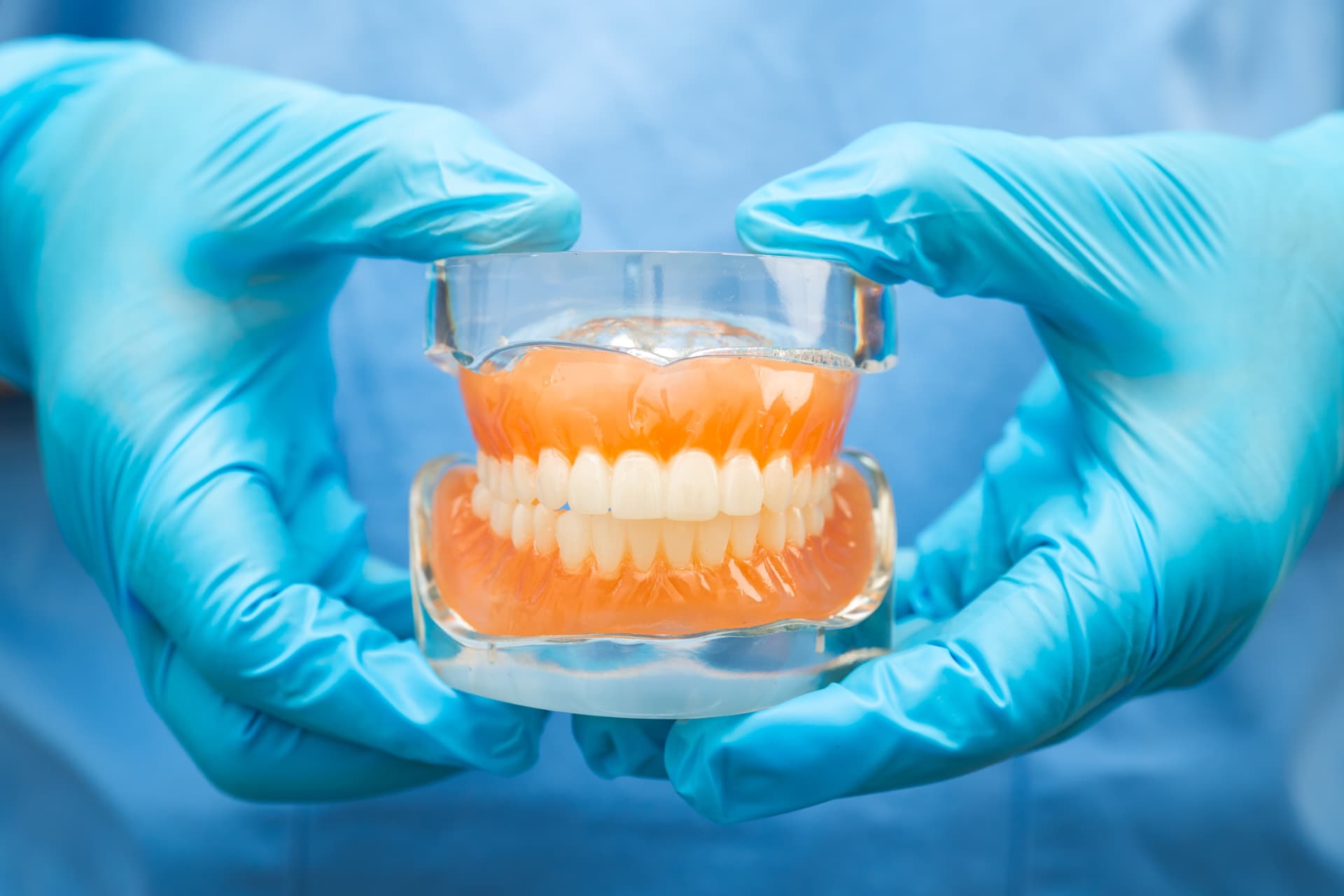
An implant-supported denture is a denture anchored to titanium implants placed in your jawbone, instead of resting loose on your gums. The most common version is the snap-in denture, also called an overdenture, which clips onto two to four implants and can be removed for cleaning. The other version is a fixed full-arch bridge that stays in permanently, a different treatment at a much higher price.
The distinction that matters is the anchor. A conventional denture stays in place through fit and suction, both of which degrade as your jawbone shrinks. An implant-supported denture transfers chewing force into the bone through the implants, the way natural tooth roots do. That is why it does not slip, why adhesive becomes unnecessary, and why the bone under it stops shrinking as fast. If you are still weighing dentures against individual implants tooth by tooth, the comparison of dental implants versus dentures covers that decision. This guide is for the middle path most denture wearers actually take.
How do snap-in dentures actually work?
A snap-in denture connects to the implants through small attachments, usually a metal housing in the denture that clips onto a stud on each implant. You press the denture down until it snaps into place, and it stays put until you pull it off, typically at night for cleaning. The nylon inserts inside the attachments provide the grip, and they wear out and get swapped in a few minutes at a routine visit.
The number of implants determines the stability and the price. Two implants on the lower arch is the established standard of care for denture stabilization, and it is where most patients start, because the lower denture is the one that floats. Four implants add noticeably more stability and cost. The upper arch usually needs at least four implants because upper jawbone is softer, though the reward is that a well-anchored upper denture no longer needs the plate covering the roof of your mouth, which returns your sense of taste and temperature.
Treatment takes a few months start to finish. The implants are placed in one surgical visit, the bone heals around them for two to four months, and then the denture is attached. Many patients wear their existing denture, modified, during healing, and in many cases a structurally sound existing denture can be retrofitted with the snap attachments instead of buying a new one.
How much do implant-supported dentures cost in 2026?
A snap-in implant denture typically costs $5,000 to $15,000 per arch in 2026. A two-implant lower overdenture, the most common entry point, runs $5,000 to $8,000 in competitive markets, while a four-implant version with a new premium denture reaches $12,000 to $15,000. Treating both arches generally lands between $10,000 and $25,000. For comparison, a conventional full denture runs $1,000 to $3,000 per arch.
That gap looks enormous until you price the conventional denture over time. Relines run $300 to $500 every one to two years as your bone shrinks. Full replacement comes every five to eight years. Daily adhesive costs $150 to $250 a year for regular users. Over a decade, a $1,500 denture quietly becomes a $5,000 to $7,000 denture, and you spend that decade losing the jawbone that makes any future implant work harder. The snap-in option costs more on day one and less per year of comfortable use, which is the honest way to compare them.
The quote you receive should itemize the implants, the attachments, the denture itself, the surgery, and the imaging. A price that seems dramatically below market is usually quoting the implants without the denture, or the denture without the attachments.
Who is a candidate for implant-supported dentures?
Most denture wearers are candidates, including people who have worn dentures for years and assume their bone is too far gone. A snap-in overdenture needs less bone than a fixed bridge, and the front of the lower jaw, where the two standard implants go, is the last place bone disappears. Even patients with significant bone loss frequently qualify without grafting, and those who need grafting usually need less of it than they fear.
The real screening factors are health, not age. Uncontrolled diabetes, heavy smoking, certain medications, and active gum disease all raise the risk of implant failure and need to be managed before surgery. None of them is an automatic no. The full list of health conditions that matter, and which ones actually rule treatment out, is covered in what disqualifies you from dental implants. The only way to know your own answer is a consultation with a 3D scan, which most implant providers offer free.
Do implant-supported dentures stop bone loss?
They slow it dramatically in the places that matter, and this is the least advertised benefit of the whole treatment. Jawbone needs stimulation to maintain itself, and it normally gets that stimulation through tooth roots. When the teeth go, the bone begins shrinking, and a conventional denture accelerates the process by pressing on the gums without stimulating anything underneath. That shrinkage is why dentures need constant relines, and why long-time denture wearers develop the sunken lower face that no denture can fix.
Implants change the mechanics. Each implant transmits chewing force into the bone around it, which tells the bone it is still needed. The bone around the implants is preserved, the denture keeps its foundation, and the fit stops degrading the way a conventional denture's fit does. The areas between implants still lose some bone over time, which is one reason four implants preserve more than two.
There is a timing lesson inside this. Every year spent on a conventional denture costs bone you may want later, and the patients who face the biggest grafting bills are usually the ones who waited longest. If implant-supported dentures are in your future at all, the treatment gets neither easier nor cheaper by postponing it.
What is it like to live with snap-in dentures?
Better than a conventional denture and short of natural teeth, which is exactly what the price buys. Chewing improves dramatically, because the denture no longer shifts under load, and studies of denture wearers consistently show bite force several times higher with implant support than without it. Speech steadies for the same reason. Adhesive is done, along with the daily ritual and the taste that comes with it. Most patients eat foods they had quietly given up, corn on the cob, apples, steak, though very hard and very sticky foods still deserve caution.
The maintenance is simple but real. The denture comes out at night and gets cleaned like any denture, the implants get brushed like teeth, and the attachment inserts get replaced every year or two for a modest fee. The denture itself lasts seven to ten years or more, longer than a conventional denture, because the implants absorb the force that wears loose dentures out. Skipping the maintenance is the main way these treatments fail, so budget for regular checkups the way you would with natural teeth.
How do snap-in dentures compare to fixed full-arch bridges?
A fixed full-arch bridge, the treatment marketed as All-on-4, is screwed onto four to six implants and never comes out. It is the closest thing dentistry has to a new set of natural teeth, and it costs $20,000 to $35,000 per arch, roughly double to triple the snap-in price. The full treatment is explained in the guide to understanding All-on-4 dental implants.
The honest comparison: the fixed bridge wins on stability, feel, and convenience, and the snap-in wins on price, easier cleaning, and easier repairs. Many patients get eighty percent of the benefit for a third of the money with a snap-in, which is why it deserves to be quoted alongside any fixed-bridge proposal you receive. An office that only presents the expensive option is making your decision for you.
How can you make implant-supported dentures more affordable?
- Get at least three itemized quotes. Pricing for identical treatment varies by thousands of dollars within one city, and consultations are usually free.
- Ask specifically about a two-implant lower overdenture. It is the lowest-cost implant treatment in dentistry relative to the improvement it delivers, and some offices skip straight past it to four-implant and fixed options.
- Ask whether your current denture can be retrofitted with snap attachments. If it is structurally sound, this can save thousands.
- Check your insurance for the denture portion. Plans that exclude implants often still cover part of the denture itself, and some now contribute to implant treatment up to the annual maximum.
- Finance on terms you have actually compared. Promotional zero-interest offers and fixed-rate loans behave very differently after the promotional window, and the breakdown of financing options for dental implants covers the real math.
The financing comparison is worth reading in full before you sign anything: CareCredit vs. LendingClub vs. Proceed Finance.

The Bottom Line
Implant-supported dentures fix the specific things denture wearers hate most, the slipping, the adhesive, the shrinking fit, at a price between a conventional denture and a fixed bridge. A two-implant snap-in lower denture is the affordable entry point, most long-time denture wearers qualify, and the ten-year cost gap versus a conventional denture is far smaller than the day-one price suggests. Get itemized quotes, ask about the options the billboard did not mention, and when you are ready, find qualified providers near you at Dental Implant Directory.
Ready to find a qualified provider?
Search our independent directory of dental implant providers organized by specialty, location, and credentials. Find Providers Near You.
Ready to find a qualified provider?
Search our independent directory of dental implant providers organized by specialty, location, and credentials.