Gum disease is the reason most adults lose the teeth they eventually want to replace with implants, which puts a large share of implant patients in an awkward position: the condition that created the need is also the condition that threatens the solution. An implant placed into a mouth with active gum disease is placed into the bacteria that destroyed the tooth before it, and the bacteria do not care that the new root is titanium.
That is why every competent implant surgeon treats gum disease before placing implants, and why a provider who does not mention it is a provider to be careful with. The good news is that gum disease is treatable, the treatment is far cheaper than a failed implant, and most patients are ready for implants a few months after it.
This guide explains what gum disease does to implants, what treatment involves, how long the wait is, and how to keep the problem from coming back around the implants.
Can you get dental implants if you have gum disease?
Not while it is active. Yes, once it is treated and stable. Every major implant guideline treats untreated periodontitis as a reason to delay surgery, and most surgeons require a periodontal exam and any needed treatment before they will schedule implants. The guide to what disqualifies patients from dental implants lists gum disease among the conditions that are fixable rather than permanent, and it is the most fixable of them.
Gingivitis versus periodontitis
Gingivitis is inflammation of the gum without bone loss. It is reversible with cleaning and better hygiene and does not itself block implants. Periodontitis is the deeper disease where the bone supporting the teeth is being destroyed. It is the one that has to be treated before implants, because the same bacteria and the same inflammatory response attack the bone around an implant.
How does gum disease affect dental implants?
It raises the risk of peri-implantitis, the infection and bone loss around an implant that is the leading cause of late implant failure. Patients with a history of periodontitis have measurably higher rates of peri-implantitis than patients without, even after treatment, and patients with untreated periodontitis at the time of surgery have the highest rates of all.
The same bacteria
The bacteria that cause periodontitis live in the pockets around teeth and colonize the gum around implants. An implant placed next to infected teeth is seeded from day one. Treating the disease first lowers the bacterial load before the implant is exposed to it.
Less bone to work with
Periodontitis destroys bone, and bone is what holds an implant. Patients who lost teeth to gum disease often have less bone at the implant site than patients who lost teeth to fracture or decay, and may need grafting. The guide to bone grafting before implants explains when it is required and when it can be avoided.
A weaker seal
The gum around an implant forms a seal that keeps bacteria away from the bone. In a mouth prone to inflammation, that seal is weaker and breaks down faster. This is why maintenance after implants matters more for patients with a periodontal history.
What does treating gum disease before implants involve?
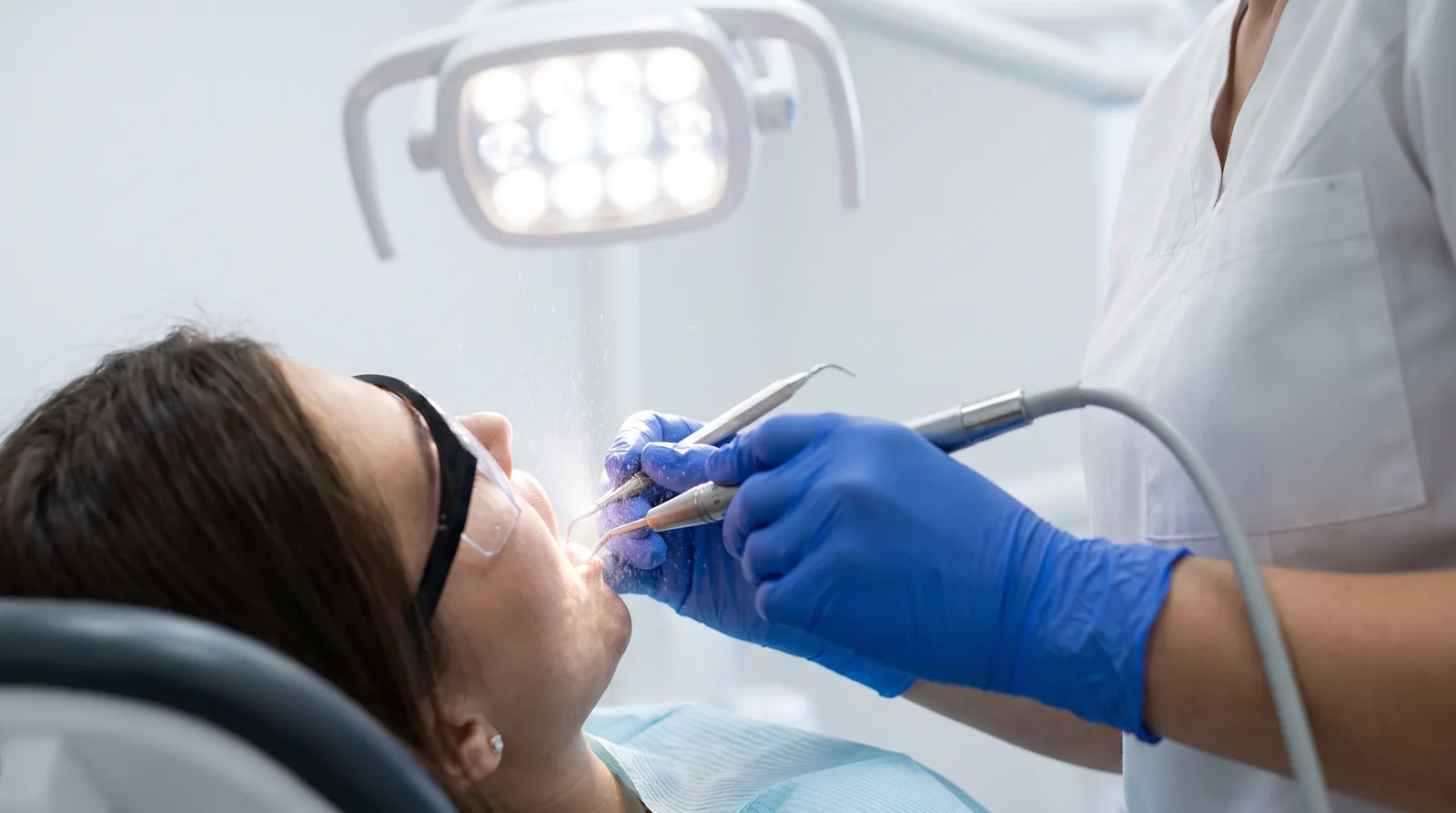
A periodontal exam to measure the depth of the pockets around each tooth, then scaling and root planing to remove bacteria and hardened deposits below the gum line, then a re-evaluation after several weeks to confirm the pockets have shrunk. Advanced cases may need periodontal surgery to reach deep pockets or to regenerate lost bone. Hopeless teeth are extracted.
Scaling and root planing
A deep cleaning below the gum, done under local anesthetic, usually across two to four visits. It is the standard first treatment for periodontitis and it resolves most moderate cases. Cost runs from a few hundred to around $1,500 for a full mouth, and dental insurance often covers part of it.
Periodontal surgery
For pockets too deep to clean without access, the periodontist folds the gum back, cleans the root surfaces, sometimes places graft material to rebuild bone, and closes the gum. It adds cost and a few weeks of healing, and it is usually done only at the sites that need it.
Extraction of hopeless teeth
Teeth with severe bone loss that cannot be saved are removed, often with a socket graft to preserve bone for a future implant. This is where the periodontal treatment and the implant plan overlap, and a periodontist is the specialist trained to decide which teeth are worth keeping. The guide to second opinions on dental implants explains why that decision deserves an independent look.
How long do you wait between gum treatment and implants?
Usually two to three months after scaling and root planing, to confirm the disease is stable at re-evaluation, and longer after periodontal surgery or extraction with grafting. Implants placed into a mouth that has been stable for a few months do well. Implants placed the week after a deep cleaning do not have the benefit of knowing whether the treatment worked.
Some surgeons place implants at the time hopeless teeth are extracted, once the rest of the mouth has been treated, which shortens the overall timeline. Ask whether that applies to your case.
Who should treat gum disease before implants?
A periodontist, ideally, since periodontists are the specialists in gum and bone disease and many also place implants, which means one provider can treat the disease, judge which teeth to keep, and plan the implants around a mouth they know. A general dentist with a hygienist can handle moderate cases. The guide to which specialist should place your implants explains what each provider brings.
A provider who proposes implants without a periodontal exam, or who plans to place implants next to teeth with untreated deep pockets, is skipping the step that decides whether the implants last.
How do you keep gum disease from coming back around implants?
Professional maintenance every three to four months, daily cleaning that reaches under any bridge, no smoking, and controlled blood sugar if you are diabetic. Patients with a periodontal history are on a tighter schedule than most for the rest of their lives, and the schedule is what keeps the implants.
- Book periodontal maintenance every three to four months, not every six.
- Use a water flosser and interdental brushes around implants daily.
- If you have a full-arch bridge, have it removed and cleaned professionally on the provider's schedule.
- Stop smoking. The guide to dental implants for smokers explains how much it matters.
- Keep blood sugar controlled. The guide to dental implants with diabetes covers the threshold providers look for.
- Report bleeding, swelling, or a bad taste around an implant immediately. The guide to the signs of a failing implant lists what each symptom means.

Should you replace teeth lost to gum disease with implants at all?
Usually, yes, and the alternative is often worse. Patients who lost teeth to periodontitis are sometimes told that implants will fail the same way, and some choose dentures on that basis. The evidence is more encouraging: treated periodontal patients who maintain their implants have survival rates only modestly below patients with no periodontal history, and far above what a denture offers in function and bone preservation.
What the higher risk actually means
A somewhat higher chance of peri-implantitis over the years, not a likelihood of failure. It translates into a stricter maintenance schedule and a lower tolerance for missed visits, not into a reason to avoid implants.
When a removable option makes more sense
A patient who cannot commit to three-to-four-month maintenance, cannot manage daily cleaning around implants, or continues to smoke heavily may be better served by an implant-supported overdenture, which is easier to clean and can be maintained by a caregiver, or by a well-made conventional denture. The guide to whether implants are worth the cost covers when the cheaper option is the right one.
What if a provider offers implants without treating your gums?
Ask for a periodontal exam with pocket measurements before agreeing to anything. If the provider says it is unnecessary despite bleeding gums, loose teeth, or a history of gum disease, get a second opinion from a periodontist. The guide to peri-implantitis describes what happens to implants placed into an untreated mouth, and it is not a risk worth taking to save a few weeks.
The Bottom Line
Active gum disease has to be treated before dental implants, because the bacteria and inflammation that destroyed your teeth will attack the bone around an implant the same way. Treatment is a periodontal exam, scaling and root planing, sometimes surgery, and extraction of hopeless teeth, followed by a two-to-three-month wait to confirm the disease is stable. Once it is, implants succeed at rates close to any other patient's, provided the maintenance schedule afterward is kept for life. And when you are ready, find qualified providers near you at Dental Implant Directory.
Ready to find a qualified provider?
Search our independent directory of dental implant providers organized by specialty, location, and credentials. Find Providers Near You.
Ready to find a qualified provider?
Search our independent directory of dental implant providers organized by specialty, location, and credentials.