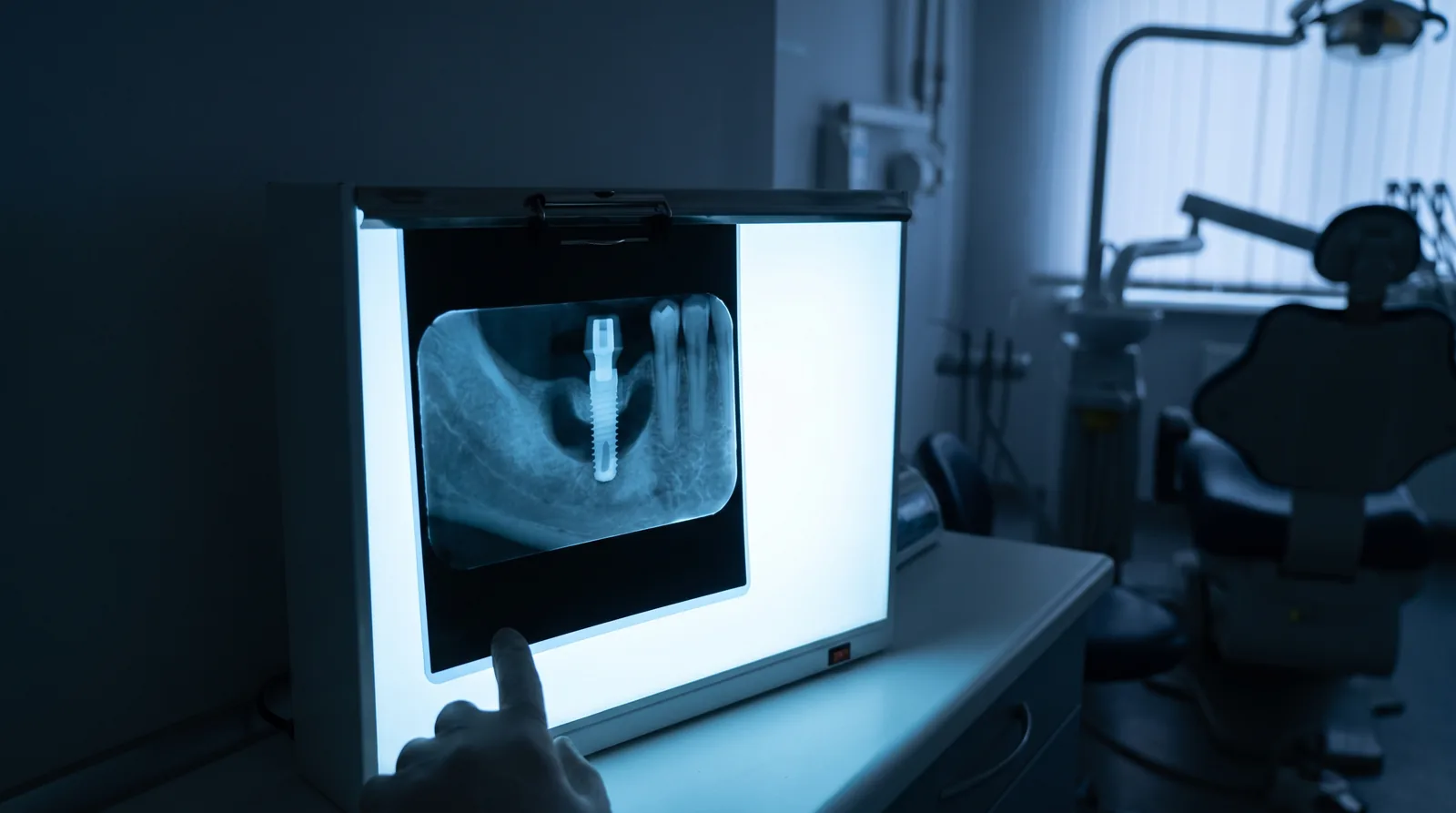
Dental implants do not get cavities, and patients sometimes take that to mean they cannot get sick. They can. The tissue around an implant can develop the same kind of bacterial infection that destroys the bone around natural teeth, and when it does, the infection has a name most patients have never heard until they are diagnosed with it. Peri-implantitis is the leading cause of implant failure after the first year, and it is largely preventable.
The difficulty is that it is quiet. It rarely hurts in the early stages, the implant feels solid, and the only signs are bleeding on brushing or a slightly puffy gum that most patients ignore. By the time an implant loosens, the bone that held it is gone. Caught early, peri-implantitis is treated in a visit or two. Caught late, it costs the implant.
This guide explains what it is, how common it is, what to look for, how it is treated, and what keeps it from starting.
What is peri-implantitis?
Peri-implantitis is inflammation of the gum and progressive loss of the bone around a dental implant, caused by bacteria that colonize the implant surface below the gum line. It is the implant equivalent of periodontitis, the gum disease that destroys the bone around natural teeth. Its milder precursor, peri-implant mucositis, is inflammation of the gum without bone loss, and it is reversible.
The progression is mucositis first, then peri-implantitis if the inflammation is not controlled. Mucositis is common and treatable with cleaning. Peri-implantitis is less common, harder to treat, and the reason the distinction matters.
How is peri-implantitis different from gum disease around a tooth?
It progresses faster, it is harder to clean, and the implant has fewer defenses. A natural tooth is attached to bone by a ligament and has a blood supply that helps fight infection. An implant is fused directly to bone with no ligament, and the gum attaches to it more loosely, so bacteria reach the bone sooner and the body's response is weaker. The implant's threaded, textured surface, designed to help bone grow onto it, also gives bacteria more places to hide once the bone recedes.
That is why the rules for implants are stricter than for teeth: more frequent professional cleaning, more careful daily hygiene, and faster response to symptoms.
How common is peri-implantitis?
Estimates vary widely with how it is defined, but reviews of the research suggest that roughly one in five implant patients develops peri-implantitis at some point, and a larger share develops the milder mucositis. Rates are higher in smokers, in patients with a history of periodontitis, in patients with diabetes, and in patients who miss maintenance visits. Rates are lower in patients who keep a three-to-four-month cleaning schedule and clean well at home.
Those figures describe patients over years, not implants in the first months. Most implants that develop peri-implantitis do so after years of service, which is why maintenance is a lifelong commitment rather than a first-year one.
What are the symptoms of peri-implantitis?
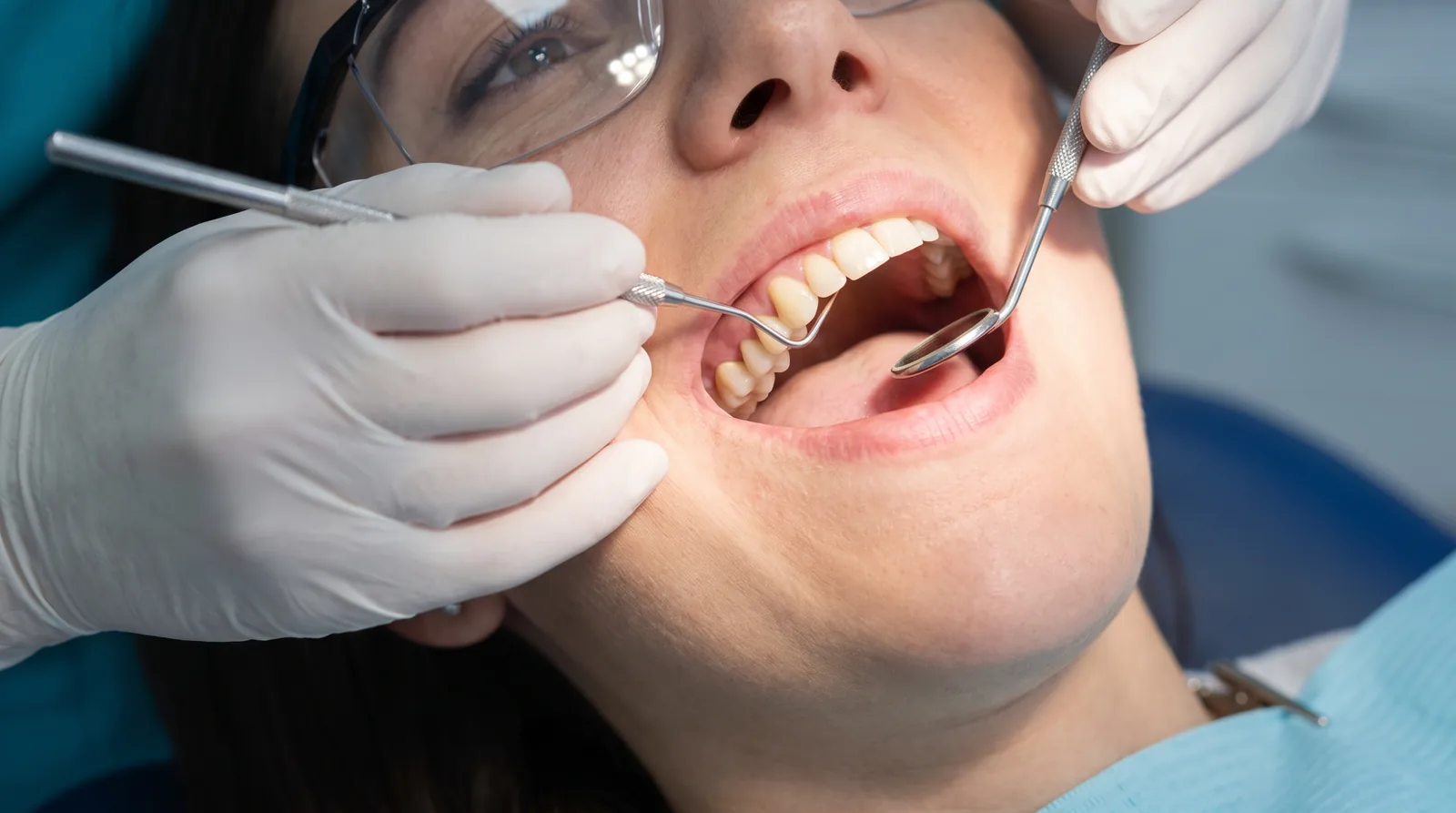
Bleeding when you brush or floss around the implant, redness or swelling of the gum, a bad taste or odor at the site, gum that pulls away from the implant and exposes metal, pus at the gum line, and eventually an implant that feels loose. Pain is often absent until late. The guide to the signs of a failing implant covers the full list and what each one usually means.
The early sign to act on
Bleeding around an implant that has been healthy for months is the sign that matters most, because it is the first one and the one at which treatment is simplest. Healthy gum around an implant does not bleed on gentle brushing. If it does, call the practice.
What the provider looks for
A probe measurement around the implant that is deeper than at the last visit, bleeding on probing, and bone loss on an X-ray compared with the X-ray taken when the implant was placed. That baseline X-ray is why providers photograph every implant at delivery, and why a patient changing practices should bring their records.
What causes peri-implantitis?
Plaque bacteria left on the implant surface, most often because the area is hard to clean, the patient does not clean it, or maintenance visits are missed. Contributing factors are smoking, a history of periodontitis, uncontrolled diabetes, excess cement left under a cemented crown, a bridge design that traps food, and an implant placed in a position that cannot be cleaned.
Design factors you can ask about
A crown or bridge with smooth, cleanable contours and a small gap at the gum is easier to keep healthy than one with bulky overhangs. Screw-retained restorations avoid the cement problem. Ask the provider how the prosthesis will be cleaned before it is made. The guide to what a prosthodontist does explains why the design of the teeth matters as much as the surgery.
Patient factors you control
Smoking is the largest. The guide to dental implants for smokers covers how much it raises the risk. Gum disease history is next, and the guide to gum disease and implants explains why treatment before implants and maintenance after are required.
How is peri-implantitis treated?
By stage. Mucositis is treated with professional cleaning and better home care, and it resolves. Early peri-implantitis is treated by cleaning the implant surface below the gum, sometimes with antibiotics or antiseptics, and the bone loss stops. Advanced peri-implantitis is treated surgically, by opening the gum to clean and decontaminate the implant surface and sometimes graft the bone defect. An implant that has lost most of its bone is removed.
Non-surgical treatment
Mechanical cleaning of the implant surface with instruments designed not to scratch it, sometimes with an antibacterial rinse or a local antibiotic, and a shortened maintenance interval. This works for mucositis and for early peri-implantitis with shallow bone loss.
Surgical treatment
The gum is folded back, the exposed implant surface is cleaned and treated, and either the bone defect is grafted or the gum is reshaped so the area can be kept clean. Success is reasonable when the defect is contained and the patient stops smoking and maintains the site, and poorer when it is not.
Removal
An implant that is loose or has lost most of its supporting bone is removed, the site is cleaned and usually grafted, and after healing a new implant can often be placed. In a four-implant full-arch case this means the bridge comes off during the process. The guide to All-on-4 problems and failure covers what that involves.
How do you prevent peri-implantitis?
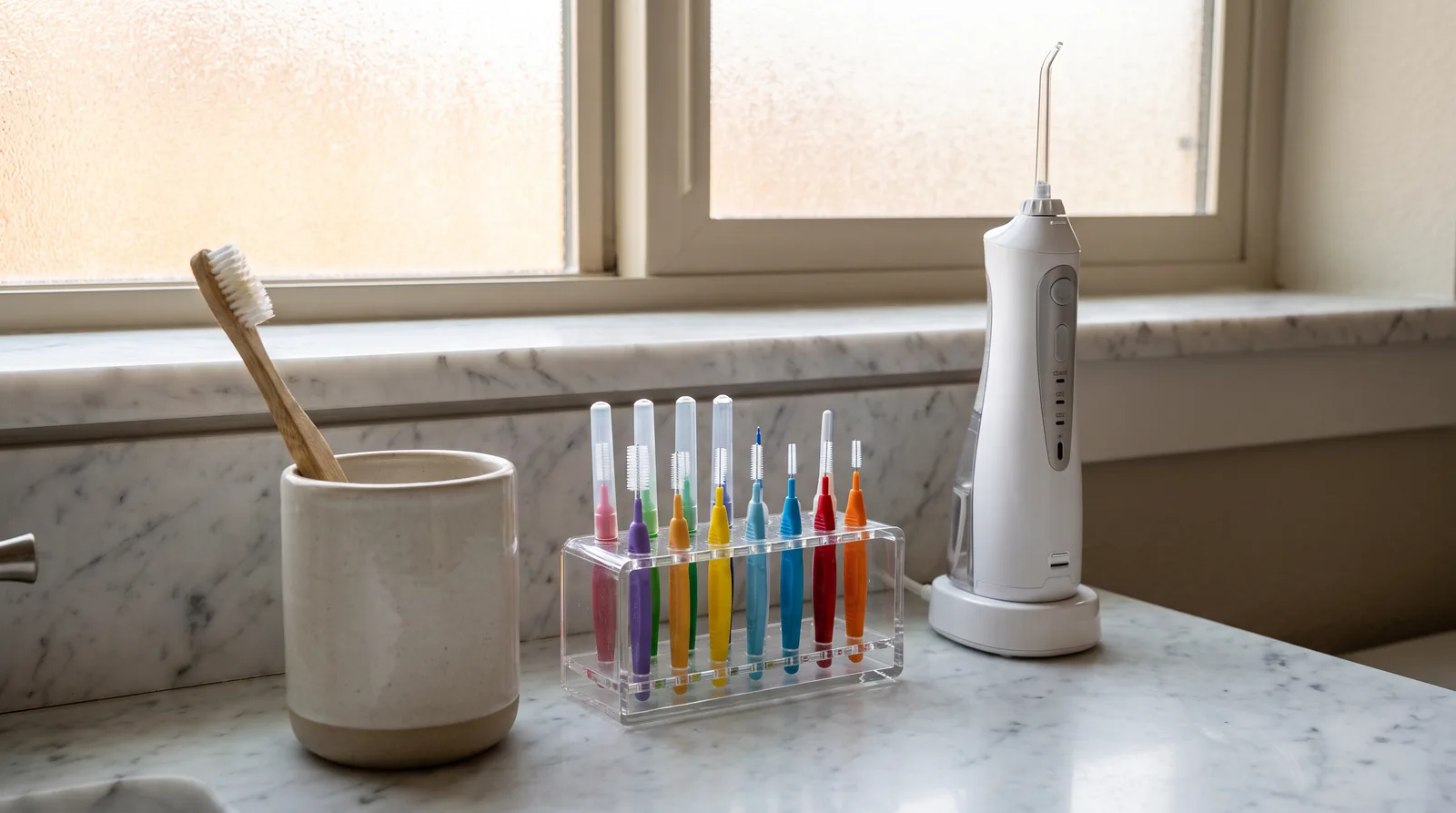
Clean around the implant every day with tools that reach below the gum and under any bridge, see the hygienist every three to four months, do not smoke, control blood sugar, and report bleeding immediately. Patients who do all five rarely develop it. The disease is common because most patients do two or three.
- Brush the implant crown and gum line twice a day with a soft brush.
- Clean between and under with a water flosser, floss threaders, or interdental brushes daily.
- Have a full-arch bridge removed and cleaned professionally on the provider's schedule, usually every one to two years.
- Keep a three-to-four-month professional maintenance interval, not six.
- Do not smoke, and keep diabetes controlled.
- Treat bleeding around an implant as a reason to call, not a thing to watch.
Can peri-implantitis be reversed?
Mucositis, the early stage without bone loss, is fully reversible with cleaning and better home care. Peri-implantitis with bone loss is not reversed in the sense of the bone growing back on its own, but its progression can be stopped, and in favorable cases surgical grafting can rebuild part of the lost bone. An implant treated early keeps most of its support. An implant treated late has lost what it has lost.
What a good outcome looks like
Bleeding stops, the gum tightens around the implant, probing depths stabilize, and the X-ray shows no further bone loss at the next check. The implant stays in service. The maintenance interval is shortened permanently.
What a poor outcome looks like
Continued bleeding and bone loss despite treatment, usually because smoking or hygiene did not change, until the implant loosens and has to come out. The site can usually be grafted and a new implant placed after healing, at the cost of a second surgery and months of time.
The window that matters
The difference between the two outcomes is often how early the patient reported the first bleeding. That is the practical reason to treat any change around an implant as a reason to call the practice within days rather than at the next scheduled visit.
Does peri-implantitis mean the implant was placed badly?
Sometimes, and usually not. An implant placed in a position that cannot be cleaned, or a crown with cement left under it, sets the patient up for infection. Most cases, though, develop around well-placed implants in patients who smoked, had a periodontal history, or drifted from their maintenance schedule. The cause matters for treatment planning, and a provider who reviews the case honestly will tell you which it was.
The Bottom Line
Peri-implantitis is a bacterial infection that destroys the bone around a dental implant, it develops quietly over years, and it is the leading cause of implant failure after the first year. Bleeding around an implant is the early sign to act on, treatment ranges from a deep cleaning to surgery to removal depending on how far it has progressed, and daily cleaning, three-to-four-month maintenance, and not smoking prevent most of it. And when you are ready, find qualified providers near you at Dental Implant Directory.
Ready to find a qualified provider?
Search our independent directory of dental implant providers organized by specialty, location, and credentials. Find Providers Near You.
Ready to find a qualified provider?
Search our independent directory of dental implant providers organized by specialty, location, and credentials.