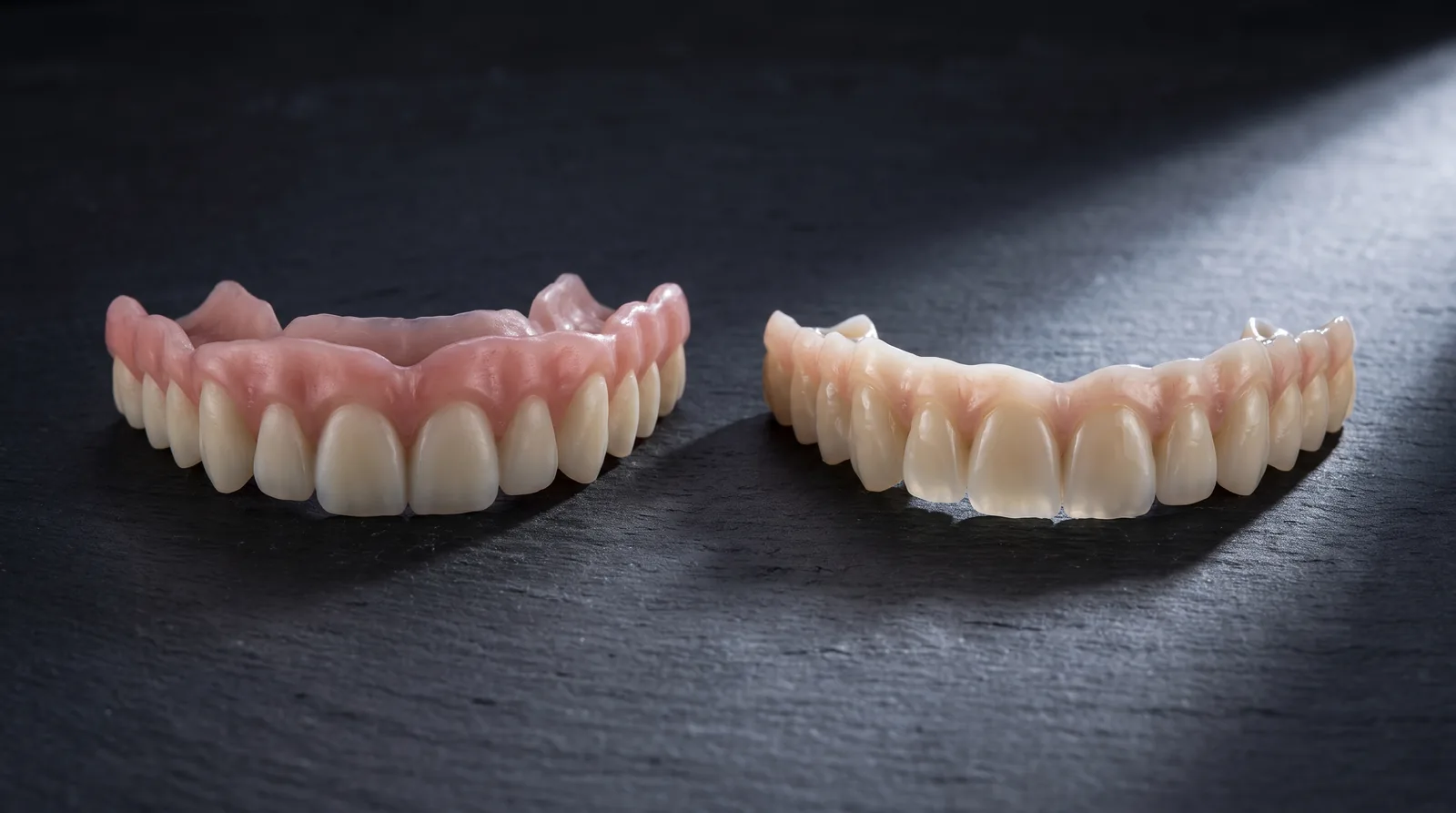
The phrase "teeth in a day" is accurate and misleading at the same time. You do walk out of All-on-4 surgery with a full set of fixed teeth. What most patients are not told clearly is that those teeth are a temporary bridge, that they will look and function differently from the final bridge, and that the switch happens months later after a second round of appointments and, at some practices, a second bill. Patients who expect the same-day teeth to be the finished product are the ones who write frustrated reviews at month four.
The gap is not a scam. The temporary bridge exists for good clinical reasons, and the final bridge cannot be made until the implants have healed and the gums have settled. But the difference between the two, and what happens in between, is the part of the process providers explain least well.
This guide covers what the temporary bridge is, why it is different, how long you wear it, what to expect when it breaks, and how the switch to final teeth actually works.
What are All-on-4 temporary teeth made of?
The temporary bridge is almost always acrylic, sometimes reinforced with a metal or fiber frame, and it is made quickly, often converted from a denture during your surgery day. It is designed to be light, to be adjusted easily, and to protect the implants while they fuse to bone. It is not designed to last.
Why the temporary is acrylic
Acrylic can be shaped and relined chairside on the day of surgery, which is what allows a fixed bridge to go in within hours of the implants being placed. It is also lighter than zirconia, which matters because the implants are not yet integrated and should carry as little load as possible. A lighter bridge, a softer diet, and a bite adjusted to avoid heavy contact all serve the same purpose during healing.
How it is made on surgery day
Most practices take impressions or a digital scan before surgery and have a denture-style bridge ready. After the implants are placed, temporary cylinders are attached to the implants, the bridge is fitted over them and locked in place with acrylic, and the whole assembly is removed, finished in the lab, and screwed back in. Some practices with an in-house lab deliver a milled temporary within a day or two instead. Either way, the bridge you receive is a healing device that happens to look like teeth.
Why do the temporary teeth look and feel different from the final ones?
Because the temporary bridge is shaped for healing and the final bridge is shaped for you. The temporary is usually bulkier, with a thicker section behind the front teeth and more material along the gum, because that extra acrylic gives it strength without a heavy frame. The tooth shapes are generic denture teeth, the color is a standard shade, and the bite is set slightly light on the back teeth to protect the implants.
Common differences patients notice
The temporary can feel large in the mouth, especially in the upper arch where it may cover more of the palate than the final will. Speech often takes a few weeks to adjust. The back teeth may feel like they do not fully meet. The gum-colored acrylic is a single shade, and the teeth may look flatter or more uniform than natural teeth. None of these is a defect. They are the trade for having fixed teeth on day one.
Why this matters for your expectations
Judge the temporary on function and comfort, not on appearance. If it lets you eat soft food, speak with practice, and smile without embarrassment, it is doing its job. Save the aesthetic feedback for the final bridge, where the shade, tooth shape, gum contour, and bite are all customized. Tell the provider what you dislike about the temporary, because that list becomes the design brief for the final.
How long do you wear All-on-4 temporary teeth?
Usually four to six months, and sometimes longer. The implants need roughly that long to integrate with bone, and the gums need time to settle into their final shape around the healing bridge. Some providers keep patients in the temporary for as long as a year if healing is slow, if the bite needs extended adjustment, or if the patient wants to test the design before committing to the final material.
During that time you follow a diet that starts liquid, moves to soft foods, and gradually returns toward normal as healing allows. The week-by-week recovery guide covers the full timeline, including when you can expect to eat normally again.
What happens if the temporary bridge breaks?
It gets repaired, usually the same day or within a few days, and it happens often enough that most full-arch practices treat it as routine. Acrylic temporaries crack when a patient bites something hard, when a grinding habit loads them at night, or simply because acrylic fatigues under months of use. A fracture is not an emergency for the implants, but a bridge that has cracked through can put uneven force on them, so it should be seen promptly.
What repair involves
A cracked temporary is typically removed, repaired with fresh acrylic and sometimes a reinforcing bar, and replaced within hours. A bridge that has broken repeatedly may be remade with a metal frame. Ask before surgery whether temporary repairs are included in your fee, how many are included, and what a remake costs. Practices vary widely, and this is one of the items most often missing from a quote, as the All-on-4 cost breakdown explains.
How to avoid breaking it
Follow the diet the provider gives you, even after the first few weeks when the temporary starts to feel solid. Avoid biting into anything with the front teeth. Wear a night guard if you have been given one. A temporary that survives to the final visit without a repair is common, and it is nearly always the patient who followed the rules.
What is the difference between the temporary and the final bridge?
The final bridge is a precision prosthesis built on a rigid frame, made of either high-strength acrylic on a titanium bar or monolithic zirconia, designed from your healed anatomy, and finished to match the tooth shape, shade, and gum contour you have approved. It is heavier, stronger, smaller in the mouth, and built to last a decade or more.
Materials for the final
An acrylic-on-titanium final is lighter and less expensive, and the teeth can be replaced individually if one wears. A zirconia final is stronger, resists staining and wear, and looks more like natural teeth, but it costs more and is harder to repair if it chips. The comparison of zirconia and acrylic All-on-4 bridges covers how to choose. Some providers include the final in the surgery fee, and some quote it separately, which is why the same procedure can vary so much in advertised price.
Fit and bite
The final bridge is made to fit the implants passively, meaning it seats without strain on any implant, which reduces screw loosening and long-term stress. The bite is balanced across all teeth rather than kept light at the back. This is the point at which chewing returns to something close to natural teeth.
Appearance
The final is where the shade is chosen, the tooth shapes are selected, and the pink material is matched to your gums and shaped so the transition is invisible when you smile. Most practices do at least one try-in of the final in wax or resin before it is made so you can see it in your mouth and request changes.
How does the switch to final teeth work?
The switch is a series of appointments over several weeks rather than a single visit. It typically starts with the provider removing the temporary, checking that every implant is solid, and taking new impressions or a digital scan of the healed implants and gums. A bite record and photographs follow. The lab produces a try-in, which you wear briefly in the chair to check appearance and bite. After any changes, the final is manufactured, delivered, and torqued onto the implants.
What the appointments look like
Expect three to five visits: a records visit, one or two try-ins, a delivery visit, and a follow-up to check the bite and adjust anything that feels off. The temporary goes back in between visits, so you are never without teeth. The whole process usually spans four to eight weeks from the records visit to delivery.
What happens to the temporary
Some practices keep the temporary as a backup in case the final ever needs to go to the lab for repair. Ask whether yours will be stored, because a spare bridge that fits your implants is worth having.
What should you ask about temporary and final teeth before surgery?
The questions below surface the parts of the process most often left out of a consultation, and the answers belong in writing.
- Is the final bridge included in my quoted price, or is it a separate fee?
- What material is the temporary, and what material will the final be?
- How many temporary repairs are included, and what does a remake cost?
- How long do you expect me to wear the temporary, and what could extend that?
- How many try-in visits are included before the final is made?
- Will you keep my temporary as a backup after delivery?
A provider who has clear answers to all six has delivered a lot of finals. The checklist for choosing an implant provider covers the rest of what to verify.

The Bottom Line
The same-day teeth after All-on-4 are a healing bridge made of acrylic, shaped to protect the implants rather than to look perfect, and worn for four to six months before the final bridge is made. The final is a precision prosthesis built on your healed anatomy, and the switch takes several appointments and, at some practices, a separate fee. Know which material you are getting for each, how many repairs are included, and whether the final is in the price before you agree to surgery. And when you are ready, find qualified providers near you at Dental Implant Directory.
Ready to find a qualified provider?
Search our independent directory of dental implant providers organized by specialty, location, and credentials. Find Providers Near You.
Ready to find a qualified provider?
Search our independent directory of dental implant providers organized by specialty, location, and credentials.