What the Google Screened box costs, how often it actually appears, and how to keep it from filling your schedule with cleanings instead of full-arch consults.
Local Services Ads are the only placement on Google where a dental practice can sit above every text ad and pay only when a patient actually calls. For a practice selling cases worth $20,000 and up, that sounds like the obvious first channel to switch on, and some practices that have done it are getting full-arch consults for under $100 a lead. Others are paying for a steady stream of emergency extractions and wondering where the implant patients went.
The difference between those two outcomes is rarely the budget. It comes down to whether the practice understood, before launching, what the LSA unit can and cannot target, how often it even appears, and what happens to a $25,000 inquiry when it lands on an untrained front desk.
This guide covers how Local Services Ads work for dentists, what they cost, the specific ways they go wrong for implant practices, and a setup that keeps the lead mix tilted toward the cases you actually want.
What are Google Local Services Ads and how do they work for dentists?
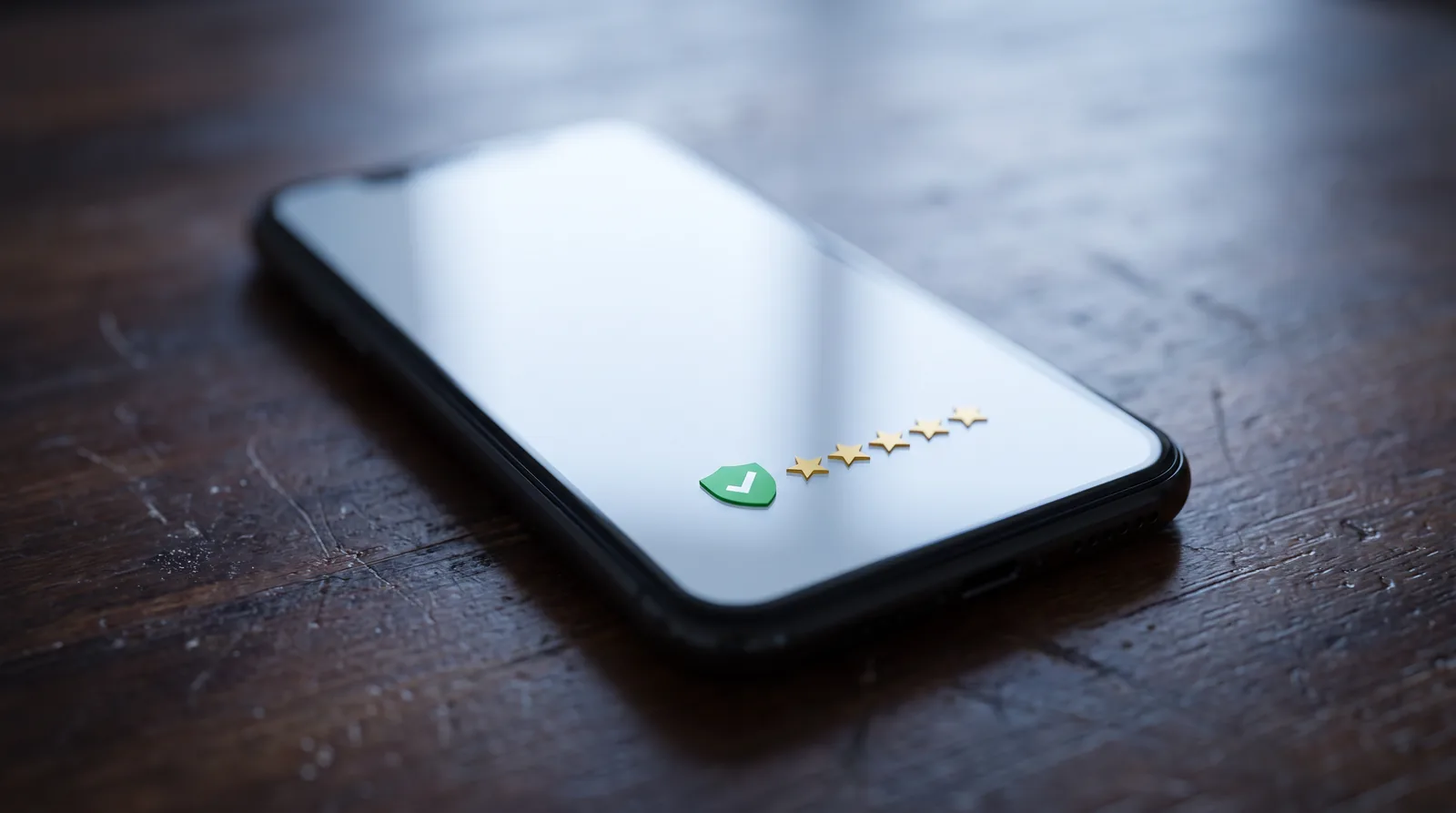
Local Services Ads are the box of three or four businesses that appears at the very top of a Google search for a local service, each one showing a Google Screened badge, a star rating, and a call button. Google opened the format to dentists in 2023, and the practice pays per lead, meaning a call or a message, rather than per click.
The unit differs from a text ad in three ways that matter for an implant practice:
- There are no keywords. You choose service categories and a service area, and Google decides which searches your practice matches.
- There is no ad copy and no landing page. The patient sees your name, rating, hours, and a button.
- Ranking inside the box is driven by your review count and rating, how quickly you respond to leads, and your proximity to the searcher, not primarily by your bid.
What does Google Screened mean?
Google Screened is the badge that healthcare and professional services providers earn after Google verifies the practice's license and runs background checks on the business and, in some categories, the owner. It is not the same as the Google Guaranteed badge used for home services, which comes with a satisfaction refund, though patients rarely know the distinction and the badge reads as a trust signal either way. Verification typically takes two to six weeks, so any practice planning a seasonal push should apply well ahead of it.
How is a lead charged?
A lead is a phone call that connects or a message sent through the unit. You set a weekly budget and Google charges per lead up to that cap. Leads that are spam, outside your service area, or for a service you do not offer can be disputed within a set window, and Google credits them back if it agrees.
How often does the LSA box actually appear on an implant search?
Less often than practices expect. A May 2026 WebFX study of 500 local service searches found the LSA box appeared on only 28% of them, rising to 49% on searches that named a city. The Local Pack, by comparison, appeared on 98%.
In practice, that means a practice running only LSAs is absent from somewhere between half and three quarters of the searches in its market, depending on how patients phrase them. When the box does appear it always takes position one, which is why it performs so well per impression, but there are fewer impressions than the position suggests.
How many clicks does the LSA unit take?
When every unit is present on the page, Local Services Ads take 13.8% of clicks, according to BrightLocal's click study of 5,500 local searches. Organic listings take 43.9%, the Local Pack 28.8%, and text ads 11.4%. The LSA box is the strongest single paid unit, slightly ahead of text ads, but it is still competing for a small slice of the page. The full breakdown, and what it means for budget order, is in where dental implant patients actually click.
What do Local Services Ads cost for a dental practice?
Agency-reported cost per lead for dental LSAs mostly falls between $30 and $65, with the full range running from about $20 in small markets to $95 in dense metros. Google does not publish an official figure, and early beta data from 2023 showed averages above $120 per lead, so the cost has come down as more practices entered the category and Google refined its matching. For comparison, WordStream's 2026 benchmarks put the average cost per lead on Google Search text ads for dentists at $72.97, with an $8.00 average cost per click. On cost per inquiry, LSAs usually win.
Why cost per lead is the wrong number for an implant practice
A $45 LSA lead that turns out to be a patient asking about a chipped filling is not a $45 implant lead. It is $45 spent on a patient you may not want. Because LSAs match on broad categories, the lead mix for a practice listed under "dentist" will reflect the general population of dental searches, where routine and emergency care dominate and full-arch inquiries are a small fraction.
The number to track instead is cost per booked implant consultation. Consider a practice receiving 40 LSA leads a month at $50 each. If four of those are implant inquiries and two book a consult, the practice is paying $1,000 per booked consult. That may still be an excellent return on a $25,000 case, but it is a very different number from the $50 on the invoice. Working through the cost per full-arch case by channel is the only way to compare LSAs with anything else honestly.

What are the advantages of LSAs for an implant practice?
For a practice with a strong review profile and a trained front desk, LSAs can be the cheapest implant consultation available on the page. The advantages come down to four things.
You pay only when the phone rings. Clicks that bounce cost nothing, whereas a text ad campaign at $20 to $30 per click in a metro can burn $300 before a single patient calls. The LSA model moves that risk to Google.
Reviews do the ranking. If your practice has more and better reviews than the competition, you will rank higher in the box regardless of who outbids you. For a practice that has already invested in earning Google reviews, LSAs convert that investment directly into calls.
There is no landing page to build or maintain. That is a genuine advantage for a single-location practice without a marketing team, even though, as the next section explains, it is also the channel's biggest weakness.
The badge carries trust the patient did not have to earn. A patient choosing between four unfamiliar practices tends to tap the one with a verification badge, and for implant patients, who are anxious about choosing the wrong provider for a major procedure, that signal matters far more than it does for a cleaning.
What are the disadvantages of LSAs for an implant practice?
The limits are no keyword control, an unpredictable presence on the page, a review-gated ranking, and a conversion that happens entirely on the phone. Any one of these can turn a good channel into an expensive one for a practice focused on implants.
You cannot target implant searches specifically
This is the central problem. LSAs will not let you bid on "All-on-4" or "full mouth implants." Your practice is matched to dental searches broadly, and the lead mix follows. Some practices mitigate this by listing only the implant-related service categories Google offers and by disputing leads for services they do not provide, but there is no way to exclude a cleaning inquiry before it costs you a lead fee.
The box is missing from most searches
With the LSA unit present on only about 28% of local service searches, a practice depending on it alone is invisible most of the time. LSAs need to sit on top of a Google Business Profile that ranks in the Local Pack and an organic presence, not replace them.
Thin reviews mean a thin position
A practice with 40 reviews in a market where competitors have 300 will rank near the bottom of the box or outside it entirely, and budget does not fix this. The only lever is reviews, and that takes months.
The front desk is the entire funnel
With no landing page, the patient's first impression of your practice is the person who answers the phone. A $25,000 inquiry that reaches a receptionist who says "we'd have to see you first" and offers an exam in three weeks is a lost case. Every practice running LSAs should have a short implant phone script, a same-week consult slot held open, and someone who can answer the financing question on the first call. The full-arch consultation script was written for the in-person consult, but its opening questions work just as well on the phone.
Responsiveness affects ranking
Google tracks how quickly you answer and how many leads you miss, and a practice that lets LSA calls go to voicemail after hours will watch its position drop. Forwarding calls to a trained answering service or a treatment coordinator's cell is often the difference between a channel that works and one that does not.
How should an implant practice set up Local Services Ads?
Apply early, pick categories deliberately, prepare the front desk before the first lead arrives, and review every lead weekly for disputes and for the implant share. The setup takes an afternoon; the discipline is ongoing.
- Apply for Google Screened verification now, before you need it, since approval takes two to six weeks.
- In your service categories, select the implant and oral surgery categories Google offers for your license type, and leave off routine services if your goal is implant cases. Accept that some general inquiries will still come through.
- Write a one-page phone script for implant inquiries covering how many teeth are missing, how long the patient has been considering treatment, and whether they have a budget or financing question, and train everyone who answers the phone on it.
- Hold at least two consult slots per week open for LSA and other paid inquiries, so the patient can be booked within days rather than weeks.
- Forward LSA calls after hours to a person rather than voicemail, and respond to message leads within the hour.
- Review every lead each week, dispute the ones outside your services or area, and record which leads were implant inquiries and which of those booked.
- Put call tracking in place so LSA calls are recorded, scored for front desk performance, and attributed alongside your other channels.
- Keep the review engine running, because your position in the box will follow your review count more closely than your budget.

The Bottom Line
Local Services Ads give an implant practice the top position on the page and charge only when a patient calls, which makes them the cheapest paid inquiry available when the practice has the reviews to rank and the front desk to convert. They cannot target implant searches directly, they appear on a minority of searches, and they put the entire conversion on the phone, so they belong on top of a strong Google Business Profile and organic presence rather than in place of one. Judge them on cost per booked implant consult, never on cost per lead. And when you want to appear in the organic listings that take the largest share of the page, list your practice on Dental Implant Directory.
Get found by implant patients
Join the directory and start receiving qualified inquiries in your area. Plans start at $19.99/month.
Explore Listing Plans