
The structure of a full-arch consultation that closes, in order: what to establish before the exam, how to present findings without a lecture, how to frame the fee, and how to end the visit so the patient leaves with a decision rather than a brochure.
A full-arch consultation is the most valuable hour in an implant practice, and in most practices it is unscripted. The surgeon examines, explains, quotes, and hopes. The patient nods, says they need to think about it, and disappears. The practice concludes that the patient could not afford it, when the truth is usually that the consultation never gave them a way to say yes.
The guide to why implant patients ghost after the consult identifies the levers: what the patient believes walking in, whether fear is addressed, how the fee is presented, what happens in the 48 hours after, and whether the practice's online presence backs up what was said. This guide is the consultation itself, step by step, so that the levers are pulled in the room rather than left to chance.
It covers the sequence, the language at each step, and the ending that turns a consultation into a scheduled case.
What should happen before the surgeon walks in?
The treatment coordinator should have learned why the patient came, what they are afraid of, what they have been told before, and whether cost is the main concern, and should have told the surgeon. The consultation should open with the surgeon already knowing the patient's story. Patients who have to repeat themselves feel unheard, and a surgeon who opens with "so what brings you in" has wasted the coordinator's work.
The intake conversation
Ten minutes with the coordinator, not a form. "What made you decide to come in now?" "What has stopped you before?" "What worries you most about this?" The answers shape everything that follows. The guide to the treatment coordinator role covers this conversation in detail.
The handoff
The coordinator briefs the surgeon in one minute: the patient's situation, their fear, their prior experience, and their cost sensitivity. The surgeon walks in and opens with what they heard.
How should the surgeon open?
By reflecting the patient's situation back to them, acknowledging the courage it took to come in, and stating what the visit will cover. Something close to: "I understand you have been dealing with a denture that will not stay put and that you are worried about what fixing this involves. Here is what we will do today: I will examine you, we will look at your scan together, I will tell you honestly what your options are, and before you leave you will know what each one costs and how people pay for it." The patient now knows the price question will be answered and can stop bracing for it.
How should findings be presented?
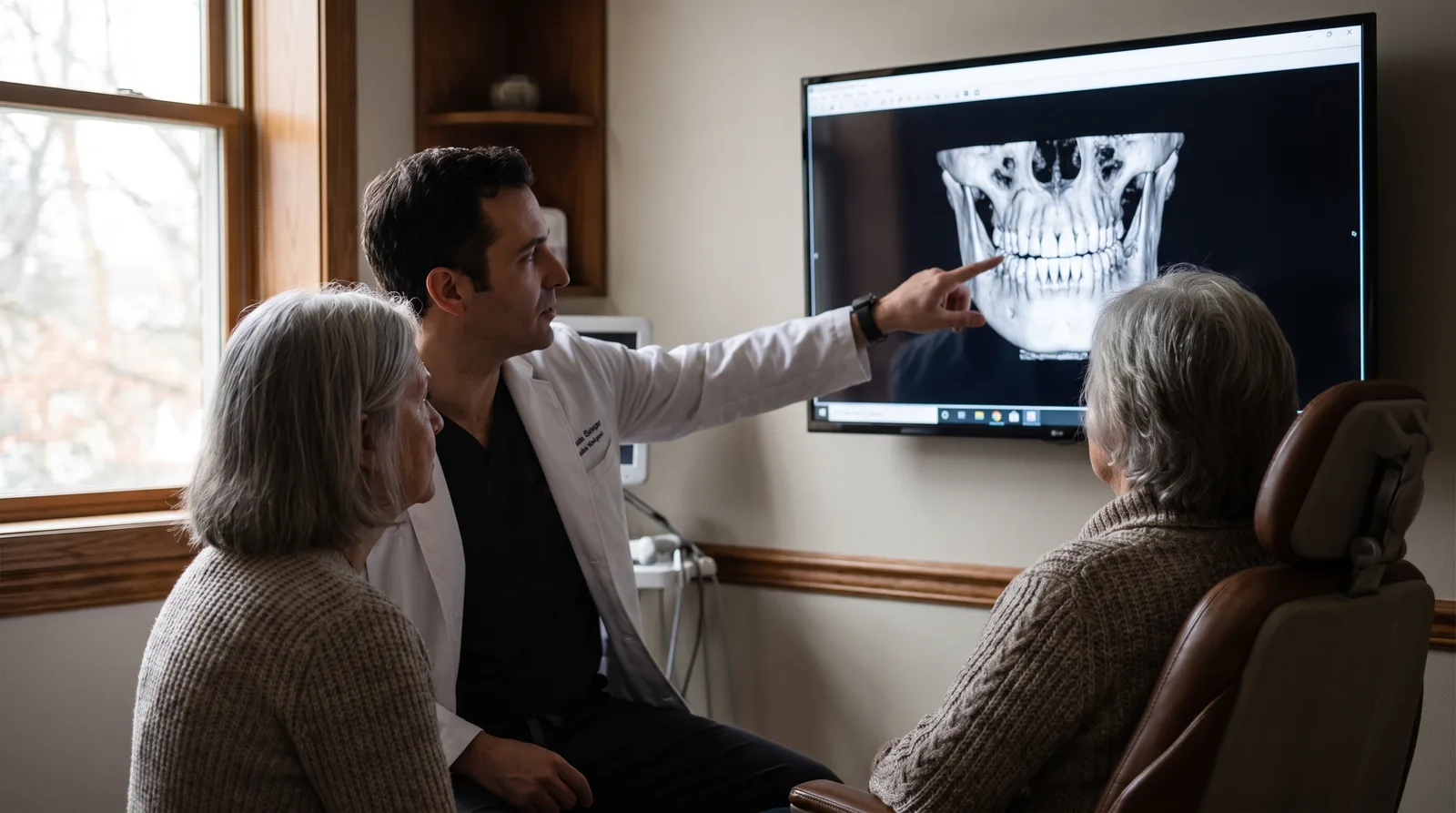
On the scan, in plain language, with the patient's own anatomy on the screen, and with the emotional reality named before the clinical one. Patients do not remember the bone density number. They remember whether the surgeon understood how they feel about their mouth.
Name the fear
"Most people in your situation are embarrassed about their teeth and afraid this will hurt or cost more than they can manage. Both of those are things we can deal with." Naming the fear out loud lowers it. Ignoring it leaves the patient alone with it.
Show, do not lecture
The CT scan on the screen, the implant positions drawn on it, a photograph of a similar finished case from the practice, with permission. Three minutes of showing beats twenty of explaining.
Offer a choice, not a verdict
Two options when there are two: a fixed bridge and a removable overdenture, or four implants and six. A patient given a choice feels in control. A patient given a single plan feels sold. The guide to All-on-4 versus All-on-6 and the guide to full mouth implant options are written for patients and can be handed over after the visit.
How should the fee be presented?
In the same visit, by the coordinator, in phases, with the monthly payment next to the total, and with financing run in the room. The single largest cause of ghosting is a patient who leaves with a big number and no way to pay it. The patient financing guide covers the lender setup; this is the presentation.
The handoff back to the coordinator
The surgeon summarizes the plan and the options, says the coordinator will go through the investment and the ways to pay for it, and leaves. Surgeons who present fees are worse at it than coordinators and it changes the relationship.
Phases, not a lump sum
"The surgical phase is X, the temporary teeth are included, the final bridge is Y, and the total is Z." A total alone lands as a loss. A total built from parts the patient understands lands as a plan.
Monthly next to total
"Most of our full-arch patients choose a monthly plan. For this case that looks like about $X a month over N years." The monthly figure is the one the patient compares against their budget. Presenting the total alone leaves them to do the division at home, badly.
Run the application now
"Would you like to see what you qualify for? It takes a few minutes and does not commit you to anything." Financing run in the room produces an answer while the patient is motivated. Financing offered as a link in an email produces silence.
How should the consultation end?
With a specific next step, a date, and the patient's own words about what they want. Not "think it over and call us." The close is a question the patient can answer yes to without feeling pushed.
The three closes
For a patient who is ready: "Shall we get you on the schedule? The next surgical date is the 14th." For a patient who needs to talk to someone: "Who do you need to talk to, and would it help if I sent you a summary you can share tonight? I will call you Thursday." For a patient who says they need to think: "Of course. What is the thing you most need to think about?" The last question surfaces the real objection, which is usually cost, and reopens the financing conversation.
What the patient leaves with
A one-page summary of the plan and the options, the itemized fee, the monthly figure, the financing outcome if run, the surgeon's name and the coordinator's direct number, and the date of the follow-up call. Never a brochure alone.
What happens in the 48 hours after?
A personal message from the coordinator within two hours, referencing the patient's specific situation, attaching the summary. A call at the agreed time. A second touch a few days later if there is no answer. The ghosting guide describes why the patient's readiness decays from 70 percent to 40 percent by Friday without contact, and the post-consult follow-up sequence guide lays out the touches.
What should the consultation never include?
Pressure to sign today, a discount that expires at the door, a plan that removes teeth the patient did not know were at risk without explaining why, a fee with no breakdown, or a surgeon who leaves without the patient knowing the next step. Each of these is a reason patients get a second opinion and do not come back. The patient-side guide to second opinions describes exactly what sends them elsewhere, and a practice that reads it will recognize its own consultation in a few of the examples.

How do you know the script is working?
Close rate, measured monthly as consults held divided into cases scheduled. A practice that moves from a 25 percent close to a 40 percent close has increased cases by 60 percent with no additional marketing, and the guide to the cost of a full-arch case shows what that does to cost per case. Track it, review the consultations that did not close, and adjust the script where they went wrong.
The Bottom Line
A full-arch consultation closes when the surgeon opens knowing the patient's story, names the fear before the findings, shows the plan on the patient's own scan, offers a choice, and hands off to a coordinator who presents the fee in phases with a monthly figure and runs financing in the room, then ends with a specific next step and a date. The patient leaves with a summary and a follow-up scheduled, and hears from the practice within two hours. Practices that script this see close rates rise without spending another dollar on marketing. And when you are ready to be found, explore listing plans at Dental Implant Directory.
Get found by implant patients
Join the directory and start receiving qualified inquiries in your area. Plans start at $19.99/month.
Explore Listing Plans