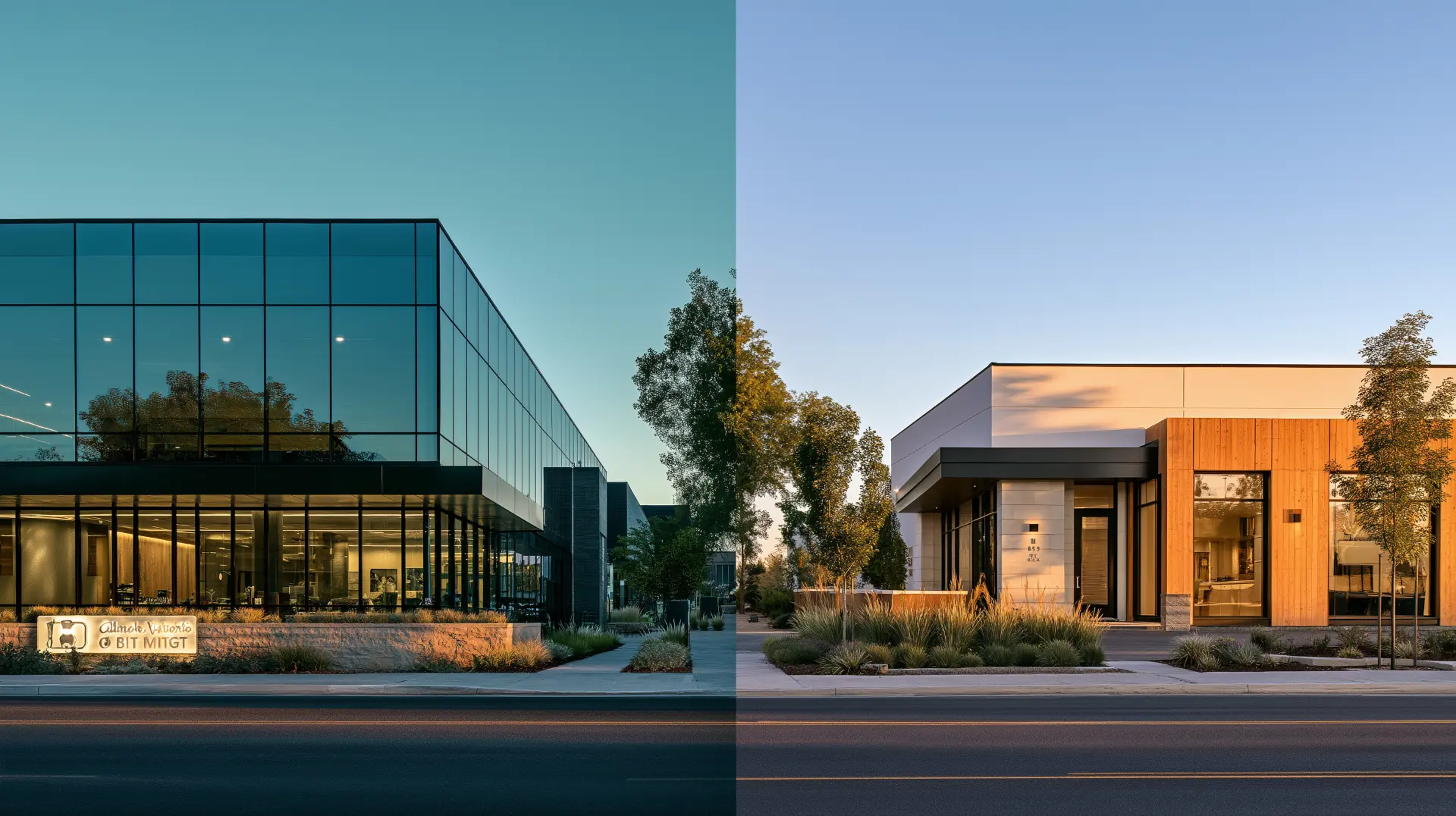
If you have started researching dental implants, you have almost certainly seen the ads. National implant brands run television commercials, billboards, and search ads promising new teeth in a day, all under one roof, with financing ready to go. Meanwhile, the periodontist twenty minutes from your house has a modest website, a few dozen Google reviews, and no ad budget at all. The gap in marketing is enormous. The gap in surgical quality may run in either direction, and that is the problem.
Choosing between a corporate implant center and a local office is not like choosing between a chain restaurant and a diner. This is surgery. The decision affects who places your implants, what happens if a complication shows up two years later, and how much pressure you feel in the consultation room. Most patients make this choice knowing almost nothing about how each business model actually works.
This guide breaks down how corporate centers and local offices differ on ownership, cost, surgical staffing, follow-up care, and sales tactics, so you can judge both on substance instead of advertising.
What is a corporate dental implant center?
A corporate implant center is a clinic owned or managed by a dental support organization, usually shortened to DSO. A DSO is a company that handles the business side of dentistry: marketing, staffing, purchasing, real estate, and administration. Licensed dentists still perform the clinical work, because laws in every state require it, but the brand, the systems, and often the sales process belong to the corporation.
This model is a large and growing share of American dentistry. According to the American Dental Association's Health Policy Institute, about 16 percent of U.S. dentists were affiliated with a DSO as of 2024, and the number climbs to 27 percent among dentists within ten years of dental school. The biggest implant-focused brands follow this model. ClearChoice, the most heavily advertised implant center in the country, operates under the Aspen Group umbrella, one of the largest DSOs in the United States.
The corporate model has real strengths. High-volume centers concentrate everything in one building: CT scanning, surgery, an on-site lab, and financing staff. A center that places full-arch implants every day develops repeatable systems, and repetition matters in surgery. The model also has structural weaknesses, which this guide covers below, and most of them trace back to one fact: the clinic has revenue targets set by a corporation, not by the dentist treating you.
How is a local implant office different?
A local implant office is owned by the dentist or specialists who treat you. That single difference drives almost everything else. The person responsible for your surgical outcome is also the person whose name and reputation are on the building, and who answers to you rather than to a regional manager.
Local offices placing implants generally fall into three groups: periodontists, oral surgeons, and general dentists who have invested in implant training. The best of them rival or exceed corporate centers in both technology and case volume. Others place a handful of implants a year. That range is the local model's honest weakness. There is no brand standard behind an independent office, so the burden of vetting falls entirely on you. A structured way to do that vetting is covered in Dental Implant Directory's guide on how to choose a dental implant provider.
The local model's strength is continuity. The dentist who plans your case typically places the implants, restores them, and sees you for every follow-up visit across the life of the implant. When something needs adjusting in year three, you call the same office and see the same doctor.
Do corporate implant centers cost more than local dentists?
Often, yes, particularly for full-arch treatment. Corporate centers carry national advertising budgets, corporate overhead, and premium single-visit positioning, and their full-arch pricing tends to sit at or above the top of the local market. Many patients report ClearChoice-style quotes in the range of 25,000 to 35,000 dollars or more per arch, while independent offices in the same city frequently quote the same treatment for less. A full breakdown of what drives those numbers is in the guide to All-on-4 dental implant cost.
Location moves prices as much as business model does. Average full-arch pricing differs by thousands of dollars between states, and between cities within the same state. A patient comparing quotes in Houston is working from a different baseline than one in a smaller Texas market, which is why any quote should be judged against local averages rather than a national number you saw in an ad.
Be careful comparing financing offers rather than prices. Corporate centers are built to arrange financing on the spot, which is convenient but can blur the actual cost of treatment behind a monthly payment. A local office may quote a lower total but leave you to arrange your own lending. Understand the full amount financed, the term, and the rate in both cases. The guide to financing dental implants through CareCredit, LendingClub, and Proceed explains what to look for before you sign anything.

Who actually places your implants at each?
At a local office, the answer is usually simple: the dentist or specialist you met at the consultation. At a corporate center, the answer varies by location, and you should ask directly.
Large centers staff a surgical team that may include an oral surgeon or periodontist alongside restorative dentists, and the surgeon you meet at a consultation is not always the one operating on the day of surgery. Some locations use traveling surgeons who cover multiple centers. That does not make the surgery unsafe, and team-based surgery is standard in hospitals, but it changes the relationship. If the person who placed your implants is three states away next month, your follow-up care lands with whoever is on site.
At either type of practice, the question that matters is the same. Ask exactly who will place your implants, what their credentials are, how many cases like yours they complete in a year, and who will see you at each follow-up visit. A qualified provider of any business model answers those questions without hesitation.
What happens if something goes wrong after surgery?
This is where the two models separate most sharply, and it is the question patients ask least often.
Implants can need attention years after placement. Screws loosen, prostheses chip, gum and bone levels change. At a local office, revision care is a phone call to the doctor who did the work. Independent dentists live on local reputation, and standing behind their surgery is how that reputation survives.
At a corporate center, follow-up care runs through the system rather than a person. That can work well: large centers have written warranty policies, and a big organization can absorb the cost of a remake. But patients should read the warranty terms, not the headline. Ask what the warranty covers, for how long, whether it requires you to keep every scheduled maintenance visit at that center, and what happens if your local center closes or your surgeon moves on. Corporate locations do close, and when one does, your records and your warranty may transfer to a center much farther away.
There is one more scenario worth naming. If you seek a second opinion or revision from an outside dentist after corporate treatment, some local providers are reluctant to take over another clinic's full-arch work. Whoever you choose first, you are choosing them for the long term, so choose as if the relationship will last twenty years, because it should.
What are the red flags at corporate centers and local offices?
Both models have failure modes. Learn the specific ones for each.
Red flags at a corporate implant center
The most reported problem is sales pressure. Consultations at some centers follow a scripted arc that ends in a same-day decision: a discount that expires today, a financing application started before you have left the building, a treatment coordinator whose job title is closer to sales than clinical care. Surgery decisions do not expire in an afternoon. Any center that ties price to signing today is telling you about its incentives.
The second flag is the one-treatment answer. Full-arch centers are structured to deliver full-arch treatment, and a patient with several failing teeth may be steered toward extracting everything rather than saving what can be saved. If a center recommends removing teeth that another dentist calls savable, get a second opinion before anything is extracted. Extraction is not reversible.
Red flags at a local office
The local equivalent is the occasional implant dentist: a practice that places a few implants a year, quotes attractive prices, and refers complications out when they occur. Low fees paired with vague answers about case volume are a warning. So is an office that cannot show you before-and-after cases of treatment similar to yours, or that plans surgery without a CT scan.
A structured consultation exposes most of this quickly. The guide to preparing for your first implant consultation covers what a thorough evaluation should include, at any type of practice.
What questions should you ask before choosing either one?
Take the same list to both consultations and compare the answers side by side.
- Who exactly will place my implants, and what are their credentials and annual case volume for treatment like mine?
- Will the same doctor handle my surgery, my restoration, and my follow-up visits? If not, who handles each?
- What is the total cost in writing, itemized, including the CT scan, extractions, grafting, the temporary prosthesis, and the final prosthesis?
- What does your warranty or revision policy cover, for how long, and what are the conditions?
- If I decline treatment today, does the price change?
- Can I see cases like mine that you treated, with names of the treating clinicians?
- What happens to my care if this location closes or my surgeon leaves?
The answers matter more than the logo on the door. A corporate center with an experienced resident surgeon, transparent pricing, and a written warranty can be an excellent choice. So can a high-volume local specialist who has placed implants in your town for fifteen years. What you are screening out is the pressured sale on one side and the underqualified generalist on the other.
The Bottom Line
Corporate implant centers offer convenience, repeatable systems, and built-in financing, but their consultations can run on sales targets, and their care model outlasts any individual doctor. Local offices offer continuity and personal accountability, but quality varies office to office, and the vetting is on you. Neither model is automatically better. The right provider is the one who answers hard questions plainly, shows you their work, and lets you decide on your own schedule. And when you are ready, find qualified providers near you at Dental Implant Directory.
Ready to find a qualified provider?
Search our independent directory of dental implant providers organized by specialty, location, and credentials. Find Providers Near You.
Ready to find a qualified provider?
Search our independent directory of dental implant providers organized by specialty, location, and credentials.