Dental Implants After 60: Costs, Coverage, and What Changes With Age
Most implant patients are over 55, and the questions they ask are different: what Medicare covers, whether it is too late, and where the money comes from on a fixed income. These guides answer those questions directly, without the program listings that stopped taking applications years ago.
The paying-after-65 post is the long one. It covers Medicare, Medicare Advantage dental benefits, financing, and the assistance program in each state. The free and low-cost post separates the programs that deliver dentures and implants to older adults from the ones that only collect phone numbers. The oral health post explains what changes in the mouth after 60 and what to do about each change before it becomes an implant problem.
Age alone does not rule anyone out, and a separate guide explains why there is no upper age limit. Guides on blood thinners, dementia, comparing Medicare Advantage plans at open enrollment, and the implant grant myth cover the questions that come up most often after 65. When you are ready to look at providers, the directory lists practices by city with Google ratings and review counts.
Start here

How Do You Pay for Dental Care After 65? Medicare, Financing, and Assistance by State
A plain-language guide to what Medicare does and does not cover, where the money actually comes from, and the program in your state that can help.
Read the guideAfter 60 guides

Medicare Advantage Dental Implant Coverage: How to Compare Plans at Open Enrollment
How to read a Medicare Advantage plan's dental benefit for implant coverage specifically, the caps and clauses that decide what you actually receive, and a step-by-step method for comparing plans during open enrollment if implants are in your future.
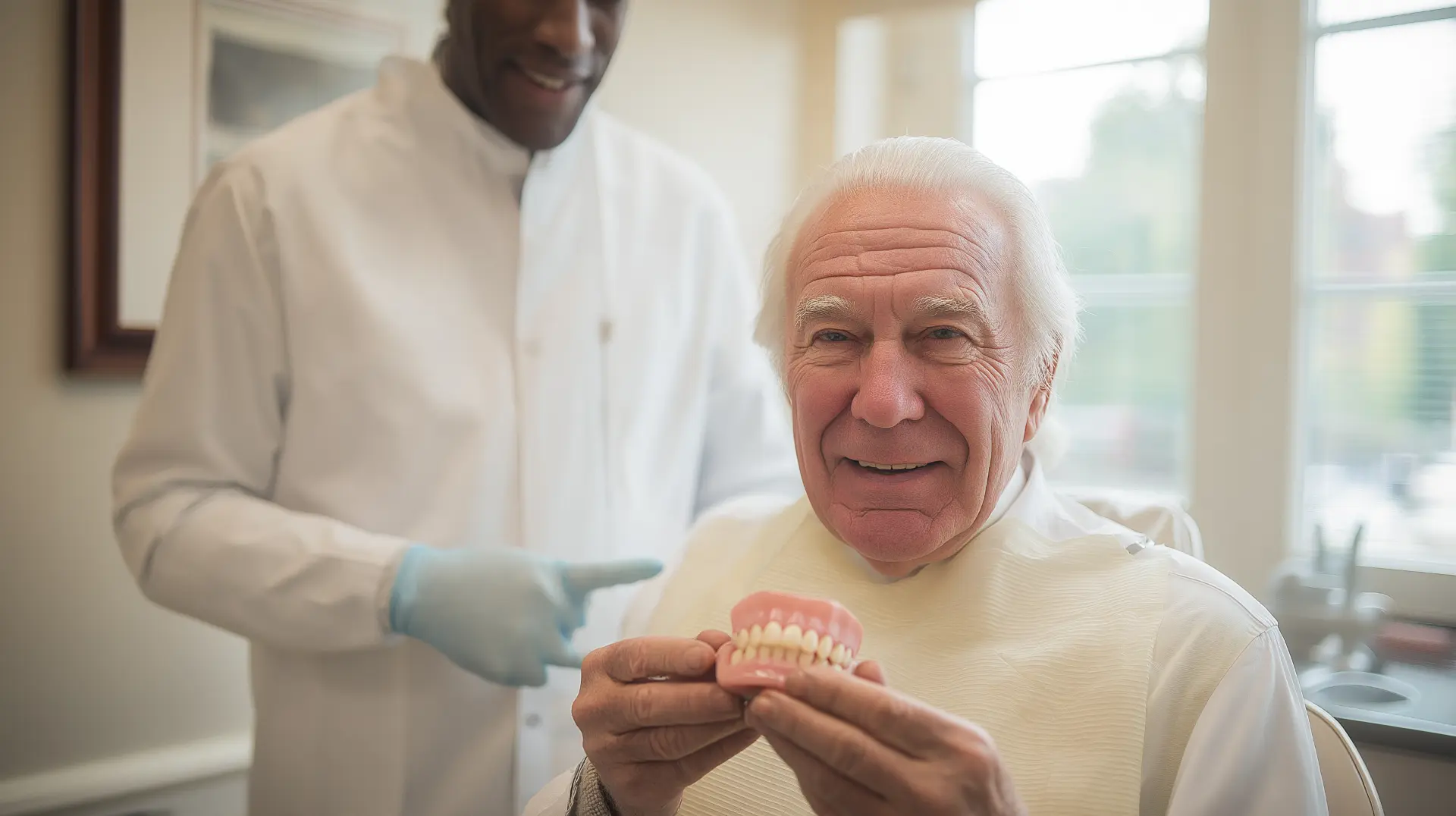
Who Qualifies for Free or Low-Cost Dentures and Implants After 65?
The programs that actually deliver free or reduced-cost dentures and implants to older adults, who each one accepts, and how long the wait really is.

Are Dental Implant Grants Real? What the "Free Implant Grant" Sites Actually Do
Why there is no government or foundation grant that pays individuals for dental implants, what the sites advertising one are really collecting, the handful of legitimate programs that do provide reduced-cost care, and how to tell the two apart in thirty seconds.

Is There an Age Limit for Dental Implants? What Changes at 70, 80, and 90
Why there is no upper age limit for dental implants, what actually changes in healing after 70, the health questions that matter more than the birth date, and how to decide whether implants are worth it late in life.

Can You Get Dental Implants on Blood Thinners? What to Do About Warfarin, Eliquis, and Aspirin Before Surgery
How anticoagulants affect implant surgery, why most patients should not stop them, what the surgeon does instead to control bleeding, and how the answer differs between warfarin, the newer anticoagulants, and aspirin.

Dental Implants and Dementia: How Families Decide Whether Treatment Makes Sense
When implants help a person with cognitive decline and when they create problems, the questions a family and a dentist should work through together, what a removable option offers, and how to keep existing implants healthy when the patient can no longer manage them.

What Changes in Your Mouth After 60, and What Should You Do About It?
A plain-language guide to dry mouth, receding gums, root decay, loose dentures, and the point at which an implant becomes the sensible choice.
Common questions about after 60
- Does Medicare cover dental implants?
- Original Medicare does not cover implants, dentures, or most routine dental care. Some Medicare Advantage plans include a dental benefit that pays part of the cost, usually with an annual cap far below the price of a full arch. The paying-after-65 post explains how to read a plan's dental benefit and what it will actually pay.
- Are there free dental implants for seniors?
- Free implants are rare. Some dental schools, charitable clinics, and state programs provide free or reduced-cost dentures, and a few provide implants for patients who meet income and health criteria, usually with a wait. The free and low-cost post lists the programs that currently deliver and what each one requires.
- Am I too old for dental implants?
- No. There is no upper age limit, and implants succeed in patients in their eighties and nineties when bone and general health allow. Providers look at healing capacity, medications, and bone density rather than the number on your birth certificate.
- How do people on a fixed income pay for dental implants?
- A mix of savings, financing through CareCredit or an installment lender, Medicare Advantage dental benefits, HSA balances, and state or charitable assistance for those who qualify. Many full-arch practices also offer in-house payment plans. The guides in this topic cover each source and how to combine them.
Related guides from other topics

Dental Implants vs. Dentures: Which Is the Right Choice for You?
A clear, honest comparison of dental implants and dentures covering cost, comfort, longevity, and the factors that actually matter for your decision.

What Disqualifies You From Dental Implants? 9 Conditions and How Many Are Actually Fixable
A clinical breakdown of what actually disqualifies you from dental implants, the numbers surgeons measure, and how long it takes to turn most of these from a no into a yes.

How Should You Finance Dental Implants? CareCredit vs. LendingClub vs. Proceed Finance
A realistic comparison of the three major dental financing options, including the deferred-interest traps and what monthly payments actually look like on an implant-sized case.
Browse other topics
Ready to compare providers near you?
Browse dental implant practices by city with Google ratings, review counts, and specialties.
Find Providers by City