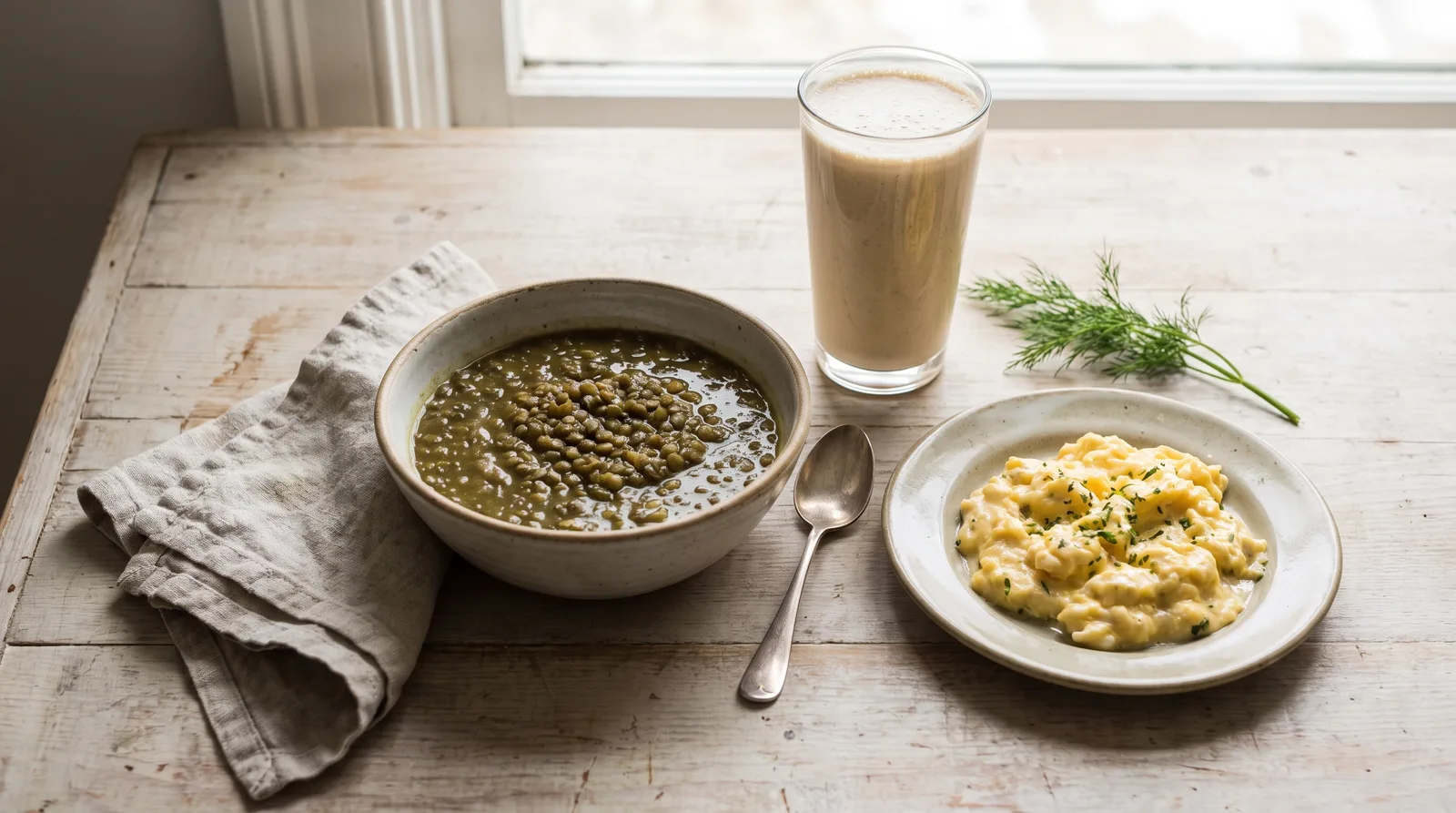
Most All-on-4 patients are handed a printed sheet that says soft foods for six weeks, no hard or crunchy items, and call us if anything hurts. That sheet is accurate and close to useless. It does not tell you what to buy, it does not tell you how to get enough protein when chewing is off the table, and it does not tell you that the restrictions run far longer than six weeks for most people.
That last point catches patients out more than any other. The temporary bridge you leave surgery with is acrylic, it is there to protect healing implants, and it is not built to handle a normal bite. Treating it like final teeth is how patients end up with a fractured temporary and an unscheduled trip back to the office.
This guide breaks the eating plan into the phases that actually match healing, and covers the nutritional problem sitting underneath all of it.
Why do the diet restrictions last so long?
Because two separate processes are running on different clocks.
Soft tissue heals in two to three weeks. That is the part that governs pain, and it is why patients feel dramatically better by week three and start assuming they are done.
Osseointegration, where bone grows into the implant surface and locks it in place, takes three to six months. During that window the implants are held by mechanical friction rather than biological attachment, and excessive force can cause micromovement that interferes with the process. The bridge is deliberately kept out of hard contact for this reason.
The temporary prosthesis is the third constraint. Acrylic teeth are chosen for temporaries because they are light, adjustable, and inexpensive to repair. They are also the most fragile material in the whole restoration. The full difference between the temporary and what you eventually receive is covered in the guide to temporary versus final teeth.
So the restriction is not about pain. It is about protecting a biological process and a fragile appliance, and it runs until your provider confirms both are ready.
What can you eat in the first week?
Liquids and purees only, and the goal in this week is calories and hydration rather than nutritional perfection.
Good options are broths and strained soups, smooth yogurt, kefir, protein shakes, meal replacement drinks, milk, thinned mashed potato, applesauce, pudding, and smooth ice cream. Room temperature or cool is easier than hot, because heat increases swelling and you will not feel a burn properly while the anesthetic wears off.
Two rules matter more than the food list itself.
Do not use a straw. The suction can disturb clot formation at the surgical sites, and a disturbed clot is both painful and a healing setback.
Do not skip protein. This is the week patients lose the most ground, because liquid diets built from broth and pudding are almost protein free. Add a whey or plant protein powder to shakes, choose Greek yogurt over regular, and drink milk rather than juice. A reasonable target is 60 to 80 grams a day for most adults, and higher if your surgeon or physician has told you so.
The hydration point
Swelling, reduced appetite, and pain medication together make dehydration common in the first few days, and dehydration makes everything about recovery feel worse. Water, broth, diluted juice, and electrolyte drinks all count. Alcohol does not, and it interferes with healing besides.
What can you eat in weeks two through six?
Soft solids, meaning anything you can break apart with a fork without effort.
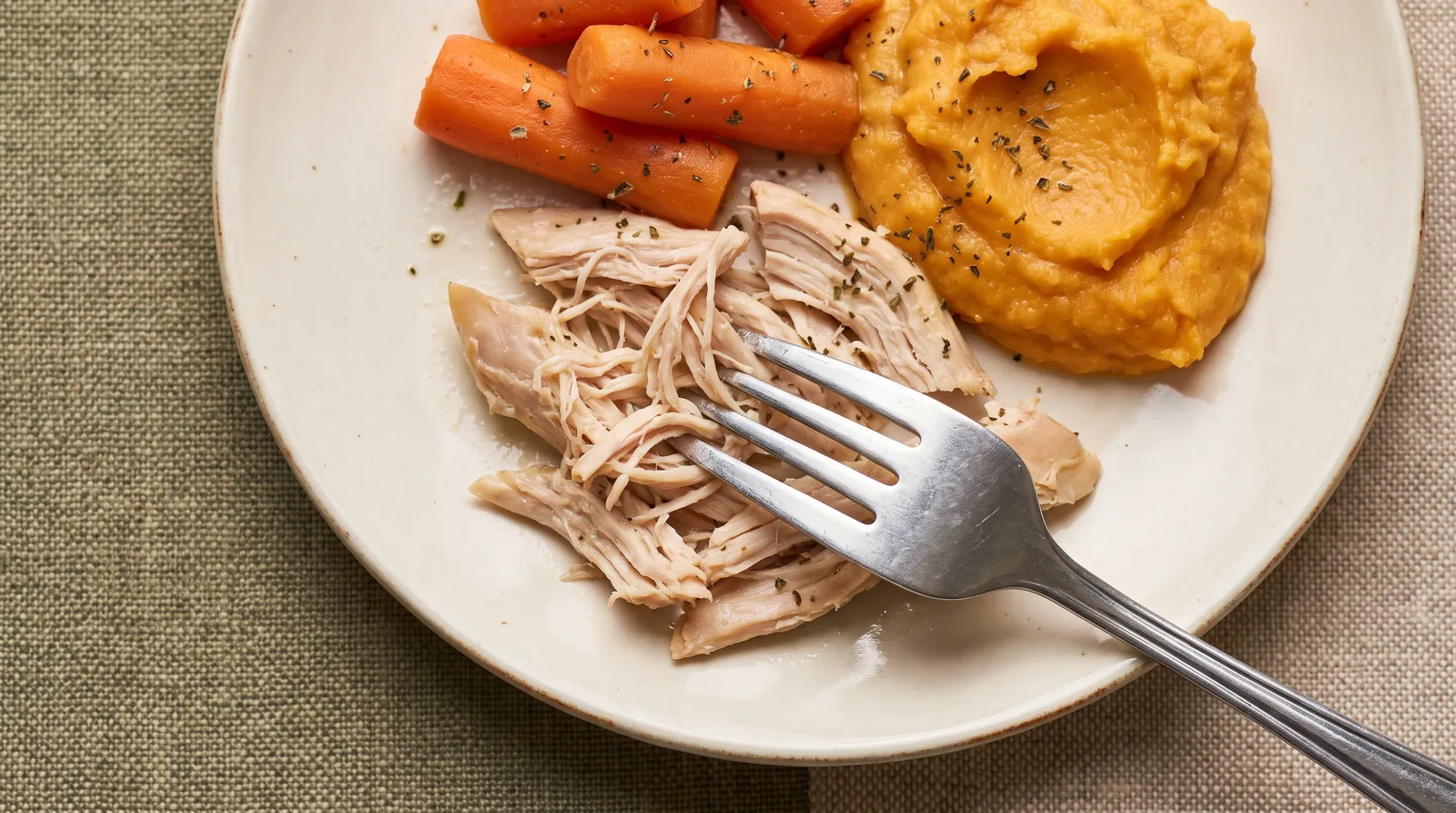
This is where the diet gets meaningfully better. Scrambled and soft-boiled eggs, flaked fish, canned tuna and salmon, slow-cooked shredded chicken and pork, meatloaf, soft pasta, risotto, polenta, refried beans, lentils, tofu, cottage cheese, oatmeal, ripe banana, avocado, stewed fruit, and any vegetable cooked to fork-tender all work.
The technique that matters more than the list is cutting everything small and chewing on the back of the bridge rather than biting with the front. Front-tooth biting puts a levering force on the temporary that it is not designed for, and it is the single most common way temporaries get broken.
What stays off the list in this phase is anything crunchy, chewy, or sticky. That means nuts, seeds, chips, raw vegetables, crusty bread, bagels, tough or grilled meat, caramel, taffy, and anything with small hard fragments like popcorn kernels.
How do you get enough protein when you cannot chew?
This is the practical problem almost every All-on-4 patient underestimates, and it is worth solving deliberately rather than improvising.
Start from the target. Most adults recovering from surgery need somewhere between 1.0 and 1.2 grams of protein per kilogram of body weight per day, which works out to roughly 70 to 95 grams for a 165-pound adult. Older adults sit at the higher end of that range, not the lower, because the muscle loss that comes with age accelerates during any period of reduced intake.
Now look at what a typical first-week soft diet delivers. A bowl of broth has around 2 grams. Applesauce has none. Pudding has 2 or 3. A patient eating three of those a day is getting under 10 grams, which is a deficit steep enough to produce measurable muscle loss over a few weeks.
The foods that fix this are specific. Greek yogurt carries 15 to 20 grams per cup against 8 for regular yogurt. Cottage cheese is similar. A scoop of whey or pea protein powder adds 20 to 25 grams and blends into anything, including soup. Milk carries 8 grams a cup where water and juice carry none, so using milk as the base for everything is the single easiest change. Commercial meal replacement drinks run 15 to 30 grams a bottle and exist precisely for this situation.
Once soft solids arrive in week two, eggs, flaked fish, canned tuna, refried beans, lentils, and tofu do most of the work, and the protein problem largely solves itself.
One caution worth stating plainly. If you have kidney disease, do not raise protein intake on the strength of a blog post. Ask your physician for your target, because in that situation the right number is a clinical decision rather than a general one.
What about months two through six?
The soft-solid diet generally continues until your provider clears you, and the clearance depends on your healing rather than on the calendar. Patients who had bone grafting, who smoke, or who have diabetes typically wait longer, and the reasons are covered in the guides on diabetes and implant healing and the week-by-week recovery timeline.
This is the phase where the nutritional risk is real, because months of soft eating is long enough to shift body composition. A few habits protect you.
Keep protein high and spread across the day rather than concentrated in one meal, because older adults absorb it more effectively that way. Keep fiber in the diet through cooked vegetables, blended soups, beans, lentils, and oats, since constipation is a common and preventable complaint in this phase, particularly for anyone on pain medication. Keep eating vegetables in whatever form works, cooked or blended, because the beta carotene, folate, and vitamin C that drop in long-term soft diets are the same nutrients this phase puts at risk.
If you are underweight going into surgery, raise it with both your surgeon and your physician before the date. A patient who is already frail does not have months of reduced intake to give away, and planning for supplementation beforehand is straightforward.
What can you eat once you have your final bridge?
Close to everything, with a short permanent caution list.
The final prosthesis, usually zirconia or a titanium-reinforced material, is far stronger than the temporary, and by this point the implants are integrated. Steak, apples, crusty bread, raw vegetables, and corn on the cob are back, and most patients describe the first few weeks as the point where eating stops requiring thought.
The permanent list of things to avoid is short. Ice is the leading cause of fractured implant restorations and there is no safe way to chew it. Hard candy is the same problem more slowly. Olive pits, cherry pits, unpopped kernels, and bone fragments cause trouble because implants do not have the periodontal ligament that warns natural teeth about a hard object before you bite through it. You will bite harder on a hidden pit than you ever did with natural teeth.
Very sticky foods will not damage anything but are difficult to clear from under a fixed bridge, which matters for the gum health that keeps the whole thing stable.

A week-by-week summary
- Days one to three: liquids and purees, no straws, protein shakes, cold rather than hot, hydration is the priority.
- Days four to seven: thicker purees and very soft foods, keep protein at 60 to 80 grams daily, no chewing on the front of the bridge.
- Weeks two to six: fork-tender soft solids, eggs, fish, slow-cooked meat, beans, cooked vegetables, everything cut small, chew at the back.
- Months two to six: continue soft solids until cleared, protect protein and fiber, watch for unintended weight loss.
- After final bridge delivery: normal diet, avoiding ice, hard candy, and hidden pits or fragments permanently.
The Bottom Line
The eating restrictions after All-on-4 last months rather than weeks, and they exist to protect osseointegration and a fragile acrylic temporary rather than to manage pain. The real risk in that period is not discomfort, it is a long stretch of low-protein, low-fiber eating at exactly the age when that does the most damage. Plan the protein, keep vegetables in the diet in cooked or blended form, and get your provider to tell you the clearance criteria rather than a date.
Ask at your consultation what the soft-food period will look like for your specific case, because grafting, smoking, and diabetes all extend it. And when you are comparing providers, find qualified providers near you at Dental Implant Directory.
Ready to find a qualified provider?
Search our independent directory of dental implant providers organized by specialty, location, and credentials.
Ready to find a qualified provider?
Search our independent directory of dental implant providers organized by specialty, location, and credentials.