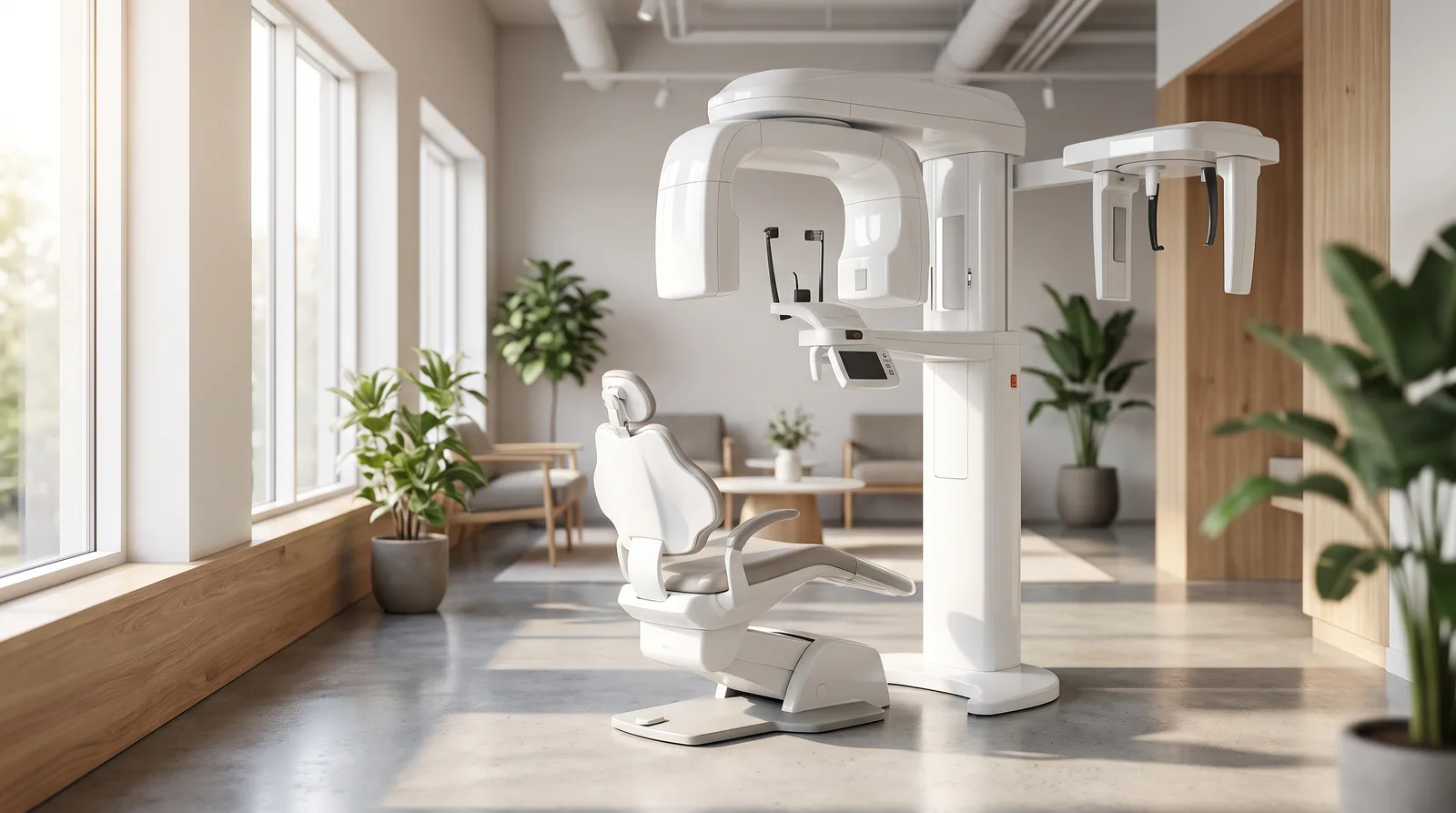
How to run the numbers on a cone-beam CT scanner and guided surgery workflow, the case volume at which owning beats referring, the revenue that is easy to miss, the costs that are easy to underestimate, and how guided surgery changes the full-arch day.
A cone-beam CT scanner is the most expensive piece of equipment most implant practices will buy, and the decision is usually made on gut feel in either direction. Owners who love technology buy it before the volume is there. Owners who watch costs refer out for scans for years past the point where the referral is costing them cases. Both are avoidable, because the arithmetic is simple once the inputs are honest.
The question is not whether the scanner is useful. Three-dimensional imaging is the standard of care for full-arch planning, and a surgeon placing tilted implants next to the sinus and the mental nerve without it is working with less information than the patient assumes. The question is whether the practice's volume justifies owning the machine, and whether the guided surgery workflow it enables changes the economics of the full-arch day enough to move the answer.
This guide lays out the inputs, the break-even, and the effects on the case that do not show up in a spreadsheet.
What does a CBCT scanner actually cost?
The machine, the room, the software, the service contract, the training, and the time. Practices that budget for the machine alone underestimate the total by a third or more.
The machine
A large field-of-view scanner suitable for full-arch planning is a significant capital purchase, financed over five to seven years in most practices. Smaller field-of-view units are cheaper and adequate for single implants and endodontics but not for full-arch planning where the whole arch, the sinuses, and the nerve canals need to be in one volume.
The room and the shielding
A scanner needs a room that meets state radiation shielding requirements, which can mean construction. A practice that has an existing panoramic unit often has a room that can be adapted; one that does not is adding a build-out to the cost.
Software and service
Planning software is licensed annually or bundled, and a service contract on the scanner is not optional for a machine the practice depends on. Both are recurring costs that belong in the monthly figure.
Training and time
Staff need to be trained and certified to operate the scanner under state rules, and the surgeon needs to learn the planning software. Both are real costs in the first year.
What revenue does the scanner produce?
The scan fee itself, the cases the practice keeps that it would have referred, the cases it closes at higher rates because the plan is visual and immediate, and the scans it can do for every other implant, endodontic, and surgical patient in the practice. The first is small. The rest are where the return is.
Scan fees
A practice that charges for scans, or bundles them into the case fee, recovers part of the cost directly. This alone rarely pays for the machine at typical implant volumes.
Same-visit planning
A patient who is scanned during the consultation and shown a three-dimensional plan on a screen before they leave is more likely to schedule than one sent across town for a scan and asked to come back. The full-arch consultation script is built around a same-day scan, and the close-rate difference between a one-visit and a two-visit consult is the largest single line in the return calculation.
Cases kept in-house
A general practice adding full-arch treatment needs the scanner for planning, and a practice without one refers not just the scan but often the case. The guide to adding All-on-4 to a general practice places the scanner second in the build sequence for this reason.
Every other patient
Endodontic evaluation, impacted third molars, TMJ, airway, and single-implant planning all use the scanner. A practice that counts only full-arch scans undercounts the volume by a wide margin.
At what volume does owning beat referring?
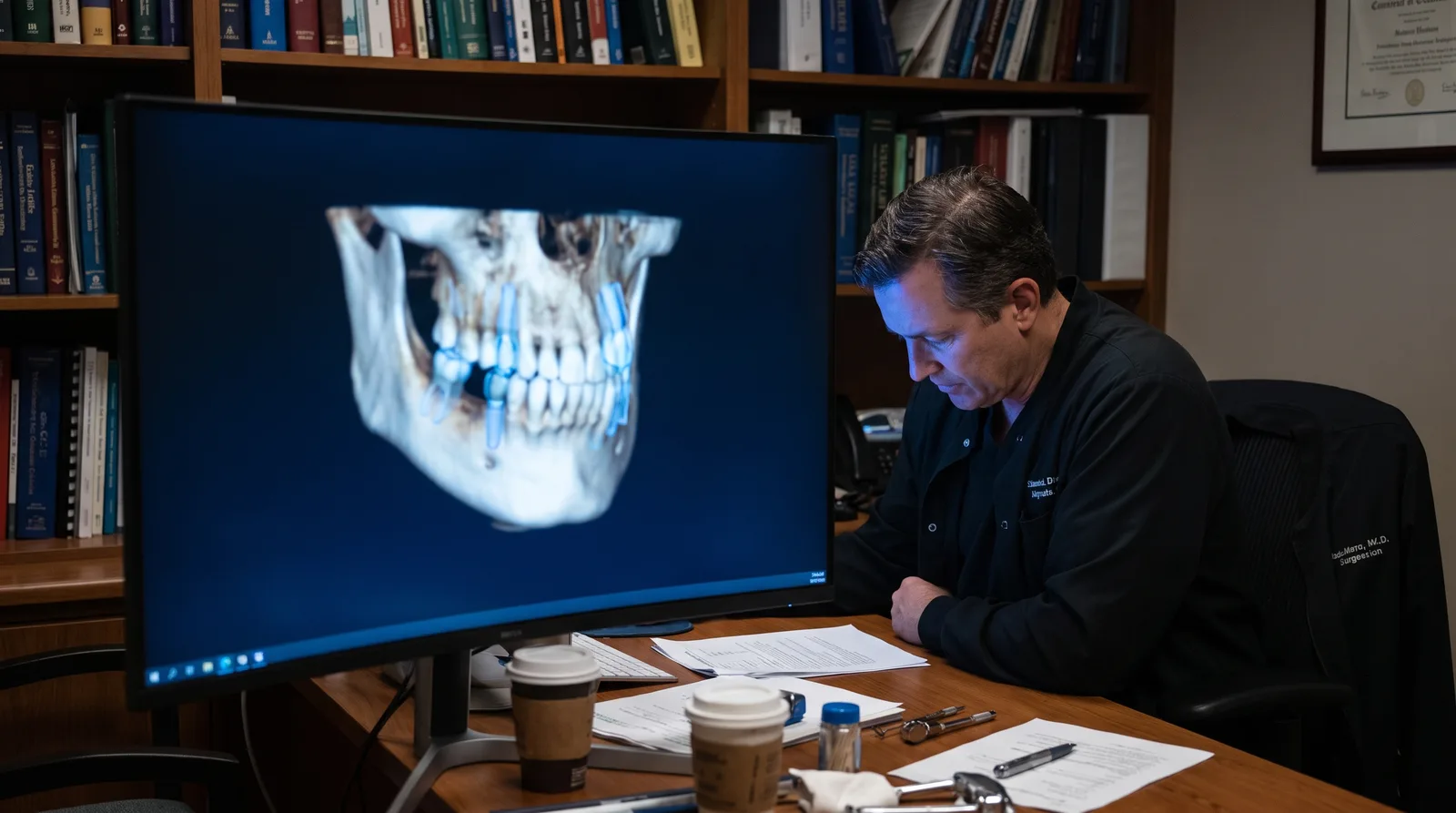
When the monthly cost of the scanner is smaller than the sum of scan fees recovered, the referred cases kept, and the additional cases closed by same-visit planning. For most practices that is a handful of full arches a month plus routine implant and endodontic scanning, and the break-even arrives faster than owners expect because the close-rate effect is large relative to the scan fee.
A worked example
Take the monthly cost of the scanner, software, service, and financing as the hurdle. Against it, count the scan fees the practice would otherwise pay to a referral center, the contribution from one additional full-arch case a month closed because the consult became one visit, and the contribution from any case that would have been referred out. The guide to the cost of a full-arch case gives the per-case contribution, and one additional arch a month covers a scanner's monthly cost in most practices on its own.
When to keep referring
A practice doing a few full arches a year, with a reliable imaging center nearby and a close rate that does not seem to suffer from the two-visit consult, can reasonably wait. The moment to buy is when the practice is either losing consults between the scan and the return visit or turning away cases it could keep with in-house planning.
What does guided surgery add?
A surgical guide made from the scan and the prosthetic plan, which places the implants where the plan put them. Guided surgery shortens the surgical day, reduces the variability between planned and placed positions, makes the same-day temporary fit better because the implant positions are known in advance, and lowers the stress of the case for a surgeon early in their full-arch experience.
The cost of guides
Each guide has a design and fabrication cost, whether from a lab or an in-house printer. A practice doing full arches monthly often justifies a printer; one doing them occasionally orders guides from a lab. The in-house lab guide covers the printer decision alongside the milling one.
What guides do not do
Replace surgical judgment or experience. A guide places implants where the plan says, and a plan made by an inexperienced surgeon places them badly with precision. The mentored cases described in the general practice guide come first.
Where guided surgery changes the economics
The surgical day. A guided full arch with a pre-made temporary can take an hour or two less chair time than a freehand case with a chairside conversion, which is either an additional case on the surgical day or a shorter day for the team. Over a year, that time is worth more than the guides cost.
What should be in the decision?
Current and expected full-arch volume, the close-rate gap between one-visit and two-visit consults, the number of cases currently referred for lack of in-house planning, the practice's other scanning needs, the room and shielding situation, and the surgeon's honest interest in planning software. A practice that scores high on the first four should buy. A practice that scores low on all of them should wait and revisit in a year.
- How many full arches a month now, and in two years?
- How many consults are lost between the referred scan and the return visit?
- How many cases are referred out that in-house planning would keep?
- How many other scans a month would the practice do?
- Is there a room, and what would shielding cost?
- Will the surgeon actually use the planning software?
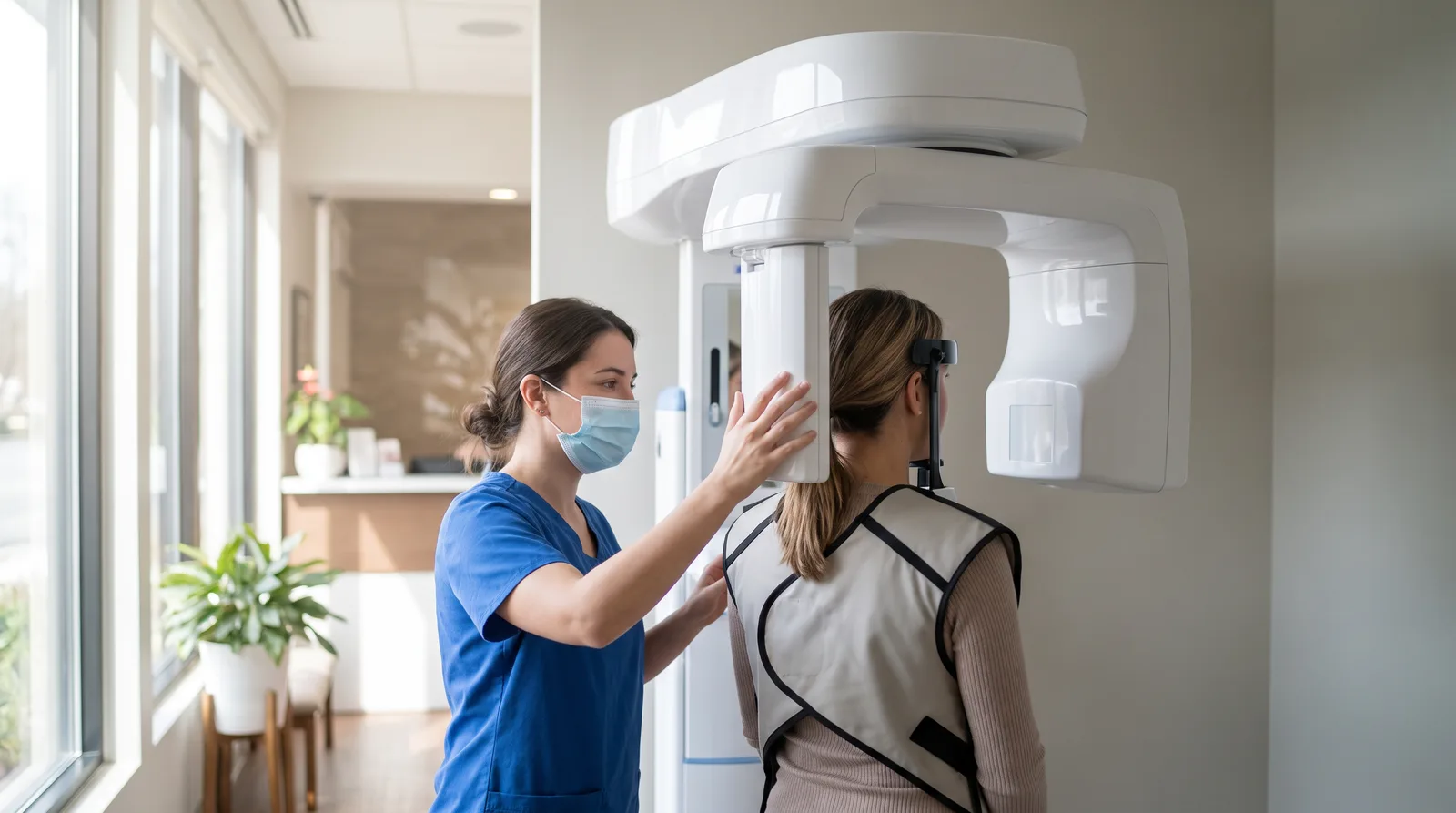
How does the scanner affect marketing and patient trust?
Patients researching full-arch treatment are learning to ask about three-dimensional planning and guided surgery, and a practice that has them can say so on its website, its directory listing, and in the consultation. It is a differentiator against practices that refer out for scans and against the price-only comparison from clinics abroad. The guide to handling the dental tourism objection uses the planning conversation as part of the answer, and the patient-facing guide to what a prosthodontist does describes planning from the teeth backward in terms a patient understands.
The Bottom Line
A cone-beam CT scanner pays for itself when the practice's full-arch and general scanning volume, the cases kept in-house, and the consults closed by same-visit planning together exceed its monthly cost, and for most practices doing a few arches a month that happens faster than expected because the close-rate effect is worth more than the scan fees. Budget for the room, the software, the service contract, and the training, not just the machine. Add guided surgery once the surgeon's planning is sound, for a shorter and more predictable surgical day. Refer out until the volume is there, and buy the moment consults are being lost between visits. And when you are ready to be found, explore listing plans at Dental Implant Directory.
Get found by implant patients
Join the directory and start receiving qualified inquiries in your area. Plans start at $19.99/month.
Explore Listing Plans