The honest checklist for a general dentist who wants to bring full-arch treatment in-house, from the surgical training and the first mentored cases to the scanner, the lab relationship, the sedation plan, and the coordinator, and the point at which the numbers make sense.
A general practice that refers out every full-arch case is sending its most valuable patients to someone else, and most general dentists know it. The question is not whether the cases are worth keeping. It is what it takes to keep them safely, and the honest answer is more than a weekend course and less than a residency. Practices that underestimate it produce complications. Practices that overestimate it never start.
Full-arch treatment is a surgical procedure with a prosthetic half that is at least as demanding, performed on patients who are often older and medically complex, with a price that makes every failure expensive. Bringing it in-house means building four things: surgical competence with mentored cases, the imaging and planning to place implants where the teeth need them, a lab and prosthetic workflow, and a team that can run consults and manage the case. Each one has a cost and a sequence.
This guide lays out what each piece requires, in the order a practice should build them, and how to know when the practice is ready to stop referring.
What surgical training does a general dentist need for All-on-4?
A structured implant curriculum with live-patient surgery, followed by mentored full-arch cases with an experienced surgeon in the room, followed by a graduated increase in case complexity. Single-implant courses are the entry point, not the destination. Full-arch surgery involves extractions, bone reduction, tilted implant placement, immediate loading decisions, and the management of complications, none of which a single-implant course covers.
The curriculum
Programs that combine didactic training with supervised surgery on real patients over months, with a documented case requirement, are the ones that prepare a dentist for full-arch work. The patient-facing guide to implant credentials describes what patients are learning to look for, and a general dentist adding full arches should expect to be asked about it.
Mentored cases
The first full-arch cases should be done with an experienced full-arch surgeon present, in the general dentist's own operatory or the mentor's. Most programs that take this seriously require a minimum number of mentored arches before the dentist works alone. This is the step practices most often skip and the one that prevents the complications that end a full-arch program early.
What to refer out, still
Zygomatic cases, severe bone loss, patients with significant medical complexity, and cases the dentist has not seen before. A general practice that adds All-on-4 should keep its referral relationships for the cases outside its competence, and a surgeon who takes those referrals is often the same one who mentored the first cases.
What imaging and planning does a full-arch practice need?
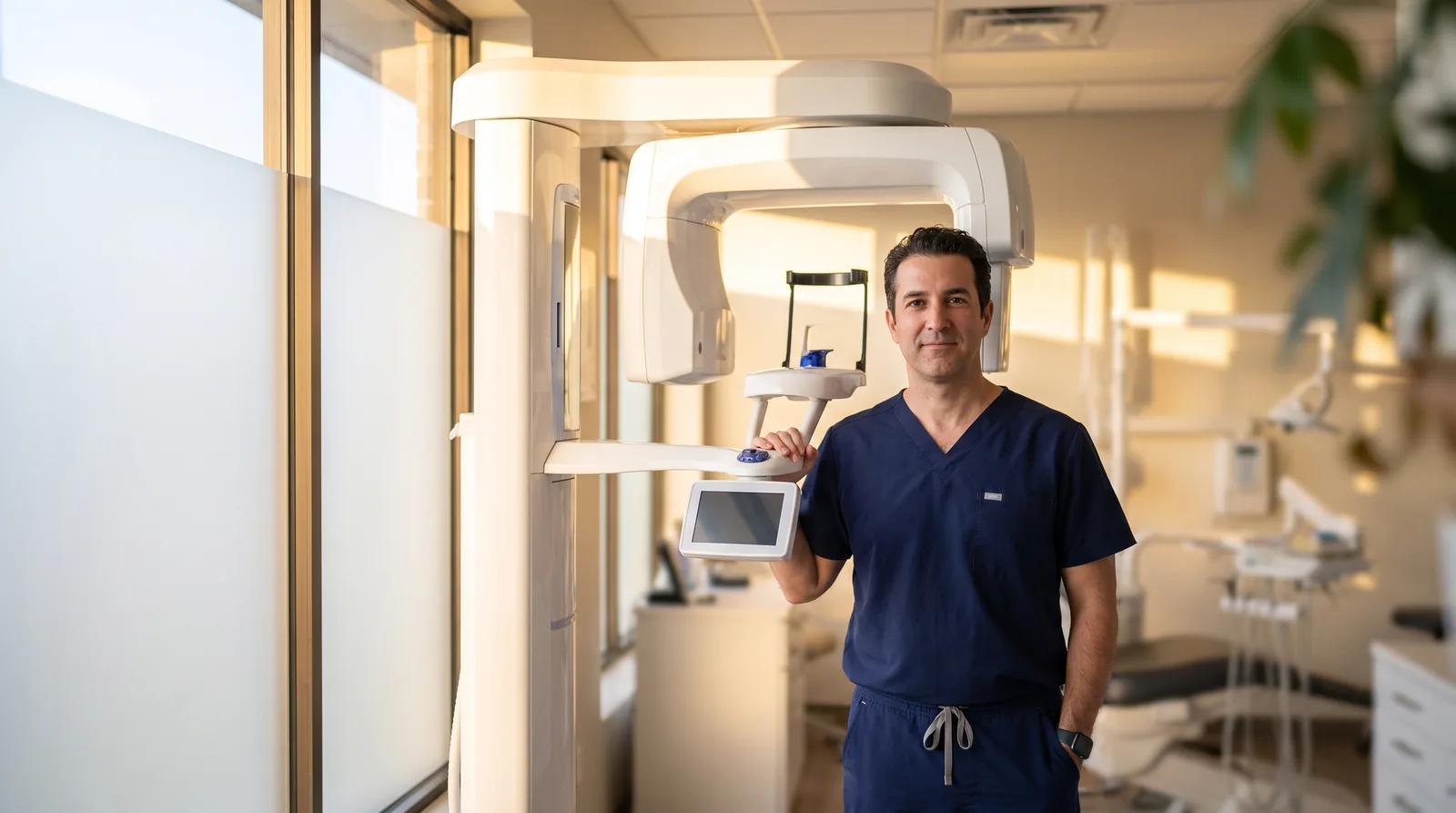
A cone-beam CT scanner, planning software, and the habit of planning every case from the prosthetic outcome backward. Full-arch implants are placed where the teeth need them, not where the bone happens to be easiest, and that requires a three-dimensional plan and often a surgical guide. The guide to CBCT and guided surgery ROI covers the equipment decision and the numbers.
Owning versus referring for scans
A practice doing a few full arches a year can refer for CT scans. A practice doing them monthly needs the scanner in-house for planning, same-day evaluation, and post-operative checks. The scanner also serves every other implant, endodontic, and surgical case in the practice, which changes the math.
Planning from the teeth backward
The prosthetic design comes first, then the implant positions to support it, then the surgical guide. A dentist who places implants first and asks the lab to make it work produces bulky, hard-to-clean bridges. The patient-facing guide to what a prosthodontist does describes the prosthetic half in a way that is useful for a general dentist deciding how much of it to take on.
What lab and prosthetic workflow does All-on-4 require?
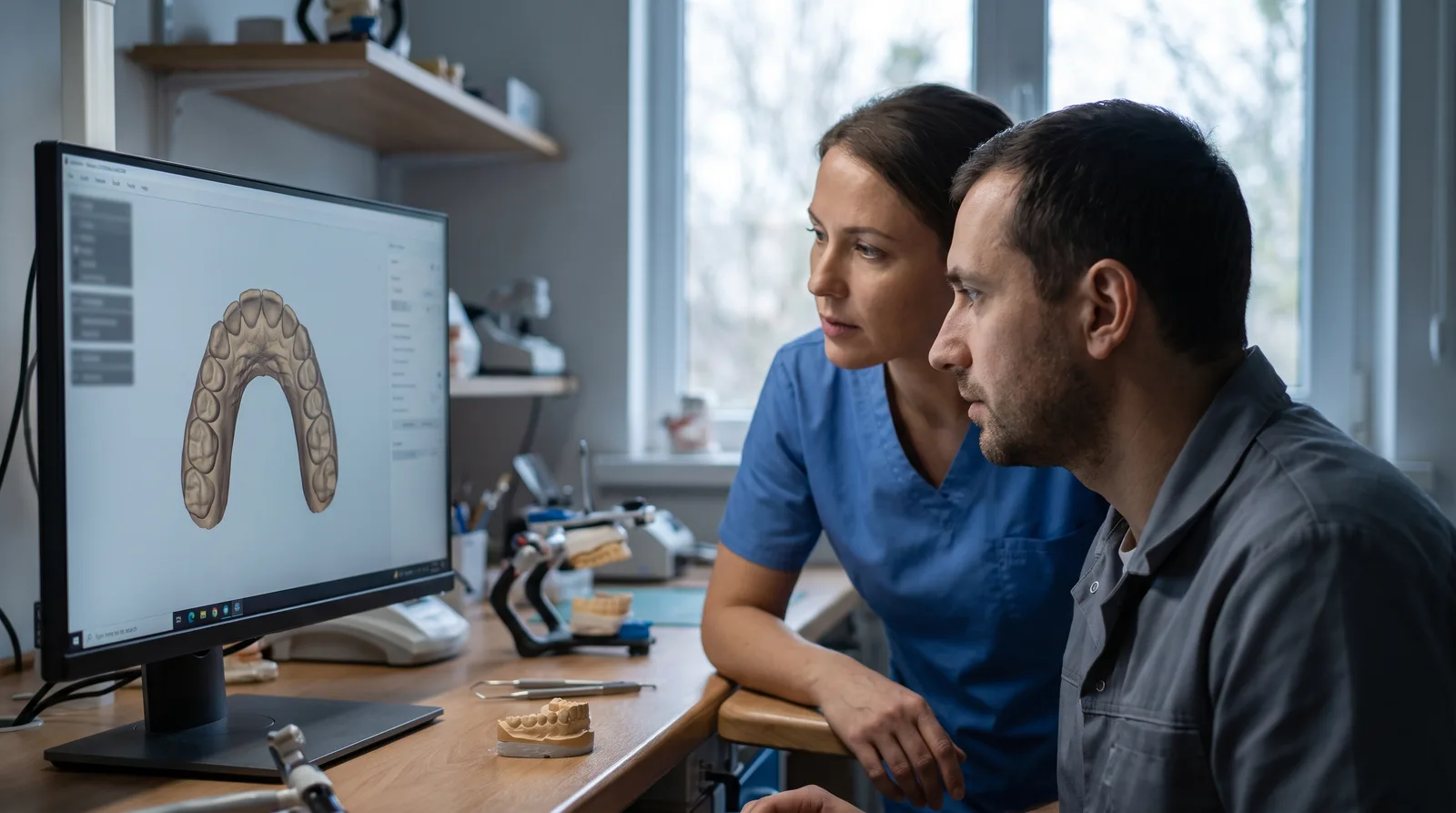
A lab that does full-arch work regularly, a plan for the same-day temporary, and a defined path to the final bridge. The temporary is delivered on surgery day and requires either an in-house conversion of a denture or a milled temporary from a lab that can turn it around fast. The final bridge months later requires impressions or a digital scan of the healed implants, try-ins, and a lab that can deliver a passive-fit prosthesis.
The same-day temporary
The most operationally demanding part of the day. A practice needs either the skill and materials to convert a denture chairside or a lab partner who can deliver a milled temporary within a day. Starting with a delayed-load protocol for the first cases, where the temporary is a removable denture and the fixed bridge comes later, removes this pressure while the team learns.
The final bridge
Acrylic hybrid or zirconia, on a titanium frame, made from the healed implant positions. The patient-facing zirconia versus acrylic comparison describes the trade a practice will present. The in-house lab guide covers when it makes sense to bring milling in-house, which for most general practices is not at the start.
What sedation plan does a full-arch practice need?
Most full-arch patients want sedation for a surgery involving extractions and multiple implants, and a practice has three options: IV sedation certification for the dentist, a mobile dental anesthesiologist who comes to the practice, or oral sedation with local anesthesia for suitable patients. The IV sedation certification guide prices the first option. A mobile anesthesiologist is the fastest way to start and the most expensive per case.
What team does a full-arch practice need?
A treatment coordinator who owns the consult, the financing, and the follow-up, a surgical assistant trained for implant surgery, and a front desk that knows what a full-arch inquiry sounds like. The coordinator is the hire that decides whether the cases the practice attracts become cases the practice treats. The treatment coordinator role guide covers the job and the hire.
Financing
Full-arch cases are financed, and the practice needs a lender waterfall and a fee presentation before the first consult. The patient financing guide covers the setup.
Marketing
Cases do not appear because the practice added a service. The marketing fundamentals guide covers the positioning, reviews, and tracking that have to exist before ad spend, and a verified directory listing puts the practice in front of patients already comparing full-arch providers in the city.
When do the numbers make sense?
When the practice can reasonably expect a few full-arch cases a month within the first year, with a margin that covers the training, the scanner, the coordinator, and the sedation plan. A full-arch case at $25,000 to $35,000 with lab, materials, and sedation costs in the range of a third of that produces a contribution large enough that a modest monthly volume pays for the infrastructure quickly. The guide to pricing full-arch cases covers setting the fee, and the case value calculator models the funnel from consults to cases.
The sequence that keeps risk low
Training and mentored cases first, with delayed loading and a referral partner for complexity. Scanner and coordinator second, once the first cases have shown the practice can attract and close them. Same-day temporaries and sedation capacity third. In-house milling only when volume justifies it.
What should a general dentist ask themselves before starting?
Whether they want to do surgery, whether they can commit to mentored cases before working alone, whether the practice can attract the patients, and whether they are prepared to refer out the cases they should not take. A yes to all four is the foundation. A no to the second is the reason to keep referring.
- Do I want to do full-arch surgery, or do I want the revenue? The second alone is not enough.
- Will I complete a structured curriculum and mentored cases before working alone?
- Can this practice attract and close full-arch consults, and do I have a coordinator to run them?
- Do I have a lab partner and a plan for the same-day temporary, or will I start with delayed loading?
- What is my sedation plan?
- Which cases will I still refer, and to whom?
The Bottom Line
Adding All-on-4 to a general practice takes a structured surgical curriculum with mentored full-arch cases, a cone-beam scanner and planning from the teeth backward, a lab partner and a plan for the temporary and final bridges, a sedation option, and a treatment coordinator who owns the consult and the financing. Build them in that order, start with delayed loading and a referral partner for complex cases, and expect the numbers to work once the practice is treating a few arches a month. Skip the mentored cases and the practice will learn from complications instead. And when you are ready to be found, explore listing plans at Dental Implant Directory.
Get found by implant patients
Join the directory and start receiving qualified inquiries in your area. Plans start at $19.99/month.
Explore Listing Plans