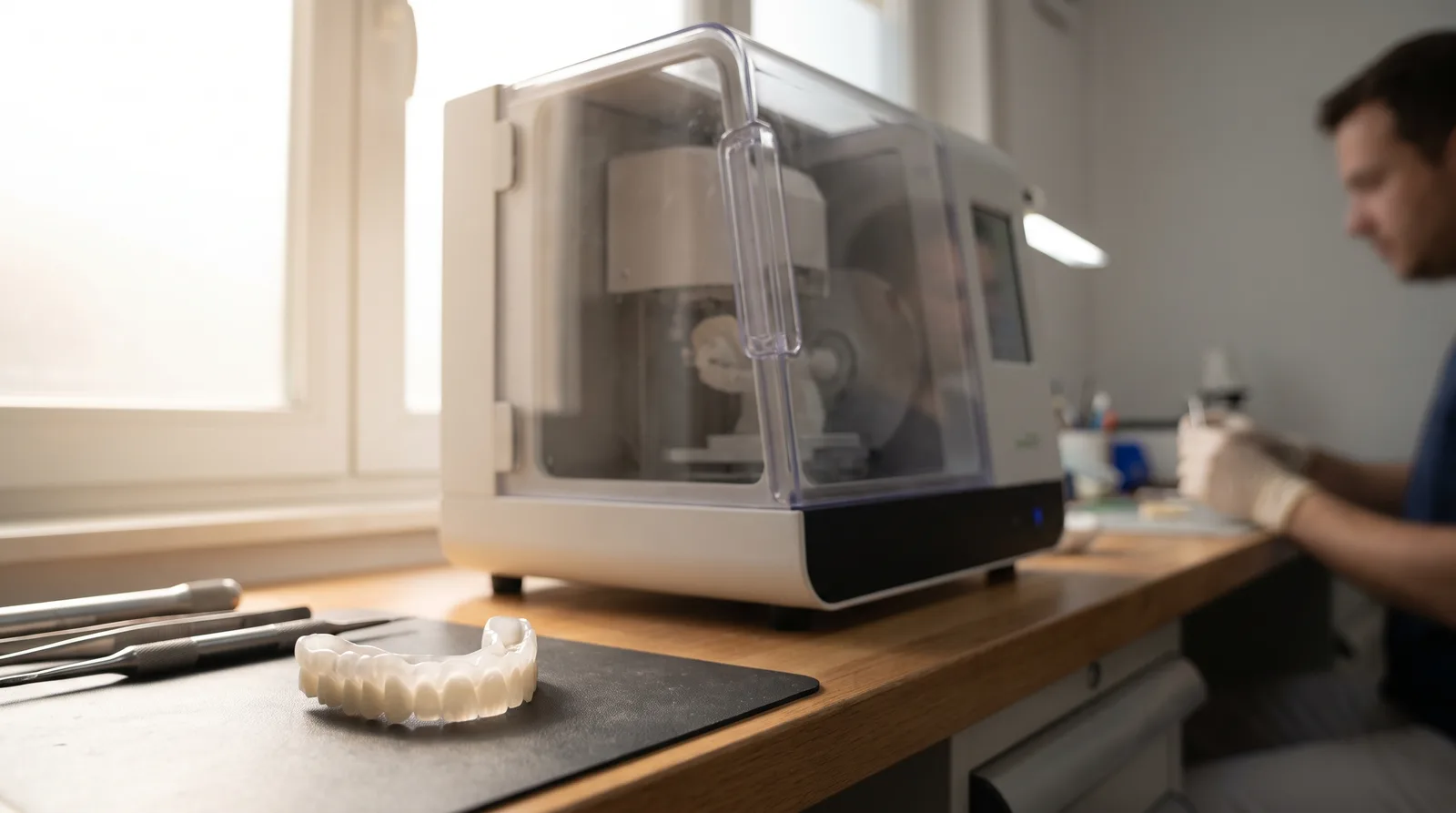
What an in-house lab for full-arch work actually involves, the difference between printing guides and temporaries and milling final zirconia, the case volume at which each step pays, the technician problem nobody budgets for, and the hybrid model most practices should run instead.
Lab fees are the largest hard cost in a full-arch case, and every owner who has paid for a zirconia bridge has done the mental arithmetic on owning a mill. The arithmetic looks good on the surface: a machine that costs less than a year of lab fees, running in a back room, turning out bridges at the cost of materials. The reality is a technician, a workflow, a learning curve, and a set of remakes that the lab used to absorb.
An in-house lab for full-arch work is not one decision. It is three, in a sequence: printing surgical guides and models, printing or milling same-day temporaries, and milling final bridges. Each has a different cost, a different skill requirement, and a different volume at which it pays. Most practices should do the first, many should do the second, and few should do the third until the volume is well beyond what a single-location practice produces.
This guide separates the three, prices them honestly, and describes the hybrid model that captures most of the savings without the risk.
What does an in-house full-arch lab actually involve?
A scanner for the digital impression, design software, a printer for guides and models and often temporaries, a mill for final restorations, a sintering furnace for zirconia, finishing and staining equipment, and a technician who can run all of it. The equipment is the smaller half of the investment. The technician and the workflow are the larger half.
The design step
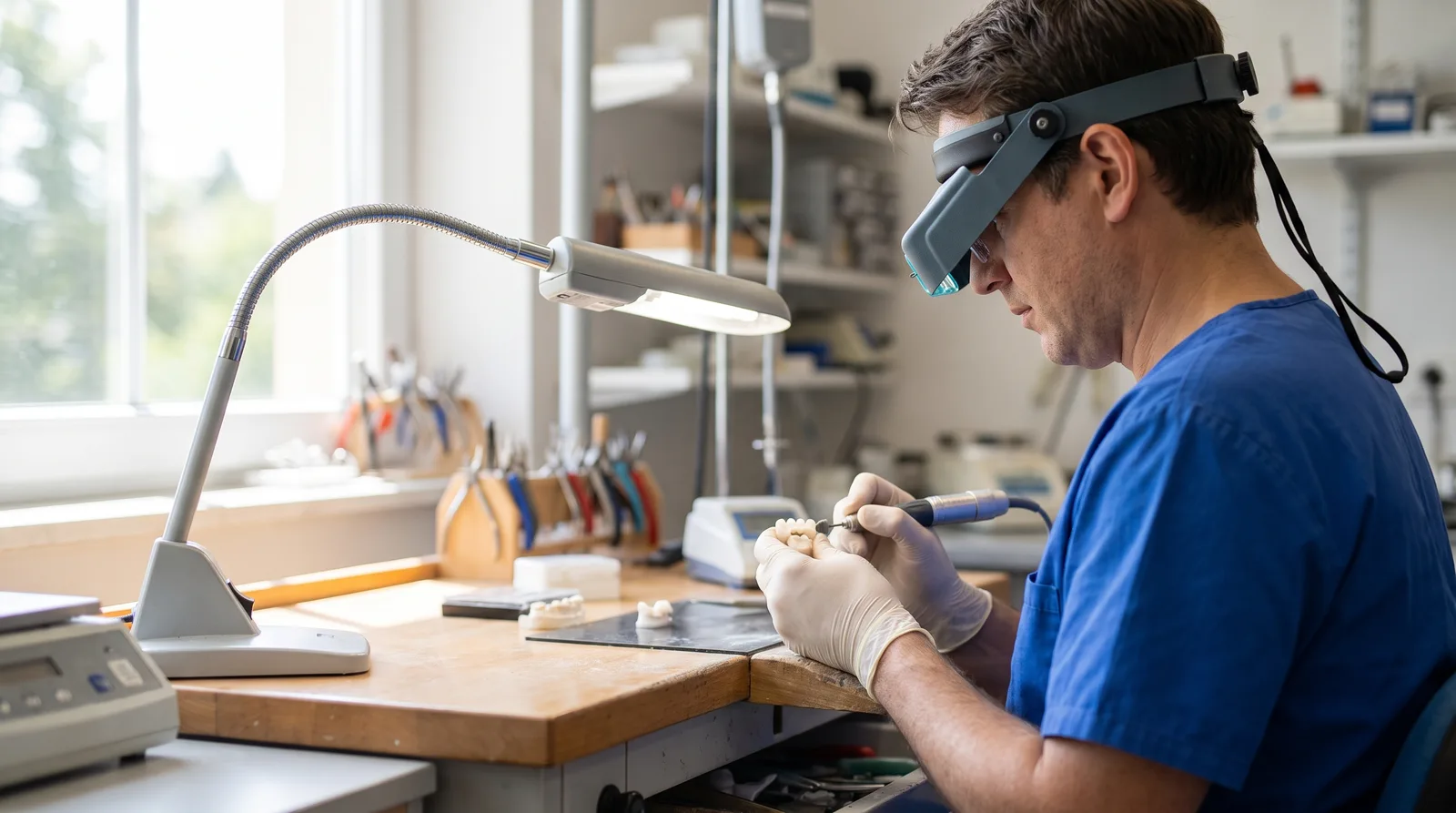
Every restoration starts as a digital design, and someone has to do it. Surgeons rarely have time. Assistants can learn model and guide design. Full-arch bridge design is a specialized skill that takes a technician years to do well, and a practice without one either outsources design and mills in-house, or hires.
The technician
A full-arch technician who can design, mill, sinter, stain, and finish a zirconia bridge is a skilled, well-paid professional in short supply. A practice that buys a mill and expects an assistant to run it produces bridges that need remaking. The guide to adding All-on-4 to a general practice places in-house milling last in the build sequence for this reason.
What should almost every full-arch practice print in-house?
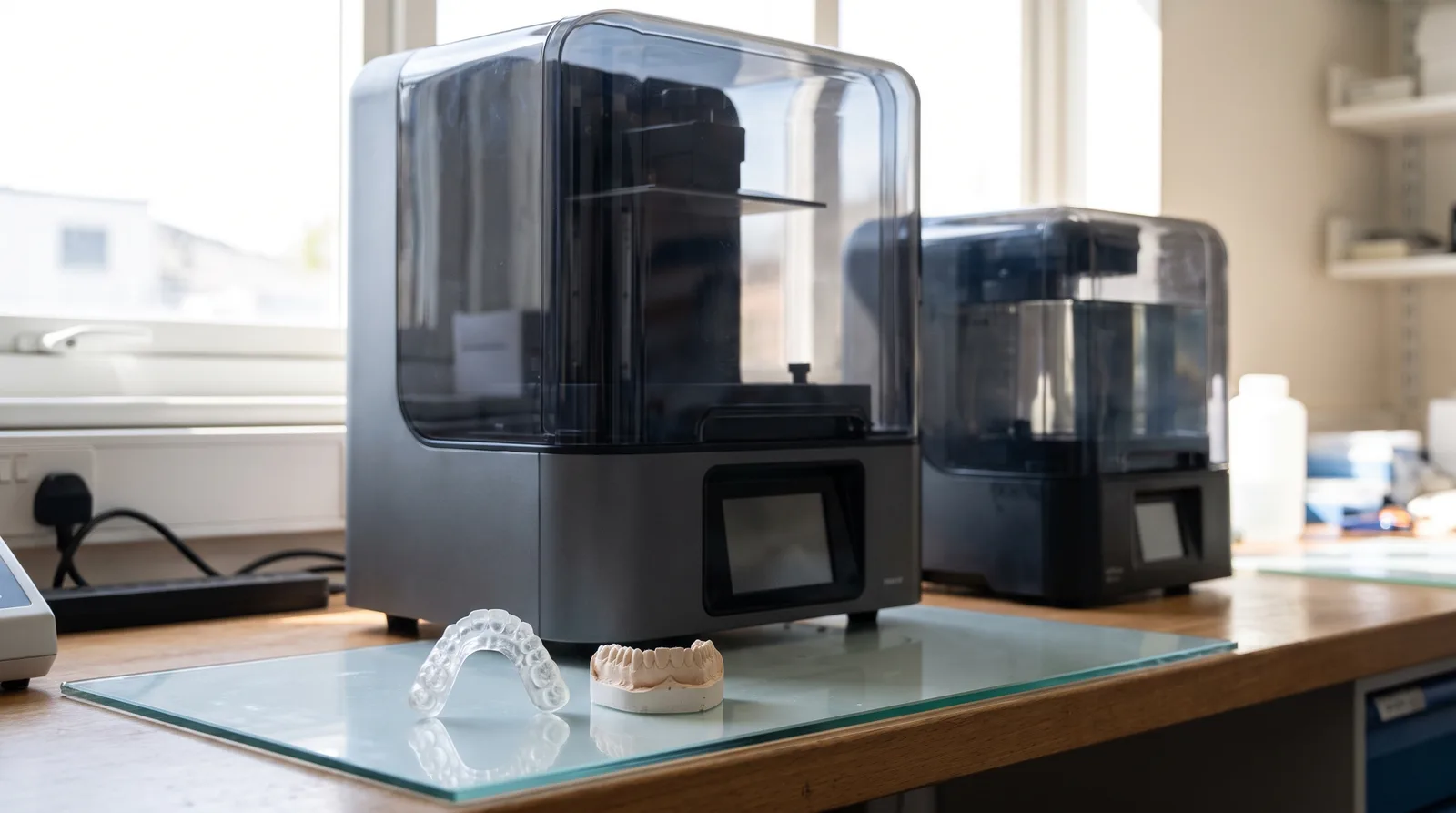
Surgical guides and models. A resin printer suitable for guides and models is inexpensive relative to everything else in the lab, the design skill is learnable by an assistant with the practice's planning software, and the turnaround benefit is immediate: a guide printed the day after planning instead of shipped from a lab a week later. The CBCT and guided surgery guide covers the planning side that feeds the printer.
The cost
The printer, a wash and cure station, resin, and the assistant's time. For a practice doing full arches monthly, this pays for itself within the first year in lab fees and shipping alone.
The risk
Low. A guide that comes out wrong is reprinted. Nothing the patient wears comes off this printer unless the practice chooses to print temporaries.
When should a practice make its own temporaries?
When it is doing enough full arches that the same-day temporary is a recurring bottleneck. A practice that converts a denture chairside on surgery day is spending an hour or more of the surgeon's and assistant's time per arch. A printed or milled temporary, made from the plan before surgery and adjusted at delivery, moves that work off the surgical day.
Printed temporaries
Resin printers rated for temporary restorations can produce a full-arch temporary at low material cost. The design is more demanding than a guide but learnable, and the temporary only has to last until the final bridge. Many practices doing several arches a month find this the highest-return step in the sequence.
Milled PMMA temporaries
Stronger than printed resin, with a longer expected life, at a higher equipment and material cost. Practices that keep patients in temporaries for extended healing periods often prefer milled. This is the first step where a mill enters the picture, and a mill bought for PMMA temporaries is a smaller commitment than one bought for zirconia.
When does milling final zirconia bridges in-house make sense?
At a volume most single-location practices do not reach, and only with a full-time technician. A zirconia full-arch bridge requires a mill capable of the material, a sintering furnace, staining and glazing equipment, and a technician who can design a passive-fit prosthesis on a titanium frame and finish it to the standard the patient is paying for. The remake rate of a practice learning this in-house is the cost nobody budgets.
The equipment
A mill capable of full-arch zirconia, the furnace, and the finishing station together cost several times what the printer setup does, and the service contracts follow.
The technician
The scarce resource. A practice that cannot hire or train a technician should not buy the mill, because the mill without the technician produces work the lab would have rejected.
The volume
Enough final bridges a month to keep a technician busy and to amortize the equipment. Multi-location groups and high-volume full-arch centers reach it. Most independent practices do not, and the comparison patients read about corporate implant centers and local practices reflects that the corporate centers built in-house labs to serve volume across many locations.
What patients see
The final bridge is what the patient lives with, and the patient-facing zirconia versus acrylic comparison describes what they expect from it. A practice that produces a lesser bridge to save on lab fees has saved nothing.
What is the hybrid model most practices should run?
Print guides, models, and temporaries in-house, and send final bridges to a full-arch lab that does them every day. This captures the turnaround and surgical-day benefits, keeps the equipment investment modest, uses skills an assistant can learn, and leaves the hardest and highest-stakes step with specialists. The practice's lab relationship for finals becomes a partnership rather than a cost to be eliminated.
Choosing the lab for finals
One that does full-arch work regularly, will accept the practice's digital files, turns around cases on a predictable schedule, and stands behind remakes. Price matters less than reliability, because a late or ill-fitting final bridge costs the practice a chair, a patient's patience, and often a review. The guide to getting reviews explains why the delivery visit is where reviews are made or lost.
When to revisit milling finals
When the practice is delivering enough final bridges a month that a technician would be fully occupied, when it has found or trained that technician, and when the lab relationship has become a bottleneck rather than a partner. Groups with multiple locations often reach this point; single practices rarely do.
How should the decision be priced?
Against the practice's actual lab spend by category, not the total. Separate what is spent on guides and models, on temporaries, and on final bridges, and compare each to the in-house cost of that step including the equipment, materials, service, and the labor of whoever runs it. The guide to the cost of a full-arch case covers the per-case cost structure, and pricing full-arch cases covers how lab strategy feeds the fee.
- Guides and models: almost always in-house.
- Temporaries: in-house once the practice is doing several arches a month.
- Final bridges: outsourced until volume and a technician justify the mill.
The Bottom Line
An in-house lab for full-arch work is three separate decisions. Print surgical guides and models in-house from the start, because the printer is cheap, the skill is learnable, and the turnaround benefit is immediate. Make temporaries in-house once the same-day conversion is a recurring bottleneck. Leave final zirconia bridges with a full-arch lab until the practice's volume can keep a skilled technician busy, because the mill without the technician produces remakes. The hybrid model captures most of the savings with a fraction of the risk. And when you are ready to be found, explore listing plans at Dental Implant Directory.
Get found by implant patients
Join the directory and start receiving qualified inquiries in your area. Plans start at $19.99/month.
Explore Listing Plans