The price of a dental implant is not fixed. The same tooth can cost $6,000 at one practice and $3,500 at a teaching clinic across town, and the difference is not quality. It is who is doing the work, what the practice pays in overhead, and whether you asked. Most patients pay the first number they are quoted because they did not know there was a second one.
The problem is that the advice on saving money splits into two unhelpful camps. One says go to Mexico. The other says implants cost what they cost. Neither helps the patient who wants a local provider, a reasonable price, and someone to call if something goes wrong.
This guide covers eight ways to pay less for implants in the United States, roughly in order of how much they save, with the trade for each one stated plainly.
Can you get dental implants at a dental school for less?
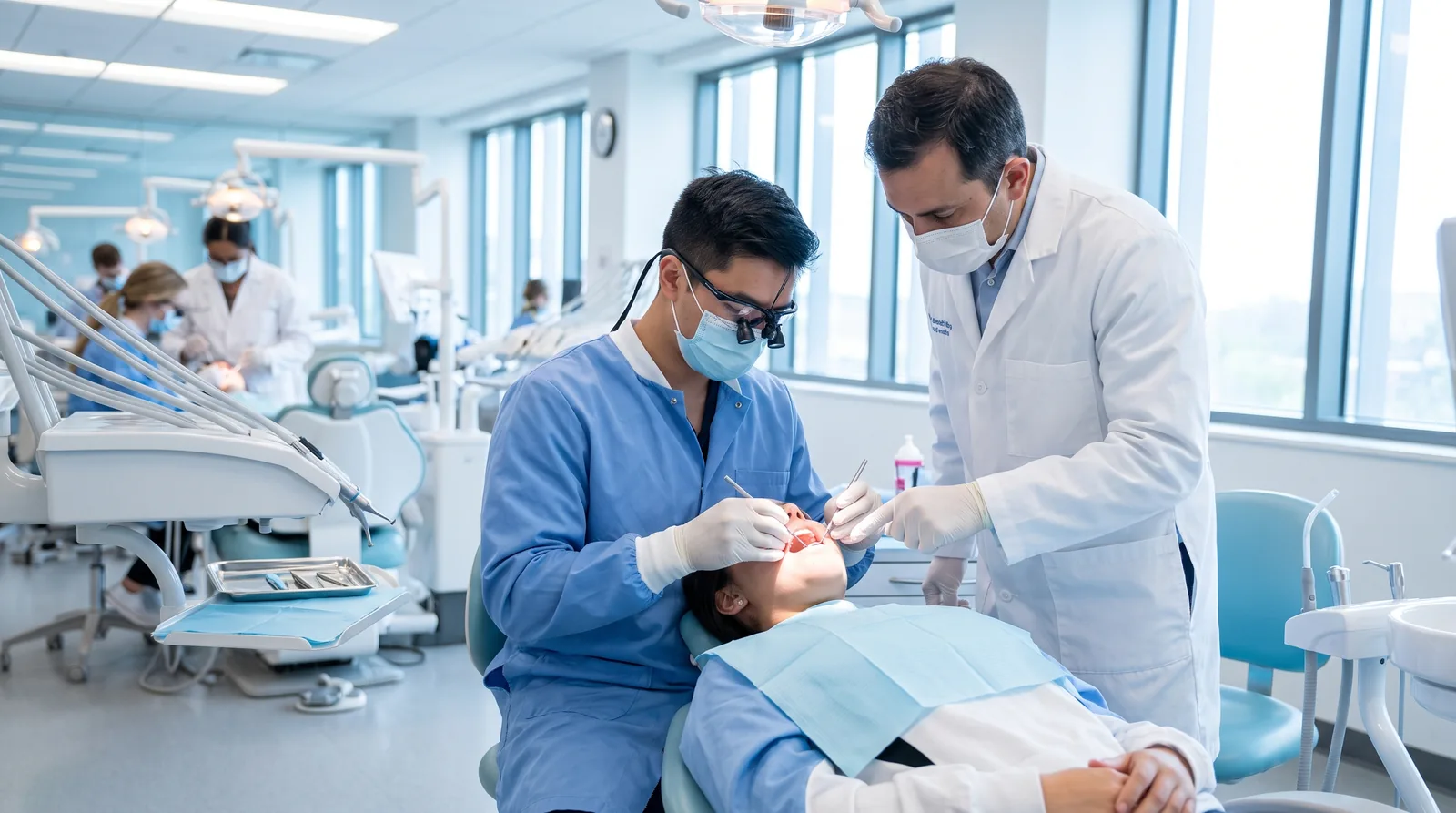
Yes, and it is the largest single discount available. Dental school clinics place implants at roughly half to two-thirds of private practice prices, with residents doing the work under faculty supervision. The trade is time: appointments are longer, there are more of them, and the schedule follows the academic calendar.
What it costs
A single implant with crown at a school clinic typically runs $1,500 to $3,500 depending on the school and the region, against $3,500 to $6,500 in private practice. Full-arch cases are treated at some schools' graduate periodontics or prosthodontics clinics at similar discounts.
What to expect
The resident placing your implant is a licensed dentist in advanced training, and a faculty specialist reviews every step. Outcomes at teaching clinics are comparable to private practice in the published literature. The cost is patience: a case that takes four visits in private practice may take eight, and each visit runs longer. Most schools have waiting lists, and some prioritize cases that fit teaching needs.
How to find one
There are around seventy dental schools in the United States, most with patient admission lines. Call the school nearest you and ask about the implant program, the wait, and the fee schedule. The guide to free and low-cost dentures and implants covers how the admission process works for older adults.
Do dental discount plans lower implant costs?
Often more than insurance does. A dental discount plan is a membership, typically $100 to $200 a year, that gives you reduced rates at participating dentists, usually 15 to 40 percent off the practice's fee schedule. There is no annual maximum, no waiting period, and no missing tooth clause, which are the three things that make insurance nearly useless for implants.
The trade is the network. Discount plans work only at practices that accept them, and the practice you want may not. Check the plan's provider list before you buy, and confirm the discount applies to implants specifically, since some plans exclude them or discount them less.
Should you get a second quote?
Always, and it is the cheapest step on this list. Implant prices vary by thousands of dollars between practices in the same city, and the variation has more to do with the practice's cost structure than with the quality of the work. A second itemized quote either confirms the first or saves you money, and it costs a consultation fee at most.
Get the second quote from a different type of provider. If the first was an oral surgeon, ask a general dentist with implant training, or the reverse. The guide to which specialist should place your implants explains what each one charges for and why.

Does driving to a smaller city save money?
Yes, and often more than patients expect. Prices track cost of living, and a practice in a small city an hour from a major metro can be 20 to 30 percent cheaper for the same procedure by the same kind of provider. For a full arch that can mean $5,000 to $10,000 per arch.
The trade is the drive, repeated for every visit, and the follow-up. A full-arch case needs adjustments in the first months and maintenance for life, so an hour is practical and a day's drive is not. The state-by-state cost guide shows how much prices move between states, and the same pattern holds within them.
Can you time treatment to use two insurance years?
If your plan covers implants at all, timing the work across two benefit years roughly doubles what the plan pays. Most plans reset their annual maximum on January 1. An extraction and implant placement in the fall and a crown in the spring draws on two maximums instead of one. The healing period between implant and crown, usually three to six months, makes this schedule natural.
This works only if your plan covers implants or applies an alternate benefit. The guide to dental insurance and implants explains the clauses that decide it and how to get a pre-treatment estimate before you schedule.
Do HSA and FSA funds make implants cheaper?
They lower the effective cost by the amount of tax you would have paid on the money. Implants are a qualified medical expense, so paying with pre-tax health savings account or flexible spending account funds saves a patient in the 22 percent bracket roughly $1,100 on a $5,000 implant. Large implant costs can also count toward the medical expense deduction if your total medical spending is high enough. The guide to HSA, FSA, and tax deductions for implants covers the limits and the paperwork.
Is package pricing at full-arch centers a real discount?
Sometimes. High-volume full-arch centers, both corporate and independent, quote one bundled price per arch that can be lower than an itemized quote from a general practice, because the center does the same procedure many times a week and buys implants and lab work at volume. The trade is that you are choosing a center for its price, and the things that matter most, meaning who places the implants, who makes the teeth, and who you see for problems later, deserve the same scrutiny as anywhere else.
Ask exactly what the package includes. The common omissions are the final bridge, extractions, grafting, sedation, and the number of temporary repairs. The All-on-4 cost breakdown lists what a complete quote should contain, and the comparison of corporate centers and local practices covers the trade in continuity of care.
Can you negotiate the price of a dental implant?
Within limits. Most practices will not cut the fee on request, but many will offer a cash discount of 5 to 10 percent for paying in full without financing, waive the consultation fee if you proceed, or match a competitor's itemized quote for the same plan. Full-arch practices have more room than single-implant practices because their margins are larger.
Ask plainly and with a specific number. "Another practice quoted this plan at this price" is more effective than "can you do better." Asking for an itemized plan first also tends to bring the price down, because line items that were padded in a bundle get looked at individually.
Should you choose a cheaper material or a smaller plan?
Sometimes the biggest saving is in the plan, not the price. An acrylic hybrid bridge instead of zirconia saves $8,000 to $15,000 per arch. An implant-supported overdenture instead of a fixed bridge saves more. Saving three teeth and placing two implants instead of extracting everything for a full arch can save tens of thousands. None of these are the right answer for every patient, and all of them are worth asking about before agreeing to the most expensive version.
The zirconia versus acrylic comparison and the guide to whether implants are worth the cost cover those trade-offs.
What does not work?
Implant grants, coupon-style specials that omit the crown, and "free consultation" funnels that sell financing rather than treatment. There are no government grants that pay individuals for dental implants, and any site offering one is collecting your phone number for a lead company. An advertised implant special under $1,000 is the fixture alone or a bait price that changes at the consultation. Treatment abroad can be a real saving for some patients, but it is a different decision with its own risks, covered in the guide to what happens when dental tourism goes wrong.
The Bottom Line
The largest legitimate discounts on dental implants in the United States are a dental school clinic, a dental discount plan, a second itemized quote, and a practice in a smaller city within driving distance, in roughly that order. Timing across two benefit years, HSA and FSA funds, package pricing, and a plain request for a cash discount each shave more off. The biggest saving of all is often a smaller plan, which is why a second opinion belongs on every list. And when you are ready, find qualified providers near you at Dental Implant Directory.
Ready to find a qualified provider?
Search our independent directory of dental implant providers organized by specialty, location, and credentials. Find Providers Near You.
Ready to find a qualified provider?
Search our independent directory of dental implant providers organized by specialty, location, and credentials.