
"Same-day dental implants" is one of the most searched phrases in implant dentistry and one of the least precisely used. It can mean an implant placed the same day a tooth is extracted, a temporary tooth attached the same day an implant is placed, or a full-arch bridge delivered on surgery day. Those are three different procedures with three different sets of candidates, and a patient who books based on the phrase may get a very different day than expected.
The appeal is obvious. Nobody wants to walk around with a gap for six months. The catch is that bone still needs the same amount of time to fuse with an implant whether or not a tooth is attached, and the same-day tooth is a temporary that has to be protected during that time. Done for the right patient, same-day treatment is safe and well supported. Done for the wrong one, it is how implants fail early.
This guide separates the three meanings, explains who qualifies for each, and lays out what the same-day tooth can and cannot do while the implant heals.
What does same-day dental implants mean?
It usually means one of three things. Immediate placement is an implant placed into the socket at the same visit a tooth is extracted, instead of waiting months for the socket to heal. Immediate loading is a temporary crown or bridge attached to a new implant the same day, instead of leaving the implant buried under the gum. Same-day full arch is the All-on-4 style procedure in which teeth are extracted, implants placed, and a temporary bridge delivered in one visit. A single case can involve all three.
Ask which one the provider means. The answer changes the candidacy criteria, the risks, and the price.
What is immediate implant placement?
Placing the implant into the fresh socket right after extraction. It saves a surgery and months of waiting, and it uses the bone before it begins to resorb. It requires an intact socket with enough bone around it to stabilize the implant, no active infection at the site, and a surgeon comfortable with the technique.
Who qualifies
A patient losing a tooth to fracture or a failed root canal, with healthy bone around the socket and no infection, is the ideal case. A patient losing a tooth to advanced gum disease with bone loss and infection usually is not, and the socket needs to heal, often with a graft, before an implant goes in. The guide to bone grafting before implants explains socket preservation, which is the alternative.
The tooth on the same day
Immediate placement does not always mean an immediate tooth. Many surgeons place the implant at extraction and leave it to heal under the gum or with a healing cap, then attach the crown months later. Whether a temporary goes on the same day is the next question.
What is immediate loading?
Attaching a temporary crown or bridge to an implant on the day it is placed, rather than letting it heal unloaded. It requires the implant to achieve high initial stability in the bone, measured at surgery, and it requires the temporary to be kept out of heavy chewing while the bone fuses.
Why stability matters
An implant fuses to bone only if it does not move during healing. A temporary attached to an implant that is not stable enough transmits small movements every time the patient bites, and the implant fails to integrate. Surgeons measure stability with the torque needed to seat the implant and sometimes with a resonance device, and they load only implants that meet a threshold.
What the temporary is for
Appearance and speech, not chewing. A same-day temporary crown is usually kept out of the bite entirely so it takes no load. A same-day full-arch temporary bridge is loaded because the bridge joins the implants together and spreads force, but it comes with a soft diet for months. The guide to All-on-4 temporary versus final teeth explains what the full-arch temporary is made of and how it differs from the final.
What is same-day full-arch treatment?
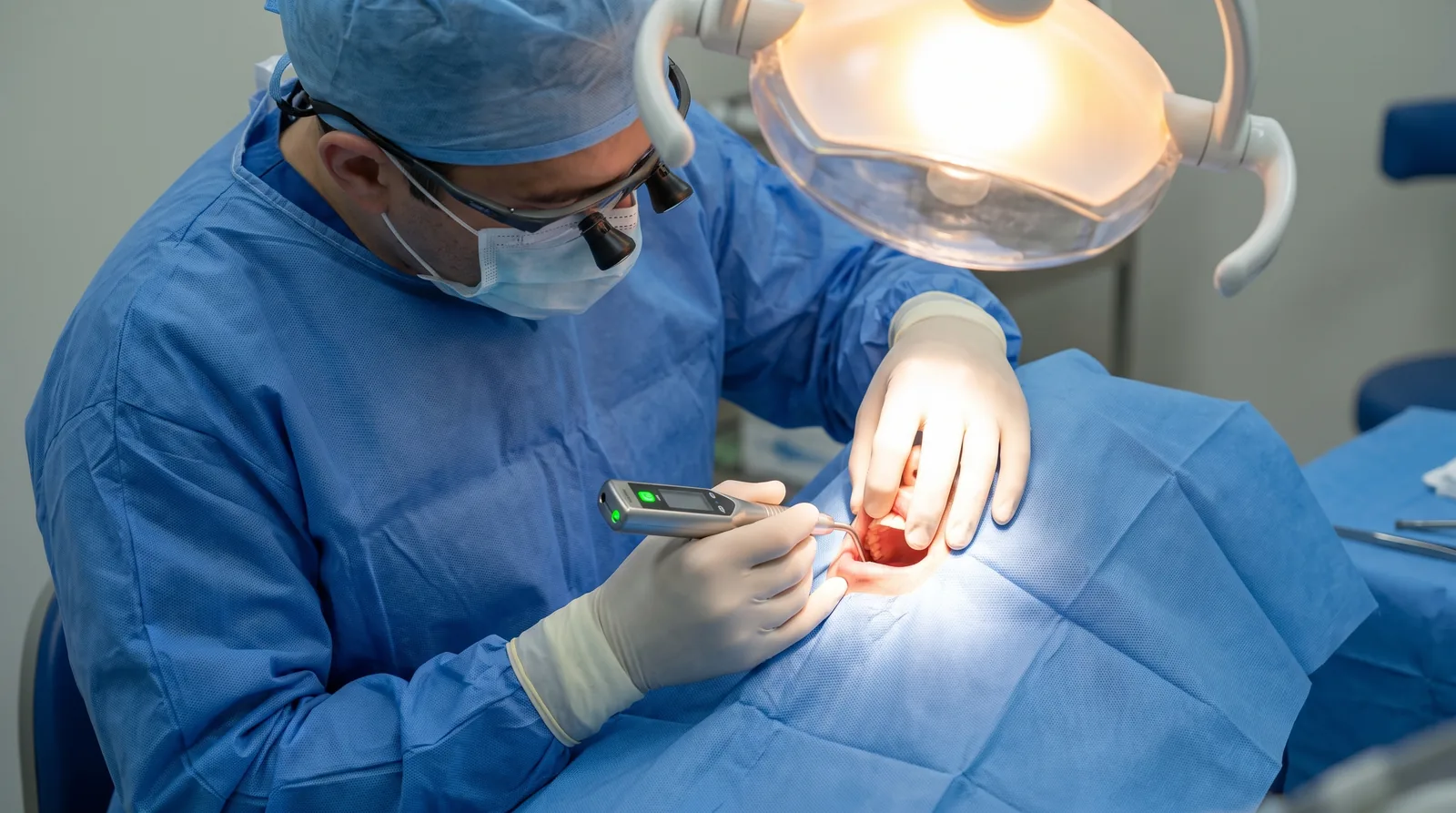
Extraction of the remaining teeth, placement of four to six implants, and delivery of a fixed temporary bridge in a single surgical day. It is the procedure marketed as teeth in a day, and it is well supported when the implants achieve stability and the patient follows the diet. The final bridge is made months later after healing. The understanding All-on-4 guide covers the procedure in full.
Who qualifies
Patients with enough front-jaw bone to stabilize four implants, no uncontrolled health conditions, and the ability to follow a soft diet for months. Smokers and patients with poor bone are higher risk for immediate loading, and some surgeons will place the implants and delay the bridge for them. The guide to All-on-4 with severe bone loss covers what happens when the bone is marginal.
What "in a day" leaves out
The final bridge, which comes four to six months later, and the months of restricted diet in between. A patient who expects the same-day bridge to be the finished product will be disappointed at month four when it is replaced.
Are same-day dental implants as successful as conventional ones?
For the right patients, yes. Studies of immediate placement and immediate loading in well-selected cases report survival rates comparable to conventional delayed protocols. For poorly selected patients, meaning those with infection, poor bone, low stability at surgery, smoking, or a diet that loads the temporary, failure rates are higher. The technique is not riskier in itself. Applying it to the wrong case is.
What raises the risk
Loading an implant that did not reach the stability threshold, placing into an infected socket, smoking during healing, and chewing on a temporary that was meant to be spared. Each is a decision, either the surgeon's or the patient's, and each is avoidable.
What the surgeon should do
Measure stability at surgery and be willing to change the plan on the day if the numbers are not there. A surgeon who promises same-day teeth no matter what is promising something the bone may not allow. The guide to All-on-4 problems and failure explains what early failure looks like and why the first months are treated carefully.
What does same-day treatment cost?
About the same as the conventional version of the same procedure, sometimes slightly more for the temporary and the same-day lab work, and sometimes less because it saves a surgery and visits. A same-day single implant with a temporary crown adds a few hundred dollars for the temporary. A same-day full arch is priced as a full arch, with the temporary included and the final bridge sometimes billed separately. The All-on-4 cost breakdown explains what to confirm is in the number.
What should you ask about same-day implants?
Which same-day procedure is being proposed, what happens if the implant is not stable enough on the day, what the temporary is for and what you can eat, and when the final tooth or bridge arrives and whether it is included.
- Do you mean same-day placement, same-day temporary, or both?
- What stability threshold do you use, and what is the plan if my implant does not meet it?
- Can I chew on the temporary, and for how long is the diet restricted?
- When is the final crown or bridge made, and is it in the quote?
- What is your early failure rate for same-day cases?
- Am I a good candidate given my bone, my health, and whether I smoke?

What happens if the implant is not stable enough on the day?
The surgeon changes the plan. The implant is placed but not loaded, a healing cap or the gum covers it, and the patient wears a removable temporary or nothing at that site while the bone fuses. The crown or bridge is attached months later. This is the conventional protocol, it is safe, and a surgeon who switches to it on the day is doing the right thing.
For a single tooth
A removable temporary, sometimes called a flipper, fills the gap for appearance. It is not attached to the implant and does not load it. Some patients wear nothing for a back tooth.
For a full arch
The surgeon may place the implants and deliver a modified denture that rests on the gum rather than attaching to the implants, or may attach the bridge to only the implants that reached stability if enough did. Ask before surgery which fallback the practice uses, because being told on the day is harder.
Why this is a good sign
A practice that measures stability and has a fallback is a practice that puts integration ahead of the same-day promise. The guide to All-on-4 problems and failure explains why loading an unstable implant is the most avoidable cause of early failure.
Is same-day treatment right for you?
If you have healthy bone, no infection at the site, good general health, and can live on a soft diet for a few months, same-day treatment gives you teeth on surgery day with no meaningful increase in risk. If your bone is marginal, the site is infected, or you smoke, the conventional timeline with a delayed load is the safer plan, and a surgeon who tells you that is one worth trusting. The checklist for choosing an implant provider covers the rest of the decision.
The Bottom Line
Same-day dental implants can mean an implant placed at extraction, a temporary tooth attached the same day, or a full-arch bridge delivered on surgery day, and each has its own candidates and risks. For patients with good bone, no infection, and high implant stability at surgery, outcomes match the conventional timeline. For patients who do not meet those conditions, delayed loading is safer, and the same-day tooth is always a temporary that has to be protected while the bone heals. Ask which procedure is meant, what happens if the stability is not there, and when the final teeth arrive. And when you are ready, find qualified providers near you at Dental Implant Directory.
Ready to find a qualified provider?
Search our independent directory of dental implant providers organized by specialty, location, and credentials. Find Providers Near You.
Ready to find a qualified provider?
Search our independent directory of dental implant providers organized by specialty, location, and credentials.