Most full-arch implant patients are offered one thing: a single bridge across the whole arch on four to six implants. A smaller number of practices offer a different design, three separate bridges of three or four teeth each, sitting on six implants spread around the arch. It is marketed as 3-on-6, and the claims made for it, from easier cleaning to a more natural look, are partly true and partly a function of who is selling it.
The design is not new and it is not exotic. It is closer to how a dentist would restore a mouth with several missing teeth than to the one-piece bridge All-on-4 uses, and it comes with the trade that implies: more implants, more bone required, more cost, and a result that behaves more like natural teeth. Whether that trade is worth it depends on the jaw and the patient.
This guide explains what 3-on-6 is, how it differs from a single full-arch bridge, who qualifies, and what to ask.
What is a 3-on-6 dental implant restoration?
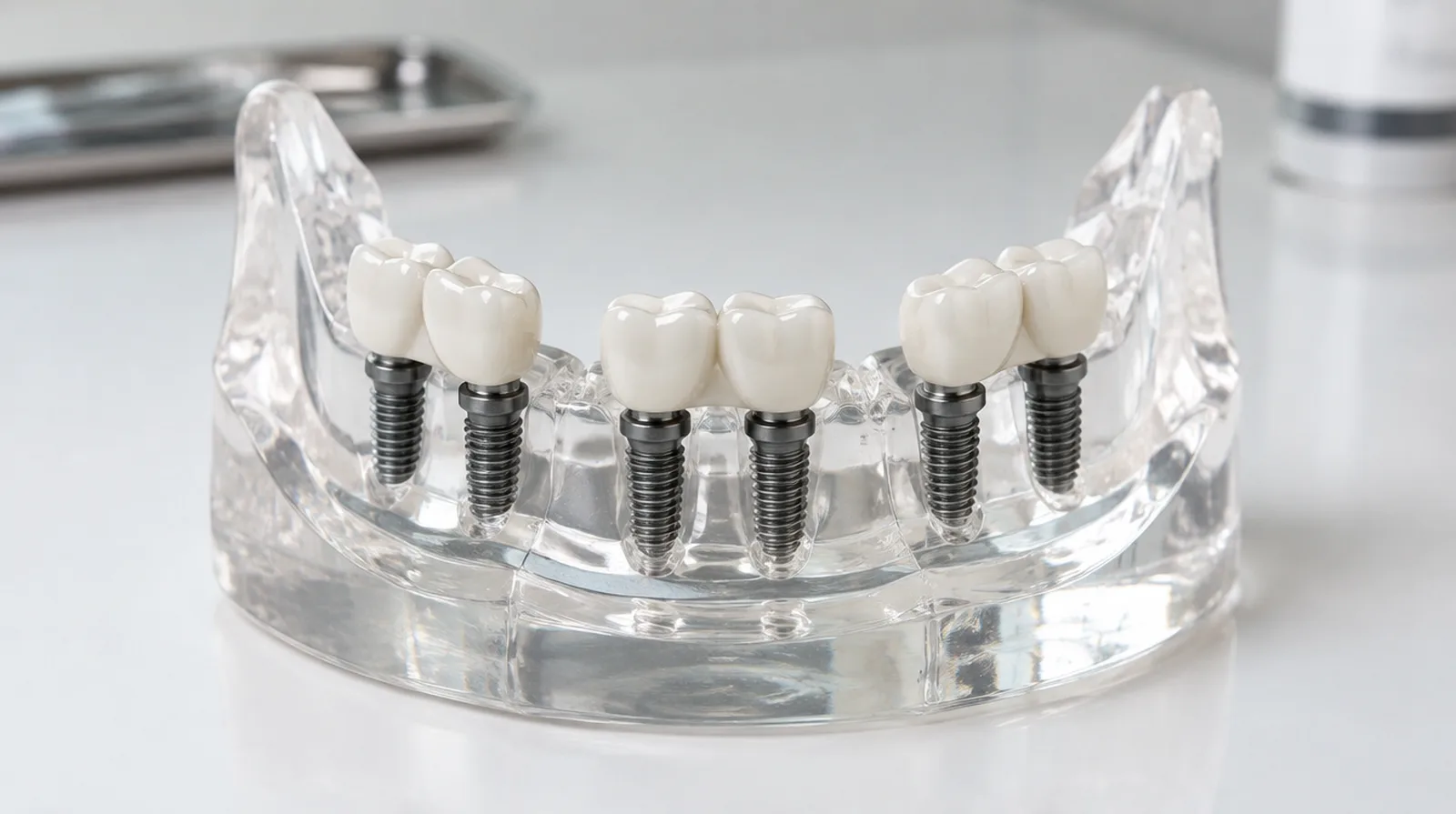
Six implants placed around the arch, restored with three independent bridges, each supported by two implants. One bridge covers the front teeth and two cover the back teeth on each side. There is no pink gum material, no single-piece frame, and each bridge can be removed or replaced without touching the others. It is a conventional implant-bridge approach applied to a whole arch.
The name is a marketing term used by a handful of practices rather than a manufacturer's protocol. The underlying dentistry, segmented implant bridges on six implants, has been in use for decades.
How is 3-on-6 different from All-on-4?
All-on-4 uses one bridge on four tilted implants, with pink material replacing the gum, designed to avoid grafting in patients with bone loss. 3-on-6 uses six upright implants in six positions, requires enough bone at each one, and replaces only the teeth. The All-on-4 bridge comes off as a unit; the three 3-on-6 bridges come off separately.
Bone requirements
3-on-6 needs bone in the back of the jaw for the rear implants, which is the bone All-on-4 was designed to work around. Patients with significant posterior bone loss need grafting or sinus lifts for 3-on-6 that they would not need for All-on-4. The guide to bone grafting before implants explains what that adds.
Gum and appearance
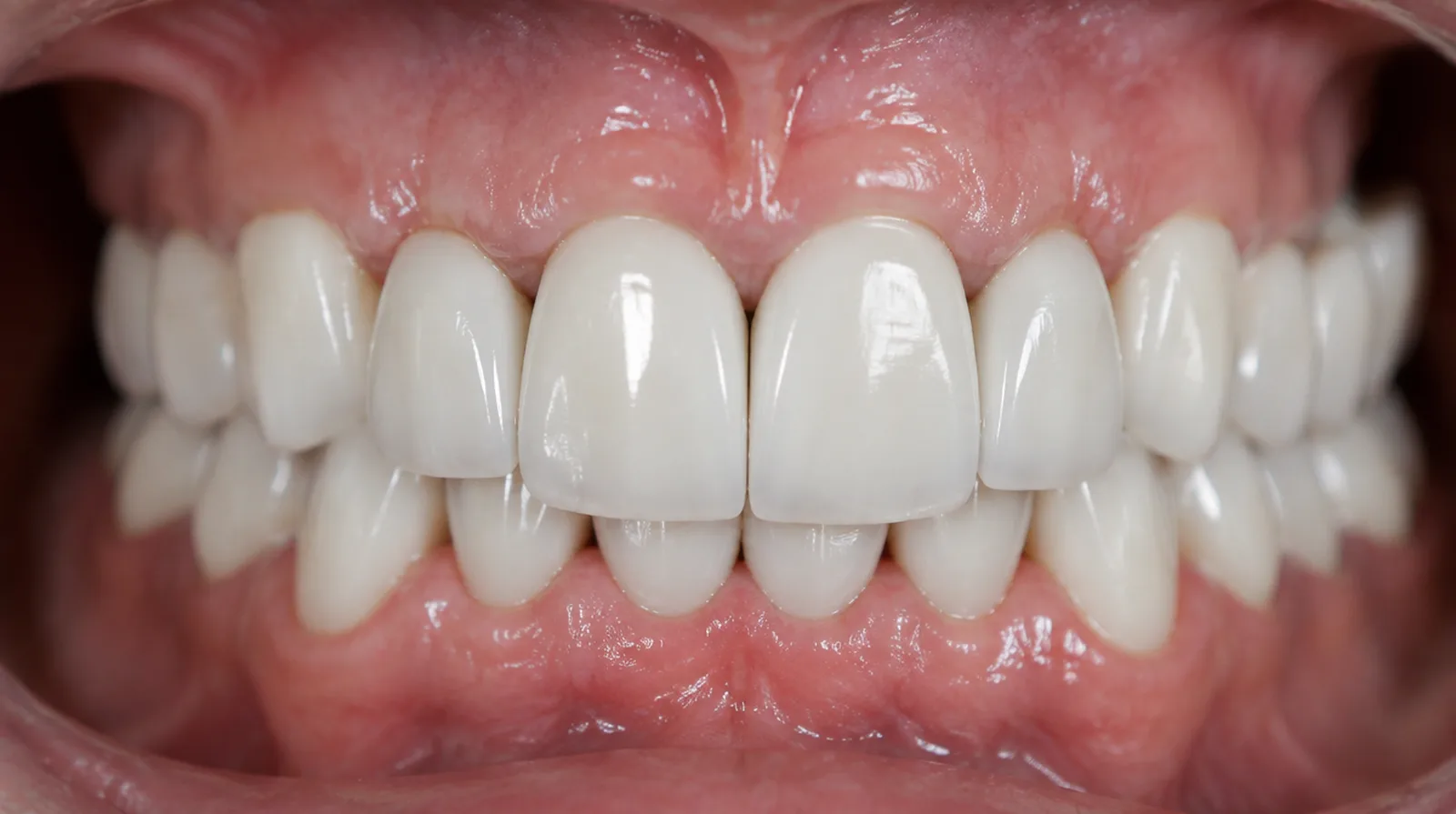
Because 3-on-6 replaces teeth without a pink flange, it depends on the patient having enough gum and bone height that the teeth look natural without it. Patients who have lost a lot of vertical bone can end up with long teeth or visible gaps at the gum. All-on-4's pink material hides that loss. For a patient with little bone loss, 3-on-6 can look more like natural teeth. For a patient with a lot, it usually cannot.
Cleaning
Three separate bridges have gaps between them and sit closer to the gum, which many patients find easier to clean with floss and brushes than a full-arch bridge that has to be cleaned underneath with a water flosser. This is the strongest practical argument for the design.
Repairs
If one bridge chips or one implant has a problem, that segment can be addressed while the other two stay in place. With a single full-arch bridge, the whole bridge comes off. The guide to All-on-4 problems and failure covers what that involves.
Who is a candidate for 3-on-6?
Patients with adequate bone throughout the arch, including the back, and enough gum height that teeth alone will look natural. That describes patients who are losing teeth now or lost them recently, not patients who have worn a denture for years. Patients with significant bone loss are candidates only after grafting, which adds months and cost, and are often better served by All-on-4 or a zygomatic approach.
The ideal case
A patient whose teeth are failing from decay or fracture rather than advanced gum disease, whose bone is largely intact, and who wants a result that looks and cleans like natural teeth. This patient gets the most from 3-on-6 and gives up the least.
The poor case
A long-term denture wearer with a resorbed ridge. The rear implants have no bone, the gum height is gone, and the teeth would look long. All-on-4 with its tilted implants and pink flange is the design built for this patient. The guide to All-on-4 with severe bone loss covers what is possible.
How much does 3-on-6 cost?
More than All-on-4 at the same practice, because it uses two more implants, three bridges instead of one, and often grafting. Expect a premium of several thousand dollars per arch over an All-on-4 quote, and more if sinus lifts are required. Practices that specialize in 3-on-6 sometimes price it competitively against premium zirconia All-on-4, and the quotes should be compared itemized. The All-on-4 cost breakdown lists what a complete quote contains, and the same items apply.
How does 3-on-6 compare with All-on-6?
All-on-6 uses six implants under a single full-arch bridge. 3-on-6 uses six implants under three separate bridges. The implant count is the same; the prosthesis is different. All-on-6 keeps the pink flange and the one-piece design, with six implants for extra support. 3-on-6 drops the flange and segments the teeth. The All-on-4 versus All-on-6 comparison explains when the extra two implants are worth it in a single-bridge design, and most of that reasoning applies to 3-on-6 as well.
What are the drawbacks of 3-on-6?
More bone required, more surgery, more cost, no way to hide vertical bone loss, and fewer providers who offer it. The segmented design also means each bridge depends on only two implants, so the loss of one implant takes that segment out of service until it is replaced. The advantages in cleaning and appearance are real for the right patient and irrelevant for the wrong one.
What should you ask a provider about 3-on-6?
Whether your bone supports six upright implants without grafting, whether your gum height will look natural without a flange, what the itemized cost is against an All-on-4 or All-on-6 alternative at the same practice, and how many segmented full-arch cases the provider has completed.
- Does my CT scan show enough bone for six implants without grafting or sinus lifts?
- Will the teeth look natural at the gum line without pink material, given my bone height?
- What does this cost itemized, and what would All-on-4 or All-on-6 cost here?
- How many 3-on-6 or segmented full-arch cases have you completed?
- If one implant fails, what happens to that segment and what does it cost?
- Who designs and delivers the bridges? The guide to what a prosthodontist does explains why that question matters for a multi-bridge case.
What does 3-on-6 treatment involve?
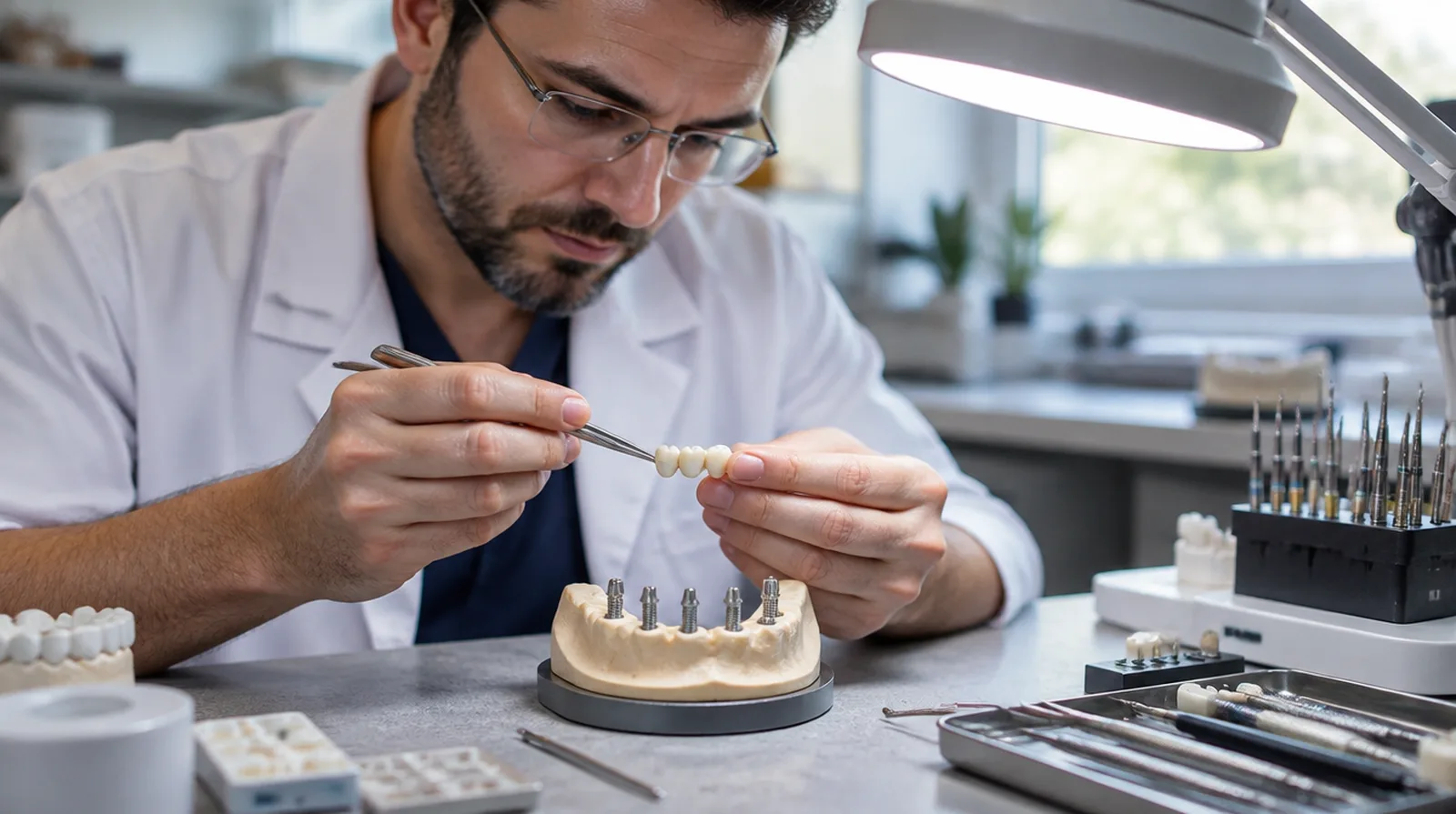
Six implants placed in one or two surgeries, a healing period of three to six months, and then three bridges made from impressions or a digital scan of the healed implants. Some providers deliver a temporary during healing; others use a modified denture or a fixed temporary on the implants that reached stability. The final bridges are usually zirconia or porcelain and are fitted and adjusted over several visits.
Grafting and staging
Because 3-on-6 needs bone in the back of the jaw, patients who lack it have grafting or sinus lifts first, which adds four to nine months before implants can be placed. The full timeline for a grafted case can run a year or more. The guide to bone grafting before implants covers what each type of graft adds.
Maintenance
Three bridges are cleaned like implant bridges anywhere in the mouth: brushing, floss threaders or interdental brushes under each pontic, and a water flosser. Professional maintenance follows the usual three-to-six-month schedule. The bridges are checked for screw tightness and fit, and each can be removed independently if needed.
Is 3-on-6 better than All-on-4?
For a patient with good bone and gum who wants the most natural-looking and cleanable result, and who can pay for two more implants and three bridges, 3-on-6 is a strong option and arguably the better one. For a patient with bone loss, All-on-4 is the design that works, and 3-on-6 would require grafting to reach a result that still might not look right. Neither is better in general. Each is better for a different mouth, and a provider who offers both and explains which fits your scan is the one to trust. The guide to second opinions on dental implants explains how to check a recommendation that only offers one.
The Bottom Line
3-on-6 restores a full arch with three separate bridges on six upright implants, without pink gum material, which makes it easier to clean and repair and closer in appearance to natural teeth for patients who still have good bone and gum height. It needs more bone, costs more, and cannot hide vertical bone loss, which makes All-on-4 the better design for long-term denture wearers and patients with resorbed jaws. Ask whether your scan supports six upright implants, whether the teeth will look natural without a flange, and what the same practice would charge for the alternatives. And when you are ready, find qualified providers near you at Dental Implant Directory.
Ready to find a qualified provider?
Search our independent directory of dental implant providers organized by specialty, location, and credentials. Find Providers Near You.
Ready to find a qualified provider?
Search our independent directory of dental implant providers organized by specialty, location, and credentials.