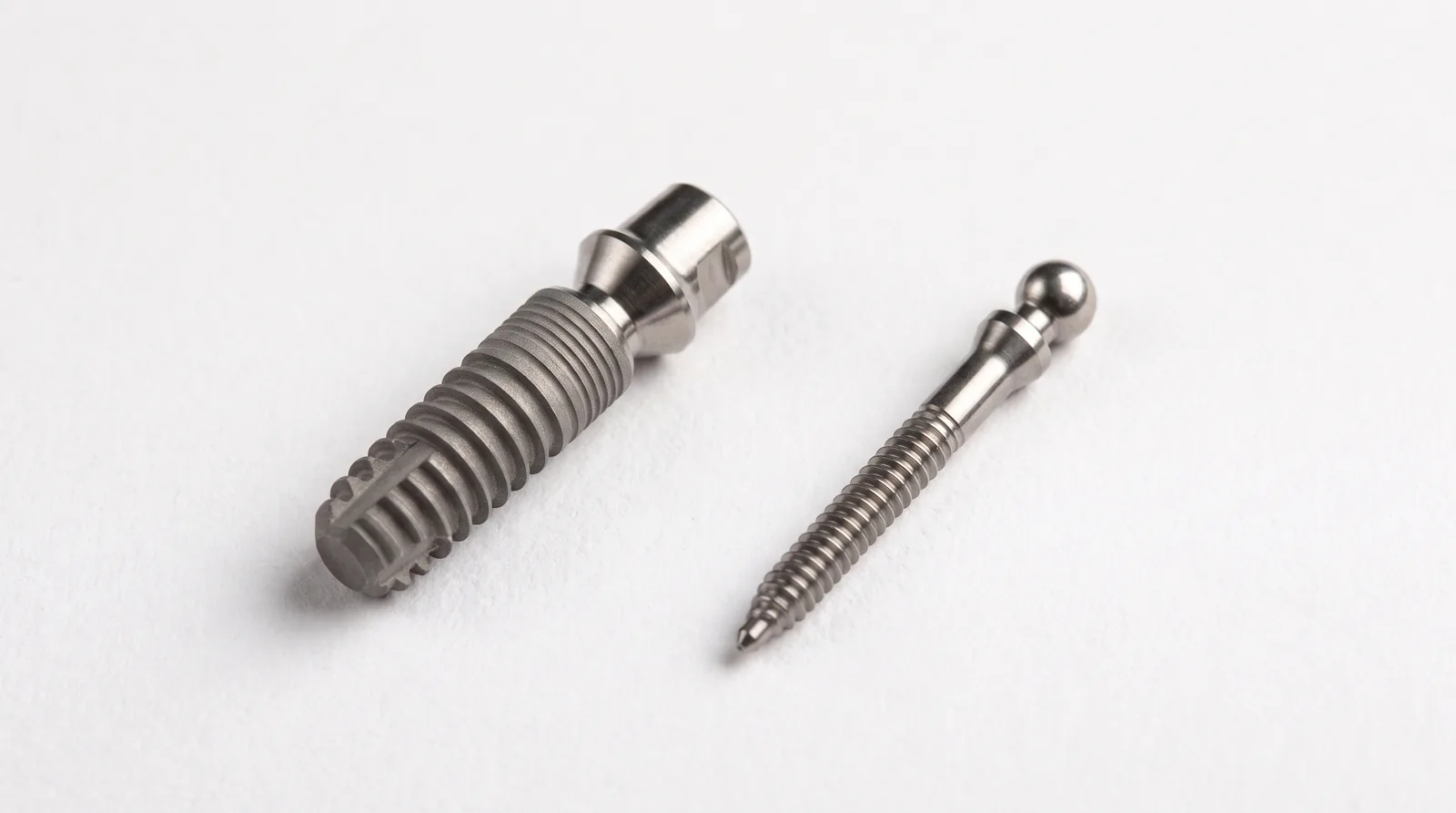
Mini dental implants are advertised as the faster, cheaper, less invasive alternative to regular implants, and for one specific job they are exactly that. For most other jobs they are a compromise, and the advertising does not draw the line. Patients who accept mini implants for a fixed bridge or a single molar because the price was lower can end up with a failure that costs more than the standard implant would have.
The problem is that "mini implant" covers a real, well-supported use and a set of off-label uses that some providers promote because the procedure is simpler and the margin is good. Knowing which is which is the whole game.
This guide explains what mini implants are, where they work, where they do not, what they cost, and what to ask.
What is a mini dental implant?
A mini dental implant is a narrow-diameter implant, usually under 3 millimeters wide compared with 3.5 to 5 millimeters for a standard implant, made as a single piece with a ball or attachment head built into the top. It is placed through the gum without a surgical flap, in a single visit, and can often be loaded immediately. Because it is narrow, it fits into bone too thin for a standard implant and is less invasive to place.
The trade for the narrow diameter is less surface area in the bone and less strength. A mini implant holds less load and is more likely to fracture or lose bone under heavy force than a standard implant.
What are mini dental implants good for?
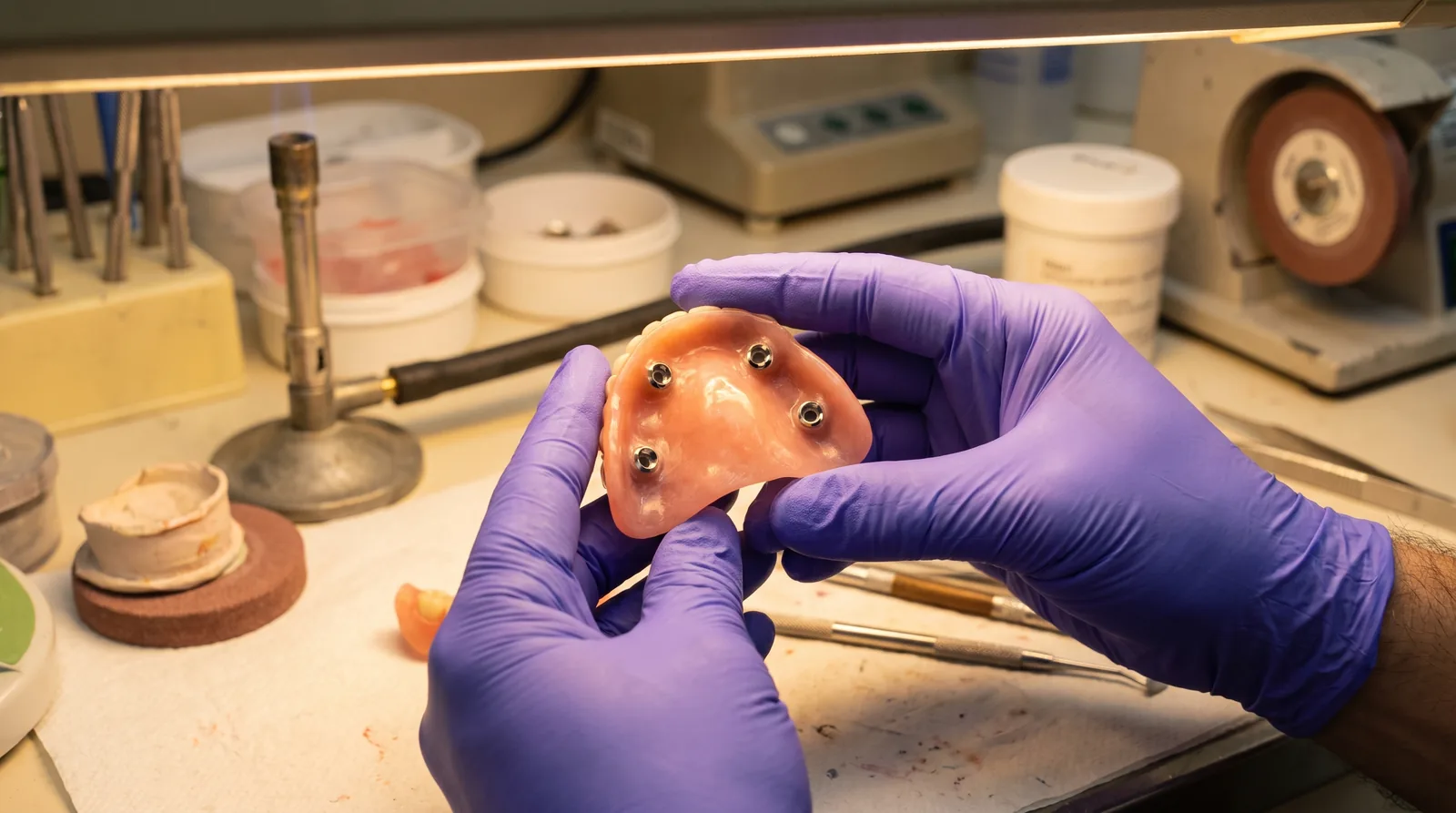
Stabilizing a lower denture. That is the use with the strongest evidence and the one for which mini implants were designed. Four mini implants in the front of the lower jaw, placed in one visit, with a denture that snaps onto them, turns a loose lower denture into a stable one at a fraction of the cost and surgery of standard implants. For an older patient with a thin lower ridge and a denture that will not stay put, it is often the best available option.
Why it works there
A lower overdenture spreads chewing force across the denture and the ridge, so the implants act as anchors rather than load-bearing posts. Four narrow implants sharing that job in dense front-jaw bone hold up well. Studies of mini implants for lower overdentures report survival rates in the same range as standard implants for the same use.
What it costs
Four mini implants with a retrofitted denture typically run $3,000 to $6,000, against $8,000 to $15,000 or more for a standard two-to-four-implant overdenture. For a patient on a fixed income with a loose lower denture, that gap is the reason mini implants exist. The guide to implant-supported dentures covers the overdenture option in general.
What are mini dental implants not good for?
Single molars, fixed bridges, full-arch fixed bridges, and most upper-jaw uses. The forces on a molar or a fixed bridge exceed what a narrow single-piece implant is built to carry, and mini implants used this way fracture, loosen, and lose bone at rates well above standard implants. The upper jaw's softer bone makes the problem worse.
Single teeth
A mini implant can support a small front tooth in a narrow space where a standard implant will not fit. For a molar, which takes the heaviest chewing force in the mouth, it is under-built. Providers who offer mini implants for back teeth are usually offering a lower price for a shorter lifespan.
Fixed bridges and full arches
Some practices market fixed full-arch bridges on six to ten mini implants as a cheaper alternative to All-on-4. The evidence for that use is thin and the failure reports are not. A fixed bridge puts continuous load on its implants, and narrow one-piece implants cannot be replaced individually under a bridge the way standard implants can. The understanding All-on-4 guide explains what a full-arch bridge asks of its implants.
Upper dentures
Mini implants in the upper jaw perform less well than in the lower, because upper bone is softer and the palate makes an upper denture less dependent on implants anyway. Some providers use them there. The results are less predictable.
Why are mini implants advertised so heavily?
Because they are simpler and faster to place, require less training, avoid grafting, and can be offered by general practices that do not do conventional implant surgery. A single-visit procedure with immediate loading and a low price is easy to market. None of that makes the implant wrong for the right job. It does mean the advertising is about the procedure's convenience for the practice as much as its fit for the patient.
The guide to what implant credentials mean explains how to check a provider's surgical training, which matters more when the option being offered is the one that requires the least of it.
How do mini implants compare with standard implants?
Standard implants are wider, stronger, come in two pieces so the top can be replaced, and have decades of data for every use in the mouth. Mini implants are narrower, weaker, one-piece, cheaper, and less invasive, with strong data for lower overdentures and weak data for everything else.
Lifespan
For a lower overdenture, comparable. For fixed teeth, shorter, with more fractures and more bone loss. The guide to how long dental implants last gives the standard-implant baseline.
Repairability
A standard implant's abutment and crown can be replaced without touching the fixture. A mini implant's head is part of the fixture, so a damaged head means removing the implant.
Bone requirements
Mini implants fit thinner bone, which is their genuine advantage and the reason they can avoid grafting. The guide to bone grafting before implants covers the other ways to avoid a graft, some of which preserve the option of a standard implant.
What should you ask before accepting mini implants?
What they are being proposed for, what the evidence is for that use, what a standard implant would cost and require instead, and what happens if a mini implant fails. A provider proposing mini implants for a lower overdenture has the evidence on their side. A provider proposing them for a fixed bridge should be able to explain why, and usually cannot.
- What is the mini implant being used for, and how does that compare with the use it was designed for?
- Why not a standard implant here? Is it bone, cost, or preference?
- What would the standard-implant version of this plan cost, and would it need grafting?
- How many mini implant cases like mine have you done, and how many have failed?
- If a mini implant fractures or loosens, what is the fix and what does it cost?
- Can I get a second opinion from an oral surgeon or periodontist before deciding? The guide to second opinions on dental implants explains how.

What does a mini implant procedure involve?
A single visit under local anesthetic, usually under an hour for four implants, with the implants placed through the gum using a small pilot hole rather than a surgical flap. The denture is then fitted with attachment housings that snap onto the implant heads, often the same day. Swelling and soreness are mild and brief compared with conventional implant surgery, and most patients return to normal activity the next day.
Healing and loading
Because mini implants are placed into dense front-jaw bone and are loaded by a denture that also rests on the ridge, immediate loading is standard. Patients are asked to keep to soft foods for a few weeks and to remove the denture at night. The implants integrate over the following months while the denture is worn.
Maintenance
The attachment housings and their rubber inserts wear and are replaced periodically, typically every year or two, at modest cost. The implants themselves are cleaned like any others, and the denture is cleaned like any denture. The guide to peri-implantitis applies to mini implants as well; narrow implants are not immune to the infection that affects standard ones, and a patient with a periodontal history should keep the same maintenance schedule.
Are mini implants a reasonable choice for an older patient on a budget?
For a loose lower denture, often yes, and they may be the best choice. The procedure is short, healing is quick, the cost is a fraction of standard implants, and the improvement in daily life for a denture wearer is large. For a patient who cannot afford or cannot tolerate standard implant surgery, mini implants under a lower denture are a legitimate answer rather than a second-best one. The guide to paying for dental care after 65 covers how patients on fixed incomes fund treatment like this.
The Bottom Line
Mini dental implants are narrow one-piece implants that excel at one job, stabilizing a lower denture, where they match standard implants on survival at a fraction of the cost and surgery. Used for molars, fixed bridges, or full arches, they carry loads they were not built for and fail more often. If a provider proposes them for a lower overdenture, the evidence supports it. If a provider proposes them for fixed teeth, ask why, ask what a standard implant would cost, and consider a second opinion. And when you are ready, find qualified providers near you at Dental Implant Directory.
Ready to find a qualified provider?
Search our independent directory of dental implant providers organized by specialty, location, and credentials. Find Providers Near You.
Ready to find a qualified provider?
Search our independent directory of dental implant providers organized by specialty, location, and credentials.